As the AI-led technology selloff deepens, investors are shifting toward government bonds and defensive stock sectors viewed as relatively safer.
4:40 PMMarketWatch101 stories from 10 sources
Supporting Articles
As the AI-led technology selloff deepens, investors are shifting toward government bonds and defensive stock sectors viewed as relatively safer.
4:40 PMMarketWatch
The equal-weight S&P 500 did not provide the expected protection from technology concentration as the AI trade weakened. Investors are again confronting the risks created by the index's heavy dependence on large technology companies.
2:02 PMCNBCThe article treats the AI stock selloff as the correction investors had been anticipating and focuses on how to manage portfolios through the downturn.
1:06 PMCNBC
The week's market tremor may signal a broader AI-driven correction, with the risk that weakness in heavily owned technology stocks spreads through equity markets.
12:53 PMFinancial Times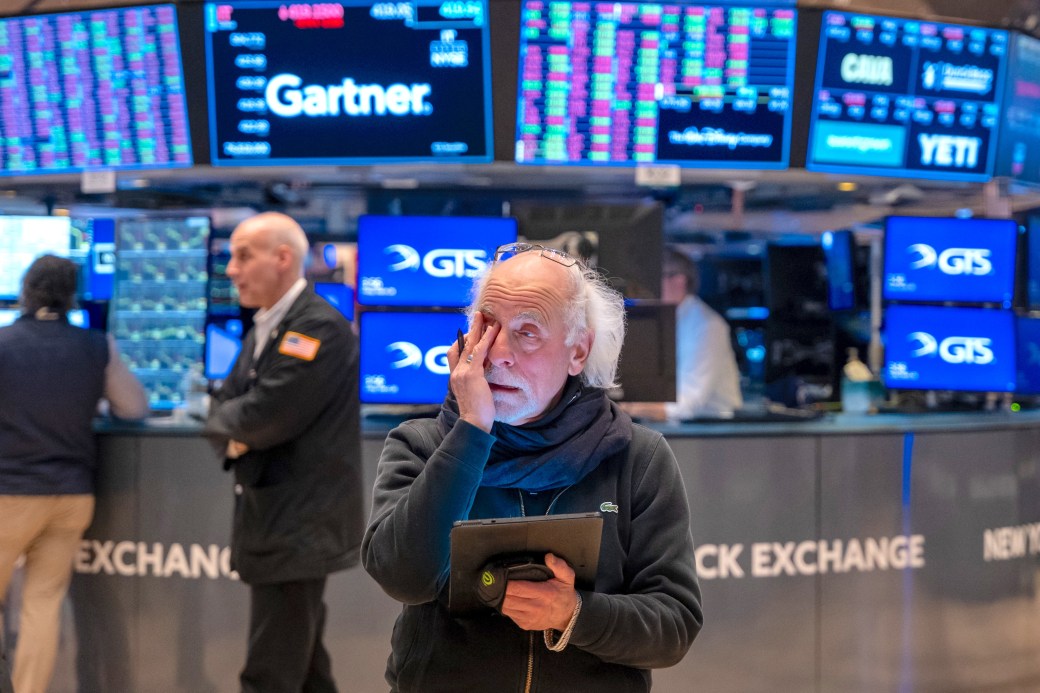
Investors are selling technology stocks across global markets, and futures point to further losses in the next session. The move reflects a broader retreat from high-growth equities.
6:23 AMFortune
Indonesian stocks fell sharply after MSCI warned that the country could be removed from major indexes. The warning reflects growing concerns about whether foreign investors can access and trade the market reliably.
11:35 PMFinancial Times
Bank of England Governor Andrew Bailey said it is too early to assess the full inflationary effect of higher energy prices. A prolonged period of elevated costs could squeeze corporate margins and push some companies to raise prices.
11:12 PMFinancial Times
Brent crude fell 0.39% to $105.51 a barrel, while West Texas Intermediate declined 0.55% to $97.43. Prices retreated after a strong prior session, when a large draw in US crude inventories supported the market.
10:25 PMEconomic Times
The outlook for mortgage rates is being reassessed after hot inflation reports, strong retail sales, rising oil prices, and historically low jobless claims delivered a run of data that would normally push bond yields higher. The central question is whether mortgage rates have peaked or whether recent bond-market moves are temporary.
1:24 PMHousing Wire
G20 finance ministers and central bankers are meeting in Thailand as the Iran war pushes energy prices higher and clouds the global economic outlook. Officials face a more difficult balance between containing inflation and supporting growth.
2:16 AMAl JazeeraThe Reserve Bank of India’s aggressive defense of the rupee has given the currency temporary relief, but the intervention has caused significant disruption across financial markets.
10:58 PMBloomberg MarketsThe rupee has recovered from 96.79 per dollar to the 95 level after recent action by the Reserve Bank of India. Analysts still expect the currency to weaken toward 100 per dollar.
8:54 PMCNBC
Gold fell 0.4% to $4,152.99 an ounce after rising more than 1% in the previous session. Investors are reassessing Federal Reserve policy after a sharp increase in US producer prices, while other precious metals also weakened.
10:08 PMEconomic TimesGold held near recent highs after posting its strongest gain in more than two weeks. Investors turned to the metal as a stock selloff pushed Treasury yields lower and increased demand for defensive assets.
7:51 PMBloomberg Markets
Investors expect gold to reach a new record within two years, while central banks made their largest monthly purchases of the metal in almost two years during September.
12:00 AMFinancial Times
France’s borrowing costs are rising as political divisions complicate efforts to manage its finances. The strain is raising concerns that a sovereign debt problem could spread across the eurozone.
5:26 AMAl Jazeera
The dollar is heading for its first weekly decline in five weeks as investors question the profitability of heavy AI investment. The euro has recovered from a 17-month low as US Treasury yields fall, with upcoming Federal Reserve signals likely to shape the next move.
10:04 PMEconomic Times
Iraq has weakened the dinar to relieve pressure on government finances and help fund public-sector salaries. The move raises import costs and leaves traders uncertain about the currency’s next official or market rate.
4:44 AMAl JazeeraSummary
As the AI-led technology selloff deepens, investors are shifting toward government bonds and defensive stock sectors viewed as relatively safer.
The rotation marks a clear reduction in risk appetite rather than a routine change in
Unlock the full First Pass Analysis to get a better understanding of why this story mattersWhy it matters
Capital is moving out of the market's growth engine and into assets that perform better when confidence and economic expectations deteriorate.
Summary
The equal-weight S&P 500 did not provide the expected protection from technology concentration as the AI trade weakened. Investors are again confronting the risks created by the index's heavy dependence on large technology companies.
The failed equal-weight strategy shows that diversification within the S&P 500 was not enough to
Unlock the full First Pass Analysis to get a better understanding of why this story mattersWhy it matters
The standard diversification fix did not work, forcing investors to rethink exposure beyond the S&P 500.
Summary
The article treats the AI stock selloff as the correction investors had been anticipating and focuses on how to manage portfolios through the downturn.
The key shift is from momentum investing to risk control after a crowded trade begins
Unlock the full First Pass Analysis to get a better understanding of why this story mattersWhy it matters
The AI trade is forcing investors to test whether their portfolios depend on one narrow market narrative.
Summary
The week's market tremor may signal a broader AI-driven correction, with the risk that weakness in heavily owned technology stocks spreads through equity markets.
The danger is a feedback loop in which falling AI shares undermine confidence, reduce risk
Unlock the full First Pass Analysis to get a better understanding of why this story mattersWhy it matters
AI concentration has made a sector correction a potential market-wide event.
Summary
Investors are selling technology stocks across global markets, and futures point to further losses in the next session. The move reflects a broader retreat from high-growth equities.
The selloff is spreading beyond individual companies into a broad repricing of technology risk. Continued
Unlock the full First Pass Analysis to get a better understanding of why this story mattersWhy it matters
A sustained tech unwind can weaken major indexes, investor confidence and the financing conditions for speculative growth companies.
Summary
Indonesian stocks fell sharply after MSCI warned that the country could be removed from major indexes. The warning reflects growing concerns about whether foreign investors can access and trade the market reliably.
The market reaction shows that investors are pricing the risk of benchmark exclusion before any
Unlock the full First Pass Analysis to get a better understanding of why this story mattersWhy it matters
Indonesia’s equity selloff could deepen if a reputational warning becomes a benchmark-driven liquidation.
3 stories · 2 sources
Summary
Bank of England Governor Andrew Bailey said it is too early to assess the full inflationary effect of higher energy prices. A prolonged period of elevated costs could squeeze corporate margins and push some companies to raise prices.
The key risk is that an energy shock moves from input costs into broader prices
Unlock the full First Pass Analysis to get a better understanding of why this story mattersWhy it matters
Energy prices could delay disinflation and keep UK monetary policy restrictive for longer than markets expect.
Summary
Brent crude fell 0.39% to $105.51 a barrel, while West Texas Intermediate declined 0.55% to $97.43. Prices retreated after a strong prior session, when a large draw in US crude inventories supported the market.
The immediate shift is from inventory-driven gains to caution over whether easing restrictions on sanctioned
Unlock the full First Pass Analysis to get a better understanding of why this story mattersWhy it matters
Oil markets are balancing a possible supply increase against evidence that US inventories remain tight.
Summary
The outlook for mortgage rates is being reassessed after hot inflation reports, strong retail sales, rising oil prices, and historically low jobless claims delivered a run of data that would normally push bond yields higher. The central question is whether mortgage rates have peaked or whether recent bond-market moves are temporary.
The latest economic data keeps upward pressure on rates by challenging hopes for rapid disinflation
Unlock the full First Pass Analysis to get a better understanding of why this story mattersWhy it matters
A sustained rise in yields would keep housing affordability under pressure and delay a meaningful recovery in mortgage demand.
Summary
G20 finance ministers and central bankers are meeting in Thailand as the Iran war pushes energy prices higher and clouds the global economic outlook. Officials face a more difficult balance between containing inflation and supporting growth.
The conflict has turned an energy shock into a policy problem for major economies. Higher
Unlock the full First Pass Analysis to get a better understanding of why this story mattersWhy it matters
A prolonged energy shock could keep global interest rates higher even as economic growth slows.
Summary
The Reserve Bank of India’s aggressive defense of the rupee has given the currency temporary relief, but the intervention has caused significant disruption across financial markets.
The rupee’s stabilization came at the expense of smoother market functioning, raising the cost of
Unlock the full First Pass Analysis to get a better understanding of why this story mattersWhy it matters
Currency support is buying time, but the market distortions could become a new source of financial stress.
Summary
The rupee has recovered from 96.79 per dollar to the 95 level after recent action by the Reserve Bank of India. Analysts still expect the currency to weaken toward 100 per dollar.
The RBI has slowed the rupee’s decline but has not reversed the forces driving it,
Unlock the full First Pass Analysis to get a better understanding of why this story mattersWhy it matters
A weaker rupee would increase India’s energy bill and test the RBI’s ability to stabilize markets without exhausting reserves.
Summary
Gold fell 0.4% to $4,152.99 an ounce after rising more than 1% in the previous session. Investors are reassessing Federal Reserve policy after a sharp increase in US producer prices, while other precious metals also weakened.
Higher producer prices are challenging expectations for easier monetary policy, which can lift yields and
Unlock the full First Pass Analysis to get a better understanding of why this story mattersWhy it matters
Gold is being pulled between rising rate expectations and persistent demand for protection against macroeconomic and geopolitical shocks.
Summary
Gold held near recent highs after posting its strongest gain in more than two weeks. Investors turned to the metal as a stock selloff pushed Treasury yields lower and increased demand for defensive assets.
The immediate shift is toward safety, with falling yields also reducing the opportunity cost of
Unlock the full First Pass Analysis to get a better understanding of why this story mattersWhy it matters
Gold is benefiting from both defensive positioning and easier financial conditions, making market stress and Treasury yields the key near-term drivers.
Summary
Investors expect gold to reach a new record within two years, while central banks made their largest monthly purchases of the metal in almost two years during September.
Central-bank buying is reinforcing investment demand and giving gold a structural bid beyond short-term speculation.
Unlock the full First Pass Analysis to get a better understanding of why this story mattersWhy it matters
Official-sector demand is making gold's rally less dependent on private investor sentiment.
Summary
France’s borrowing costs are rising as political divisions complicate efforts to manage its finances. The strain is raising concerns that a sovereign debt problem could spread across the eurozone.
Higher French yields become dangerous when political fragmentation limits the government’s ability to deliver credible
Unlock the full First Pass Analysis to get a better understanding of why this story mattersWhy it matters
France is large enough that a sovereign stress episode there could threaten the stability of the entire currency bloc.
Summary
The dollar is heading for its first weekly decline in five weeks as investors question the profitability of heavy AI investment. The euro has recovered from a 17-month low as US Treasury yields fall, with upcoming Federal Reserve signals likely to shape the next move.
The dollar’s retreat reflects a reassessment of US growth and technology valuations, not a fundamental
Unlock the full First Pass Analysis to get a better understanding of why this story mattersWhy it matters
A weaker dollar would ease pressure on global currencies and commodities while reshaping expectations for the next phase of US monetary policy.
Summary
Iraq has weakened the dinar to relieve pressure on government finances and help fund public-sector salaries. The move raises import costs and leaves traders uncertain about the currency’s next official or market rate.
The devaluation shifts the adjustment burden from the state’s cash shortage to households and businesses
Unlock the full First Pass Analysis to get a better understanding of why this story mattersWhy it matters
Iraq is buying budget relief at the cost of higher living costs and greater currency instability.
A curated list of other prominent stories from this day.

Zimbabwe is trying to build confidence in the ZiG after repeated currency crises and dependence on the US dollar. Many residents remain skeptical that the new currency will preserve value.
9:12 PMAl Jazeera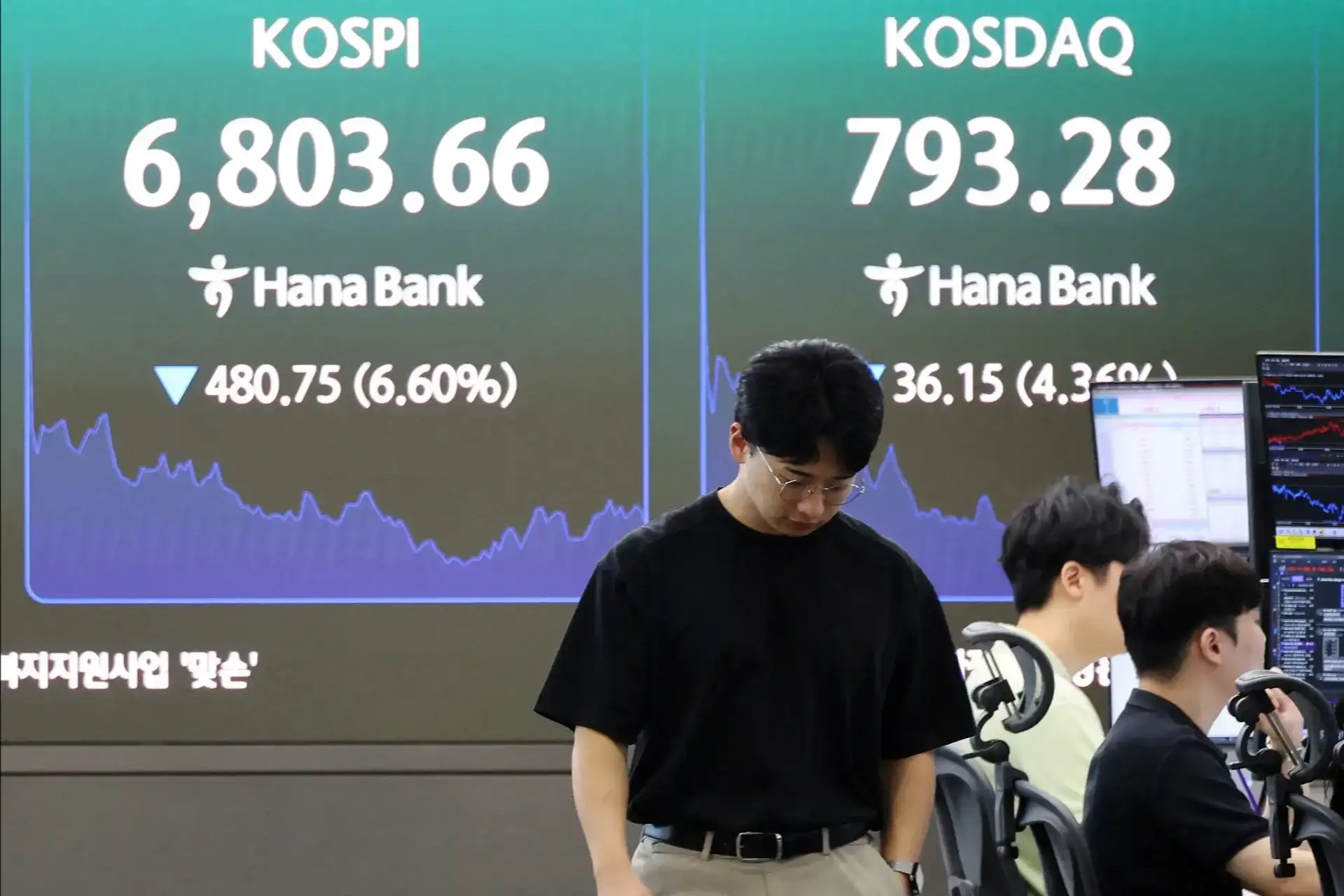
The MSCI Asia Pacific Index rose 0.6%, led by South Korean shares, while Samsung Electronics and SK Hynix recovered modestly. The S&P 500 also reversed earlier losses to finish 0.3% higher.
9:10 PMEconomic TimesRising Treasury yields are pressuring bond prices and weighing on some sectors favored for dividend income. Retirees may need to adjust their income strategies as both fixed-income holdings and dividend stocks become more volatile.
4:30 PMCNBC
Shares of AbbVie, Eli Lilly and Gilead Sciences closed near record highs as investors moved out of technology stocks. Pharmaceutical companies benefited from their defensive earnings profiles and perceived stability.
4:29 PMMarketWatch
Analysts identify a Nov. 3 governor’s race as the election-specific contest most likely to threaten the policies and investment assumptions supporting the market’s AI boom.
3:00 PMMarketWatchTini Bloomberg 500 and Bloomberg 100 index futures are now available to eligible NinjaTrader Group customers through MIAX.
12:04 PMFinextraRenewed US-Canada trade tensions are increasing uncertainty for companies that move goods across the border. Importers face potential changes in costs, documentation, and compliance requirements.
10:30 AMWWD
Steven Jon Kaplan argues that the stock market has become irrational as the S&P 500 continues to set records. He favors a safer alternative rather than chasing stretched equity valuations.
8:40 AMMarketWatchThe discussion examines how geopolitical uncertainty, new technologies and market innovation are changing risks in foreign exchange. It focuses on strengthening operational resilience across financial institutions.
7:00 AMFinextra
Wall Street is becoming more cautious despite strong stock-market gains, low unemployment and continued GDP growth. Investors increasingly see vulnerabilities beneath the headline economic data.
6:19 AMFortuneSummary
Zimbabwe is trying to build confidence in the ZiG after repeated currency crises and dependence on the US dollar. Many residents remain skeptical that the new currency will preserve value.
Trust, rather than the currency’s design, is the central obstacle to adoption. Without credible monetary
Unlock the full First Pass Analysis to get a better understanding of why this story mattersWhy it matters
The ZiG cannot displace the US dollar unless Zimbabweans believe the government will protect its purchasing power.
Summary
The MSCI Asia Pacific Index rose 0.6%, led by South Korean shares, while Samsung Electronics and SK Hynix recovered modestly. The S&P 500 also reversed earlier losses to finish 0.3% higher.
The immediate shift is a pause in the chip-stock selloff, not a broad reset in
Unlock the full First Pass Analysis to get a better understanding of why this story mattersWhy it matters
A sustained chip rebound would support Asian benchmarks, while another reversal could quickly renew pressure across global equities.
Summary
Rising Treasury yields are pressuring bond prices and weighing on some sectors favored for dividend income. Retirees may need to adjust their income strategies as both fixed-income holdings and dividend stocks become more volatile.
Higher yields create a tradeoff for retirees: new income opportunities improve, but existing bonds lose
Unlock the full First Pass Analysis to get a better understanding of why this story mattersWhy it matters
Yield increases can improve future income while damaging the portfolios retirees use today.
Summary
Shares of AbbVie, Eli Lilly and Gilead Sciences closed near record highs as investors moved out of technology stocks. Pharmaceutical companies benefited from their defensive earnings profiles and perceived stability.
The rotation signals that investors are reducing exposure to speculative growth and favoring cash flows
Unlock the full First Pass Analysis to get a better understanding of why this story mattersWhy it matters
The rally shows how quickly a technology-led market can redirect capital toward healthcare and other defensive sectors.
Summary
Analysts identify a Nov. 3 governor’s race as the election-specific contest most likely to threaten the policies and investment assumptions supporting the market’s AI boom.
The race matters because a change in state leadership could alter the regulatory, infrastructure, or
Unlock the full First Pass Analysis to get a better understanding of why this story mattersWhy it matters
A single state election could affect the costs and permissions behind the AI expansion driving major market gains.
Summary
Tini Bloomberg 500 and Bloomberg 100 index futures are now available to eligible NinjaTrader Group customers through MIAX.
The launch expands access to regulated futures tied to major Bloomberg equity indexes on a
Unlock the full First Pass Analysis to get a better understanding of why this story mattersWhy it matters
Broader platform access could increase participation and liquidity in these newer index futures.
Summary
Renewed US-Canada trade tensions are increasing uncertainty for companies that move goods across the border. Importers face potential changes in costs, documentation, and compliance requirements.
Importers must now manage trade policy as an operating risk rather than a fixed background
Unlock the full First Pass Analysis to get a better understanding of why this story mattersWhy it matters
Cross-border uncertainty can compress margins and disrupt supply chains even before new trade measures take full effect.
Summary
Steven Jon Kaplan argues that the stock market has become irrational as the S&P 500 continues to set records. He favors a safer alternative rather than chasing stretched equity valuations.
The decisive shift is the widening gap between rising index prices and Kaplan’s assessment of
Unlock the full First Pass Analysis to get a better understanding of why this story mattersWhy it matters
Record highs do not remove downside risk, especially when investor positioning becomes concentrated in expensive assets.
Summary
The discussion examines how geopolitical uncertainty, new technologies and market innovation are changing risks in foreign exchange. It focuses on strengthening operational resilience across financial institutions.
FX institutions now face a combined challenge of market volatility and operational complexity, rather than
Unlock the full First Pass Analysis to get a better understanding of why this story mattersWhy it matters
Resilience in FX infrastructure is becoming a market-stability issue as innovation increases the speed and complexity of transactions.
Summary
Wall Street is becoming more cautious despite strong stock-market gains, low unemployment and continued GDP growth. Investors increasingly see vulnerabilities beneath the headline economic data.
The shift is from celebrating resilience to questioning how durable it is. If expectations deteriorate
Unlock the full First Pass Analysis to get a better understanding of why this story mattersWhy it matters
Markets can reprice quickly when confidence turns before the headline economic indicators have clearly weakened.
Make it yours
Pick your topics, set your cadence, and receive your personalized First Pass in your inbox. It’s that simple!