
Oil prices rose to near seven-week highs before giving back some gains as Iran planned to increase its control over the Strait of Hormuz. West Texas Intermediate and Brent remained supported after the earlier move higher.
11:09 PMMarketWatch78 stories from 7 sources
Supporting Articles
Oil prices rose to near seven-week highs before giving back some gains as Iran planned to increase its control over the Strait of Hormuz. West Texas Intermediate and Brent remained supported after the earlier move higher.
11:09 PMMarketWatch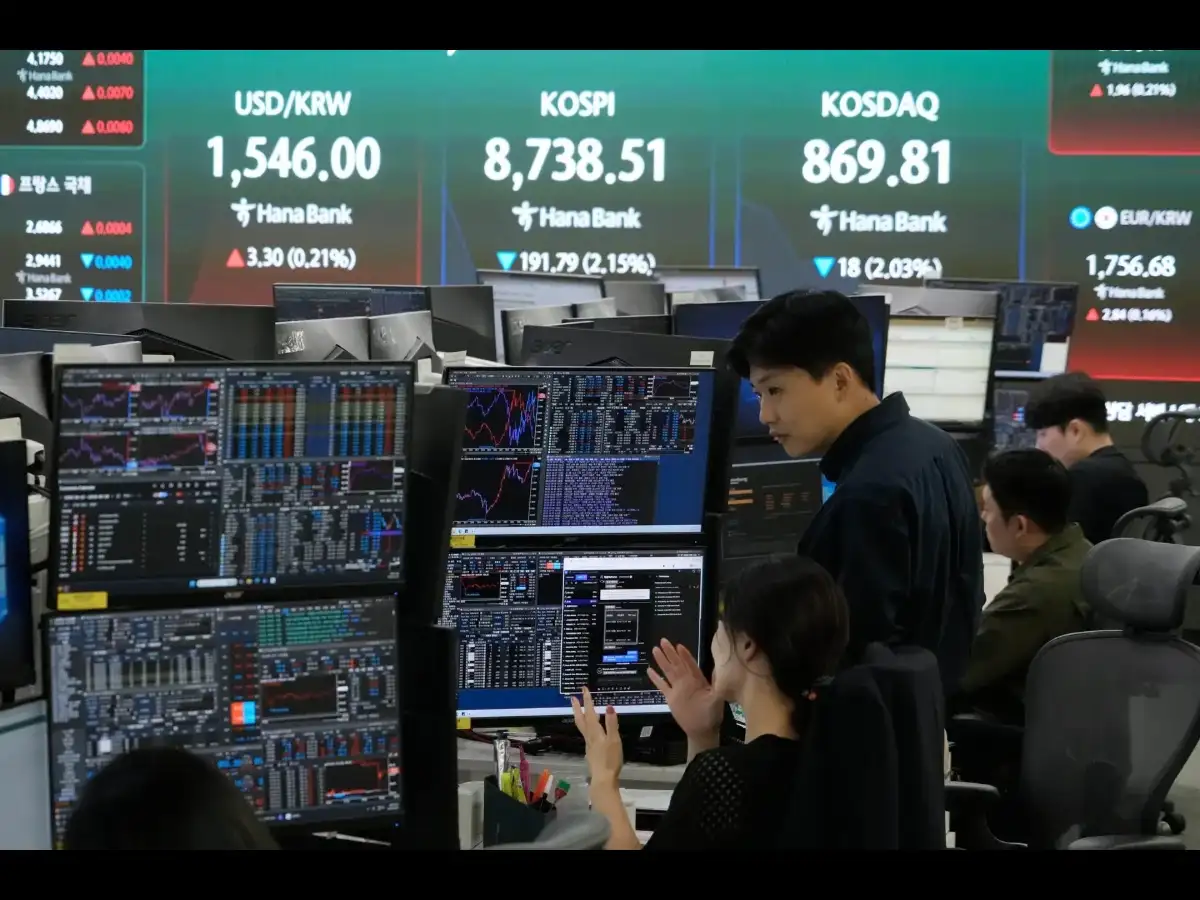
Asian markets were mixed as the yen strengthened sharply and oil prices rose for a third straight session amid escalating Iranian threats in the Persian Gulf. Japan reported stronger-than-expected economic growth and higher real wages, while Australian shares fell as consumer sentiment deteriorated.
9:48 PMEconomic Times
European shares ended largely flat as surging crude prices and renewed US-Iran tensions revived inflation concerns, offsetting stronger euro zone economic data. Energy stocks rose, while Novartis fell after a key cholesterol-drug trial failed, and investors increased bets on further ECB rate hikes.
12:41 PMEconomic Times
Oil prices are approaching $100 a barrel as attacks on shipping disrupt trade and inventories continue to fall. Traders warn that the market may be nearing a point where demand, supply, or prices must adjust sharply.
11:51 AMFinancial Times
Asia-Pacific markets opened broadly higher despite renewed hostilities in the Middle East, extending gains from the previous session.
11:45 AMCNBCMarkets face a more volatile period after a bond selloff and sharp currency moves disrupted the recent calm. Investors are also contending with possible rate hikes, widening fiscal deficits and the war in the Middle East.
9:56 PMBloomberg MarketsThe recent rise in medium- and long-term bond yields has prompted some investors and strategists to identify potential buying opportunities. Their view is that the selloff may have pushed yields high enough to attract demand.
6:38 AMCNBC
Annual interest payments on U.S. federal debt have climbed to about $1.25 trillion, the highest level in roughly 35 years. The increase comes as total national debt approaches $40 trillion.
3:00 AMFortune
Bond yields are rising as persistent economic and fiscal forces push prices lower, returning fixed income closer to historically normal behavior. Those forces are unlikely to disappear, even as markets move back toward more typical conditions.
12:00 AMFinancial Times
Rapid growth in US government debt is pushing long-term interest rates higher and creating a risk that yields could decisively exceed 5%. Such a move could damage investment and derail the AI boom.
12:00 AMFinancial TimesA strong August jobs report has increased expectations for a Federal Reserve rate hike, according to UBS. The bank sees trading opportunities across asset classes as markets adjust to a higher-rate outlook.
8:00 AMCNBC
Wall Street is increasingly pricing in a possible Federal Reserve rate hike, while President Trump is intensifying public pressure on the central bank over high borrowing costs. Trump said he would not allow elevated rates to put the United States at an unfair disadvantage.
7:17 AMFortuneDemand at Japan’s five-year government bond auction was slightly weaker as investors turned cautious before this month’s Bank of Japan meeting. The result points to greater uncertainty around the path for Japanese monetary policy.
11:41 PMBloomberg Markets
The yen reached a new seven-month high against the dollar as traders closed short positions amid expectations for higher Bank of Japan rates. The dollar remained subdued ahead of US inflation data and the next Federal Reserve meeting.
9:58 PMEconomic TimesThe yen strengthened past 155 per dollar, triggering stop-loss buying and bringing its strongest level of the year into view. Traders are now watching the 152 area as the next major target.
8:20 PMBloomberg Markets
The yen rose sharply to ¥154.04 per dollar, reaching a six-month high during London trading. The move has put markets on alert for possible Japanese intervention.
7:45 AMFinancial TimesChina injected $54 billion into banks and insurers to strengthen their capital cushions. Their shares still declined, suggesting investors saw the measure as balance-sheet support rather than a near-term earnings catalyst.
7:23 PMCNBCA Group of 20 finance meeting in the United States has intensified debate over whether China’s export strength has displaced workers and jobs in other countries. The discussion links weak Chinese domestic consumption to broader trade tensions.
7:00 PMCNBC
A second China shock is emerging, but it differs sharply from the wave of Chinese exports that transformed the global economy in the 2000s. The new pressure reflects China’s industrial overcapacity, weaker domestic demand and intensifying strategic rivalry with the West.
9:00 AMFinancial Times
Copper prices reached a record $14,533 a metric ton on the London Metal Exchange as concerns about shortages outside the United States drove buying. Falling inventories in Shanghai and a weaker dollar reinforced the rally, even as US stockpiles remained strong.
12:24 PMEconomic TimesWheat prices posted their biggest gain in more than a week as signs emerged that Russia remains committed to its war in Ukraine. Traders are reassessing the risk of prolonged disruption to grain shipments from the Black Sea.
10:29 PMBloomberg MarketsSummary
Oil prices rose to near seven-week highs before giving back some gains as Iran planned to increase its control over the Strait of Hormuz. West Texas Intermediate and Brent remained supported after the earlier move higher.
The decisive risk is the potential disruption of the world’s most important oil transit route.
Unlock the full First Pass Analysis to get a better understanding of why this story mattersWhy it matters
A sustained threat to Hormuz would raise energy costs and revive inflation risks across major economies.
Summary
Asian markets were mixed as the yen strengthened sharply and oil prices rose for a third straight session amid escalating Iranian threats in the Persian Gulf. Japan reported stronger-than-expected economic growth and higher real wages, while Australian shares fell as consumer sentiment deteriorated.
The market is repricing geopolitical risk through higher oil prices and a stronger yen, a
Unlock the full First Pass Analysis to get a better understanding of why this story mattersWhy it matters
A widening geopolitical risk premium could lift energy costs while exposing weaker Asian economies to renewed pressure.
Summary
European shares ended largely flat as surging crude prices and renewed US-Iran tensions revived inflation concerns, offsetting stronger euro zone economic data. Energy stocks rose, while Novartis fell after a key cholesterol-drug trial failed, and investors increased bets on further ECB rate hikes.
Higher oil prices have shifted attention from improving growth data to the risk of renewed
Unlock the full First Pass Analysis to get a better understanding of why this story mattersWhy it matters
A prolonged oil shock could delay rate cuts and weaken the outlook for European equities.
Summary
Oil prices are approaching $100 a barrel as attacks on shipping disrupt trade and inventories continue to fall. Traders warn that the market may be nearing a point where demand, supply, or prices must adjust sharply.
The immediate shift is from a tight market to a potential supply crisis, with shipping
Unlock the full First Pass Analysis to get a better understanding of why this story mattersWhy it matters
A sustained shipping disruption could turn a price rally into a broader inflation shock.
Summary
Asia-Pacific markets opened broadly higher despite renewed hostilities in the Middle East, extending gains from the previous session.
The initial market response suggests investors are treating the conflict as contained rather than immediately
Unlock the full First Pass Analysis to get a better understanding of why this story mattersWhy it matters
Equity resilience is conditional on the conflict staying geographically and economically contained.
Summary
Markets face a more volatile period after a bond selloff and sharp currency moves disrupted the recent calm. Investors are also contending with possible rate hikes, widening fiscal deficits and the war in the Middle East.
The central risk is that higher borrowing costs, fiscal concerns and geopolitical stress begin reinforcing
Unlock the full First Pass Analysis to get a better understanding of why this story mattersWhy it matters
A synchronized rise in yields and volatility would raise funding costs across economies and increase the odds of broader market dislocations.
Summary
The recent rise in medium- and long-term bond yields has prompted some investors and strategists to identify potential buying opportunities. Their view is that the selloff may have pushed yields high enough to attract demand.
Buying interest would indicate that investors see the yield surge as an overshoot rather than
Unlock the full First Pass Analysis to get a better understanding of why this story mattersWhy it matters
The response to elevated yields will show whether the bond selloff is nearing exhaustion or entering a new phase.
Summary
Annual interest payments on U.S. federal debt have climbed to about $1.25 trillion, the highest level in roughly 35 years. The increase comes as total national debt approaches $40 trillion.
The core shift is that debt service now consumes a much larger share of federal
Unlock the full First Pass Analysis to get a better understanding of why this story mattersWhy it matters
Rising interest costs can push Treasury yields higher, crowd out public priorities and increase pressure for tax increases or spending cuts.
Summary
Bond yields are rising as persistent economic and fiscal forces push prices lower, returning fixed income closer to historically normal behavior. Those forces are unlikely to disappear, even as markets move back toward more typical conditions.
The regime has shifted from bonds reliably cushioning portfolios to bonds carrying meaningful duration risk
Unlock the full First Pass Analysis to get a better understanding of why this story mattersWhy it matters
The return of bond volatility changes how investors build balanced portfolios and price risk across markets.
Summary
Rapid growth in US government debt is pushing long-term interest rates higher and creating a risk that yields could decisively exceed 5%. Such a move could damage investment and derail the AI boom.
The key change is that fiscal expansion is beginning to compete directly with private investment
Unlock the full First Pass Analysis to get a better understanding of why this story mattersWhy it matters
US borrowing costs could become a direct constraint on the market's most important growth theme.
Summary
A strong August jobs report has increased expectations for a Federal Reserve rate hike, according to UBS. The bank sees trading opportunities across asset classes as markets adjust to a higher-rate outlook.
The key shift is from debating whether growth can hold up to pricing a more
Unlock the full First Pass Analysis to get a better understanding of why this story mattersWhy it matters
A stronger labor market is forcing investors to reassess positions built for lower rates.
Summary
Wall Street is increasingly pricing in a possible Federal Reserve rate hike, while President Trump is intensifying public pressure on the central bank over high borrowing costs. Trump said he would not allow elevated rates to put the United States at an unfair disadvantage.
The central shift is a widening conflict between market expectations and the White House’s demand
Unlock the full First Pass Analysis to get a better understanding of why this story mattersWhy it matters
A rate hike amid White House pressure could raise borrowing costs while turning the Fed’s independence into a central political dispute.
Summary
Demand at Japan’s five-year government bond auction was slightly weaker as investors turned cautious before this month’s Bank of Japan meeting. The result points to greater uncertainty around the path for Japanese monetary policy.
The muted auction suggests buyers want more compensation before committing ahead of the BOJ decision.
Unlock the full First Pass Analysis to get a better understanding of why this story mattersWhy it matters
BOJ uncertainty is beginning to show up in government-debt demand before the policy decision.
Summary
The yen reached a new seven-month high against the dollar as traders closed short positions amid expectations for higher Bank of Japan rates. The dollar remained subdued ahead of US inflation data and the next Federal Reserve meeting.
The yen's advance combines domestic policy expectations with broad dollar weakness, creating room for further
Unlock the full First Pass Analysis to get a better understanding of why this story mattersWhy it matters
The yen is becoming a key cross-market signal for both Japanese policy normalization and shifting US rate expectations.
Summary
The yen strengthened past 155 per dollar, triggering stop-loss buying and bringing its strongest level of the year into view. Traders are now watching the 152 area as the next major target.
The break above 155 has shifted momentum decisively toward the yen by forcing bearish positions
Unlock the full First Pass Analysis to get a better understanding of why this story mattersWhy it matters
A stronger yen can reshape global carry trades, export earnings and expectations for Bank of Japan policy.
Summary
The yen rose sharply to ¥154.04 per dollar, reaching a six-month high during London trading. The move has put markets on alert for possible Japanese intervention.
The yen's rapid appreciation increases pressure on Japanese authorities to manage volatility, even as a
Unlock the full First Pass Analysis to get a better understanding of why this story mattersWhy it matters
A stronger yen can reshape expectations for Japanese policy while tightening financial conditions for exporters.
Summary
China injected $54 billion into banks and insurers to strengthen their capital cushions. Their shares still declined, suggesting investors saw the measure as balance-sheet support rather than a near-term earnings catalyst.
The immediate market test failed: more capital did not produce a rally in financial stocks.
Unlock the full First Pass Analysis to get a better understanding of why this story mattersWhy it matters
The package supports financial stability, but it does not yet convince investors that China’s financial sector can deliver stronger growth.
2 stories · 2 sources
Summary
A Group of 20 finance meeting in the United States has intensified debate over whether China’s export strength has displaced workers and jobs in other countries. The discussion links weak Chinese domestic consumption to broader trade tensions.
China’s soft consumer economy is pushing policymakers to rely more heavily on exports for growth,
Unlock the full First Pass Analysis to get a better understanding of why this story mattersWhy it matters
China’s domestic weakness is becoming a source of international trade friction rather than a purely domestic problem.
Summary
A second China shock is emerging, but it differs sharply from the wave of Chinese exports that transformed the global economy in the 2000s. The new pressure reflects China’s industrial overcapacity, weaker domestic demand and intensifying strategic rivalry with the West.
The economic relationship has shifted from mutual integration to managed confrontation. Governments now face Chinese
Unlock the full First Pass Analysis to get a better understanding of why this story mattersWhy it matters
A new China shock could fragment trade while making economic interdependence more politically dangerous.
Summary
Copper prices reached a record $14,533 a metric ton on the London Metal Exchange as concerns about shortages outside the United States drove buying. Falling inventories in Shanghai and a weaker dollar reinforced the rally, even as US stockpiles remained strong.
The market is splitting into regions: supply looks ample in the United States but increasingly
Unlock the full First Pass Analysis to get a better understanding of why this story mattersWhy it matters
Copper’s record signals that regional supply constraints are becoming a larger force in global industrial pricing.
Summary
Wheat prices posted their biggest gain in more than a week as signs emerged that Russia remains committed to its war in Ukraine. Traders are reassessing the risk of prolonged disruption to grain shipments from the Black Sea.
The market is pricing a lower chance of a diplomatic breakthrough and a higher risk
Unlock the full First Pass Analysis to get a better understanding of why this story mattersWhy it matters
A longer war keeps a major source of global grain supply exposed to geopolitical shocks.
A curated list of other prominent stories from this day.
Wistron shares fell after the Taiwanese electronics manufacturer announced plans to raise $1.5 billion through a global share sale. The offering would provide capital for expansion but increase the supply of shares in the market.
11:54 PMCNBCJapan’s health minister Kenichiro Ueno said the Government Pension Investment Fund is still assessing whether it needs to review its asset allocation. No change in the fund’s investment framework has been announced.
11:20 PMBloomberg Markets
Gold prices edged higher as the US dollar weakened ahead of key inflation data that could influence Federal Reserve policy. Silver, platinum and palladium also gained, although expectations of higher interest rates remain a potential drag on precious metals.
10:05 PMEconomic TimesExpectations for a Samsung Electronics share buyback have focused investor attention on the company's non-voting preferred shares, which trade at a steep discount. A purchase of those shares could narrow the gap and encourage similar action by other Korean companies.
8:19 PMBloomberg Markets
The cost of preparing a pot of soup in Nigeria has roughly doubled, with 5,000 naira no longer covering ingredients that now cost more than 10,000 naira. Rising food prices are forcing households to reassess basic meals.
12:53 PMAl Jazeera
Currency-market moves may offer clues about money flowing into or out of chip stocks. The signals suggest investors should watch foreign-exchange trends for evidence of continued pressure on the sector.
7:07 AMMarketWatch
The dollar’s share of global foreign-exchange reserves has fallen, but a New York Fed study finds that the decline is concentrated among a small number of countries. Much of the shift reflects country-specific reserve decisions rather than a widespread move away from the dollar.
10:56 AMEconomic Times
U.S. stock markets and postal services will operate on modified schedules for the Labor Day holiday on Monday, Sept. 7.
7:16 AMMarketWatchSummary
Wistron shares fell after the Taiwanese electronics manufacturer announced plans to raise $1.5 billion through a global share sale. The offering would provide capital for expansion but increase the supply of shares in the market.
The immediate selloff reflects dilution concerns and uncertainty over how quickly new investment will generate
Unlock the full First Pass Analysis to get a better understanding of why this story mattersWhy it matters
The financing shows both the scale of AI-related expansion and the equity cost suppliers may impose on shareholders.
Summary
Japan’s health minister Kenichiro Ueno said the Government Pension Investment Fund is still assessing whether it needs to review its asset allocation. No change in the fund’s investment framework has been announced.
The immediate shift is continued policy uncertainty, not a reallocation. Any review could affect demand
Unlock the full First Pass Analysis to get a better understanding of why this story mattersWhy it matters
The world’s largest pension fund remains a potential source of major cross-border portfolio flows.
Summary
Gold prices edged higher as the US dollar weakened ahead of key inflation data that could influence Federal Reserve policy. Silver, platinum and palladium also gained, although expectations of higher interest rates remain a potential drag on precious metals.
The softer dollar is supporting gold, but the inflation report will determine whether that move
Unlock the full First Pass Analysis to get a better understanding of why this story mattersWhy it matters
The inflation release is the next major test of gold's ability to withstand renewed pressure from interest rates.
Summary
Expectations for a Samsung Electronics share buyback have focused investor attention on the company's non-voting preferred shares, which trade at a steep discount. A purchase of those shares could narrow the gap and encourage similar action by other Korean companies.
Samsung's capital-allocation decision could turn an unusually wide valuation gap into a corporate-governance test for
Unlock the full First Pass Analysis to get a better understanding of why this story mattersWhy it matters
A successful buyback could accelerate efforts to reduce Korea's persistent valuation discount.
Summary
The cost of preparing a pot of soup in Nigeria has roughly doubled, with 5,000 naira no longer covering ingredients that now cost more than 10,000 naira. Rising food prices are forcing households to reassess basic meals.
The decisive change is the collapse in purchasing power for everyday food, not merely higher
Unlock the full First Pass Analysis to get a better understanding of why this story mattersWhy it matters
Food inflation is converting routine household consumption into a test of financial resilience.
Summary
Currency-market moves may offer clues about money flowing into or out of chip stocks. The signals suggest investors should watch foreign-exchange trends for evidence of continued pressure on the sector.
The key shift is that chip-stock risk may be visible in currency flows before it
Unlock the full First Pass Analysis to get a better understanding of why this story mattersWhy it matters
Currency markets may provide an early warning of whether the chip-stock selloff has further to run.
Summary
The dollar’s share of global foreign-exchange reserves has fallen, but a New York Fed study finds that the decline is concentrated among a small number of countries. Much of the shift reflects country-specific reserve decisions rather than a widespread move away from the dollar.
The decisive finding is that headline reserve data overstate the breadth of the dollar’s retreat.
Unlock the full First Pass Analysis to get a better understanding of why this story mattersWhy it matters
The dollar’s global position may be less vulnerable than aggregate reserve-share figures imply.
Summary
U.S. stock markets and postal services will operate on modified schedules for the Labor Day holiday on Monday, Sept. 7.
Equity trading will be interrupted while investors and businesses adjust settlement, payment, and delivery timelines
Unlock the full First Pass Analysis to get a better understanding of why this story mattersWhy it matters
Holiday closures affect liquidity and the timing of trades, settlements, and deliveries.
Make it yours
Pick your topics, set your cadence, and receive your personalized First Pass in your inbox. It’s that simple!
