Oil escalation and Japan’s rate repricing dominate markets
Day’s Recap
“
”
Supporting Articles
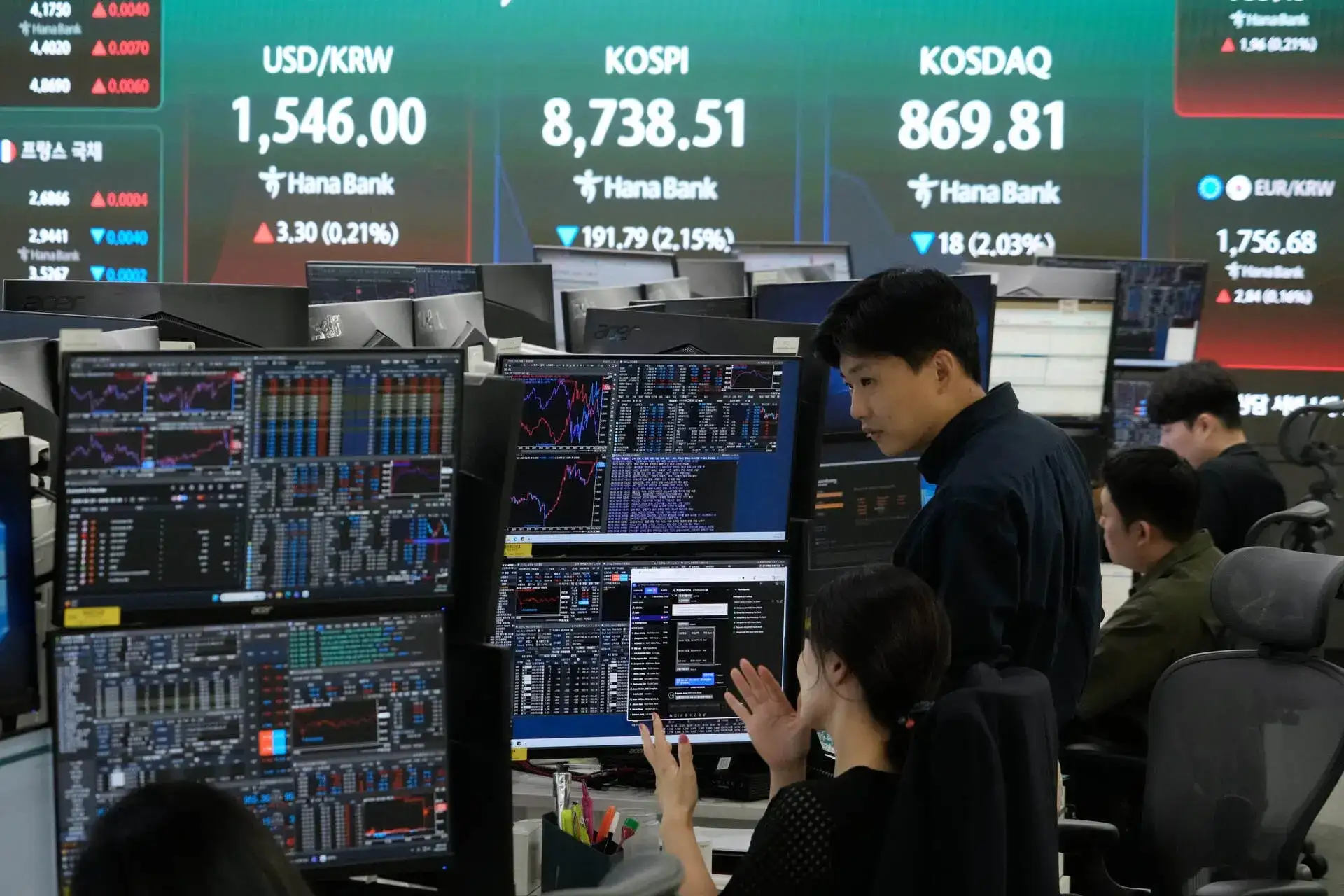
Brent crude rose above $91 in Asian trading after the U.S. and Iran exchanged strikes, including attacks around the Strait of Hormuz and in the region. Asian bonds fell as higher oil prices and geopolitical risk pushed yields higher.
9:00 PMEconomic Times
Brent crude rose more than 3% after U.S. forces struck Iranian rocket launchers near the Strait of Hormuz, a critical corridor for global oil shipments. The move follows a period in which U.S. gasoline prices briefly exceeded $4 per gallon on a daily basis in August.
12:38 PMFortune
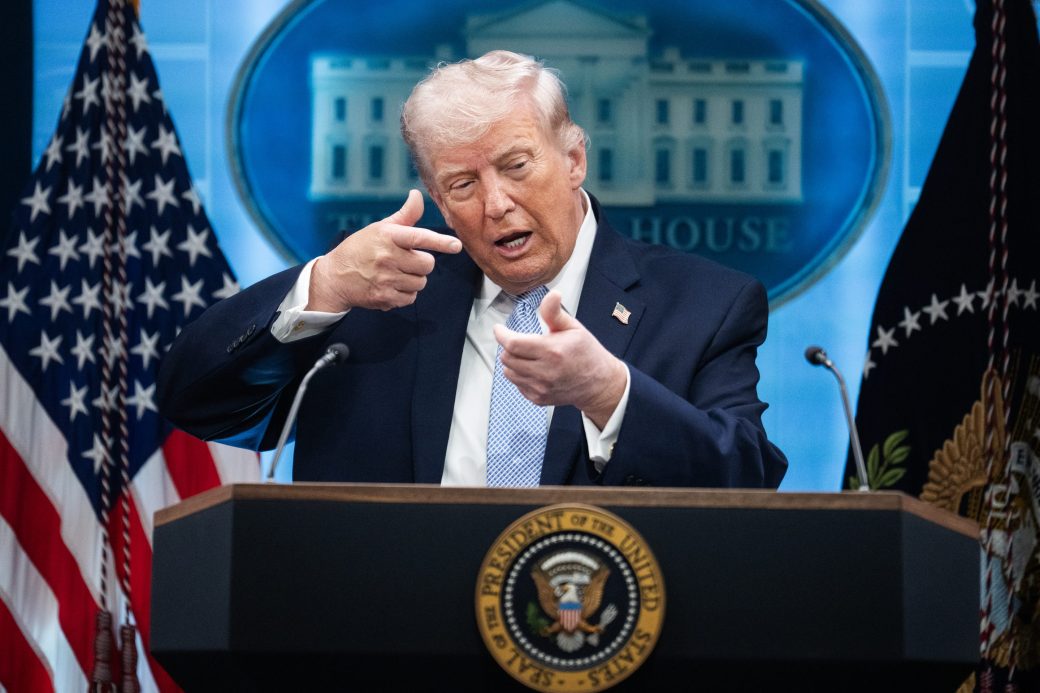
President Trump threatened to destroy Iran's Kharg Island as the United States and Iran exchanged new strikes in the Gulf. The escalation has pushed oil prices higher by increasing fears over Iranian exports and regional shipping.
6:41 AMFortune
Japan's 10-year government bond yield reached 3% for the first time since 1996, marking a sharp break from the near-zero borrowing costs that defined the market for decades.
11:41 PMBloomberg Markets
Japan's 10-year government bond auction drew sufficient demand after yields reached 3%, a level last seen decades ago. Investors are positioning for a possible Bank of Japan rate increase.
11:39 PMBloomberg Markets
The yen remained near 160 per dollar as markets weighed expectations for a Bank of Japan rate hike, pressure from US officials, Middle East conflict and rising oil prices.
9:54 PMEconomic Times
The yen weakened past ¥160 against the dollar while Japanese government bond yields climbed to their highest level in three decades after Kevin Warsh's Jackson Hole remarks. Investors increased their expectations for tighter monetary policy.
3:32 AMFinancial Times
South Korea plans to issue 222.8 trillion won, or about $162.7 billion, in bonds in 2027 to finance President Lee Jae Myung's expansionary fiscal agenda.
11:06 PMBloomberg Markets
Shein shares fell as much as 10% to HK$43.72 in early trading after the fast-fashion company debuted in Hong Kong, before recovering some of the loss.
11:56 PMBloomberg Markets
Chinese companies raised $54 billion through initial public offerings this year, giving Hong Kong and Shanghai 21% of global new-share proceeds. AI firms and chipmakers are increasingly choosing domestic listings over Wall Street, alongside Shein’s $1.7 billion offering.
10:12 AMFortune
Financial Stability Board chair Andrew Bailey is urging regulators to prioritize the safe release of advanced AI models. He warned that autonomous systems could exploit cyber vulnerabilities and spread disruptions across the international financial system.
11:24 AMPYMNTS
Wheat prices are rising as Russia and Ukraine intensify attacks on grain terminals in the Black Sea, while extreme heat adds pressure to production and export flows.
10:42 AMAl Jazeera
A federal judge rejected the former parent company of Silicon Valley Bank's $1.71 billion claim against the FDIC. The ruling favors the regulator in litigation arising from SVB's collapse.
3:01 PMPYMNTS
9:00 PMEconomic Times
Global Market Today: Asian bonds fall as geopolitical risks lift oil, yields
Summary
Brent crude rose above $91 in Asian trading after the U.S. and Iran exchanged strikes, including attacks around the Strait of Hormuz and in the region. Asian bonds fell as higher oil prices and geopolitical risk pushed yields higher.
Markets are repricing the conflict as a broader inflation risk rather than a contained security
Unlock the full First Pass Analysis to get a better understanding of why this story matters
Why it matters
The escalation is transmitting from a regional conflict into global borrowing costs and financial conditions.
Gas topped $4 daily in August for the first time. New U.S. strikes on Iran are sending oil prices even higher again
Summary
Brent crude rose more than 3% after U.S. forces struck Iranian rocket launchers near the Strait of Hormuz, a critical corridor for global oil shipments. The move follows a period in which U.S. gasoline prices briefly exceeded $4 per gallon on a daily basis in August.
The strikes have added a geopolitical risk premium to an already volatile oil market by
Unlock the full First Pass Analysis to get a better understanding of why this story matters
Why it matters
A sustained threat to Hormuz could turn a military escalation into a global fuel-price shock.
Trump threatens to blow Kharg Island ‘to smithereens’ as U.S. and Iran trade fresh strikes in the Gulf, driving up the price of oil
Summary
President Trump threatened to destroy Iran's Kharg Island as the United States and Iran exchanged new strikes in the Gulf. The escalation has pushed oil prices higher by increasing fears over Iranian exports and regional shipping.
The threat targets a core point in Iran's oil infrastructure and raises the stakes from
Unlock the full First Pass Analysis to get a better understanding of why this story matters
Why it matters
Kharg Island sits at the intersection of military escalation and global energy supply, making it a direct risk to oil prices and shipping.
Japan’s 10-Year Bond Yield Hits 3% for First Time Since 1996
Summary
Japan's 10-year government bond yield reached 3% for the first time since 1996, marking a sharp break from the near-zero borrowing costs that defined the market for decades.
The move confirms that Japan's bond market is undergoing a durable repricing rather than a
Unlock the full First Pass Analysis to get a better understanding of why this story matters
Why it matters
A sustained return of Japanese yields could redirect global capital flows and tighten financial conditions well beyond Japan.
Japan 10-Year Bond Sale Passes Smoothly After Yield Hits 3%
Summary
Japan's 10-year government bond auction drew sufficient demand after yields reached 3%, a level last seen decades ago. Investors are positioning for a possible Bank of Japan rate increase.
The smooth sale suggests that the jump in yields has not yet triggered a broader
Unlock the full First Pass Analysis to get a better understanding of why this story matters
Why it matters
Japan is moving into a higher-rate regime that could reshape capital flows and global bond pricing.
Yen hangs near 160 amid BOJ rate-hike bets, dollar wobbles
Summary
The yen remained near 160 per dollar as markets weighed expectations for a Bank of Japan rate hike, pressure from US officials, Middle East conflict and rising oil prices.
The yen's weakness is keeping intervention and policy risk in focus, while calls for the
Unlock the full First Pass Analysis to get a better understanding of why this story matters
Why it matters
A yen near 160 raises the stakes for BOJ action and potential official intervention in currency markets.
Japan’s bonds and yen under pressure after Warsh’s Jackson Hole speech
Summary
The yen weakened past ¥160 against the dollar while Japanese government bond yields climbed to their highest level in three decades after Kevin Warsh's Jackson Hole remarks. Investors increased their expectations for tighter monetary policy.
The market is repricing Japan's policy and rate outlook at the same time that the
Unlock the full First Pass Analysis to get a better understanding of why this story matters
Why it matters
Japan's currency and bond moves are becoming a global rate signal, not just a domestic market story.
Korea Plans Near-Record Bond Issuance to Fund 2027 Spending
Summary
South Korea plans to issue 222.8 trillion won, or about $162.7 billion, in bonds in 2027 to finance President Lee Jae Myung's expansionary fiscal agenda.
The planned issuance will add substantial sovereign supply to an already crowded global bond market.
Unlock the full First Pass Analysis to get a better understanding of why this story matters
Why it matters
South Korea's fiscal expansion will test investor demand for local debt and add another source of upward pressure on regional yields.
China’s AI-fueled IPO boom hits $54 billion this year, with chipmakers and Shein’s $1.7 billion IPO
Summary
Chinese companies raised $54 billion through initial public offerings this year, giving Hong Kong and Shanghai 21% of global new-share proceeds. AI firms and chipmakers are increasingly choosing domestic listings over Wall Street, alongside Shein’s $1.7 billion offering.
China’s capital markets are becoming a preferred funding channel for AI companies that face geopolitical
Unlock the full First Pass Analysis to get a better understanding of why this story matters
Why it matters
China is pairing state-backed technology ambitions with a deeper domestic funding pipeline.
FSB Warns Frontier AI Could Threaten Global Financial Stability
Summary
Financial Stability Board chair Andrew Bailey is urging regulators to prioritize the safe release of advanced AI models. He warned that autonomous systems could exploit cyber vulnerabilities and spread disruptions across the international financial system.
The risk discussion is moving from isolated model failures to systemic contagion across banks, markets
Unlock the full First Pass Analysis to get a better understanding of why this story matters
Why it matters
Frontier AI is becoming a financial-stability concern because a single failure could propagate across interconnected institutions and markets.
BofE governor warns that frontier AI models pose risk to global financial stability
Summary
Bank of England Governor Andrew Bailey warned that frontier AI models could create cybersecurity threats with consequences for global financial stability. The concern centers on how advanced systems might amplify attacks against financial institutions and infrastructure.
The warning broadens AI oversight from model safety to systemic financial resilience. Regulators may push
Unlock the full First Pass Analysis to get a better understanding of why this story matters
Why it matters
Frontier AI is increasingly being treated as a potential source of systemic risk, not only a technology-sector issue.
Wheat prices are rising as Russia and Ukraine intensify attacks on grain terminals in the Black Sea, while extreme heat adds pressure to production and export flows.
The market is pricing a tighter and less reliable supply chain from both damaged infrastructure
Unlock the full First Pass Analysis to get a better understanding of why this story matters
Why it matters
A concentrated shock to a major grain corridor can quickly become a global food and inflation problem.
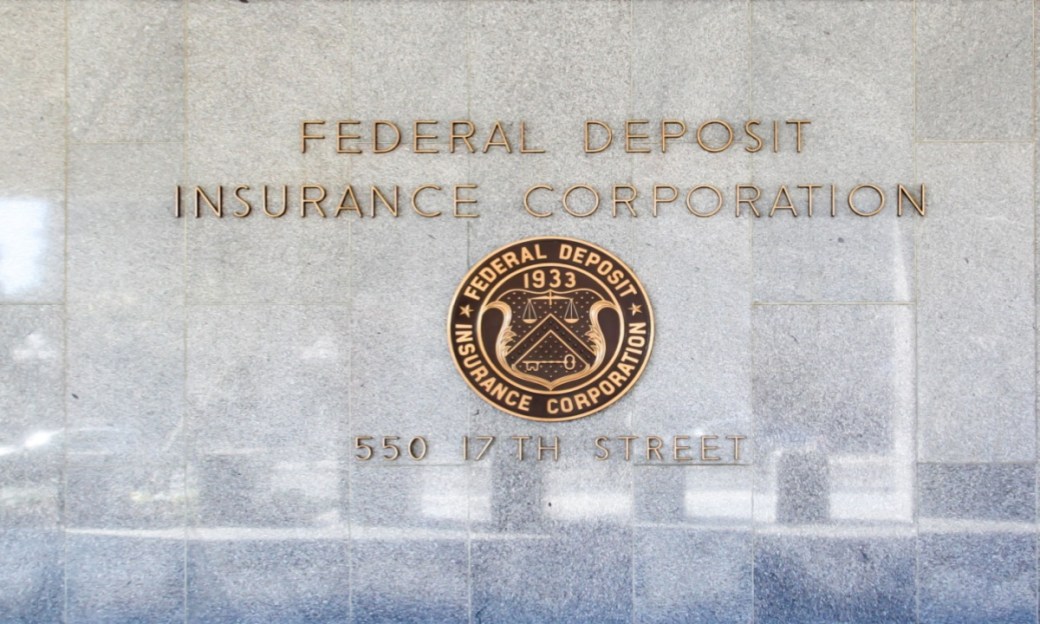
FDIC Prevails in $1.71 Billion Court Case Involving SVB Collapse
Summary
A federal judge rejected the former parent company of Silicon Valley Bank's $1.71 billion claim against the FDIC. The ruling favors the regulator in litigation arising from SVB's collapse.
The ruling limits the failed bank parent's ability to recover funds from the FDIC and
Unlock the full First Pass Analysis to get a better understanding of why this story matters
Why it matters
The decision protects the FDIC from a major claim and strengthens the legal framework used to resolve the SVB failure.
A curated list of other prominent stories from this day.
The episode explains the core differences between futures and options, two major types of financial derivatives.
10:30 PMEconomic Times
Gold prices held steady as traders assessed renewed Middle East tensions and awaited US labor data that could influence expectations for Federal Reserve policy.
9:57 PMEconomic Times
Janus Henderson says a divergence in the options market is creating an opportunity to generate more income from individual stocks.
9:35 PMCNBC
Smaller futures contracts, exchange-traded funds, and online brokerages are lowering the barriers that have traditionally kept individual investors out of oil markets.
8:49 PMCNBC
Stocks that had been hurt by bearish narratives rebounded in August, making the month a strong one for previously underperforming companies.
7:23 PMCNBC
A contrarian assessment argues that many U.S. and European companies have lost the advantages they once held in China as the market becomes more competitive and less favorable to foreign firms.
7:00 PMCNBC
September is typically a weak month for the S&P 500, but a key trading level suggests the index may avoid a sharp decline this year. The market's technical positioning is providing a counterweight to the seasonal pattern.
5:36 PMMarketWatch
The rise of low-cost S&P 500 index funds transformed investing, but the spread of indexing has raised questions about market concentration and whether investors should use a different entry strategy.
9:35 AMMarketWatch
Energy and technology stocks led August's gains, while Moderna posted the strongest performance by a wide margin as software shares continued to recover.
5:16 PMMarketWatch
Mortgage rates have already reached their highest levels of the year, leaving their ability to remain below 7% dependent on three important developments this week.
5:14 PMHousing Wire
U.S. government bonds, once viewed as a relatively stable investment, are drawing increased concern as Kevin Warsh's leadership of the Federal Reserve raises questions about the future path of monetary policy and interest rates.
4:55 PMMarketWatch
G20 finance officials are meeting in the United States as the war involving Iran drives a global economic shock. The discussions are expected to focus on surging oil prices and their effects on growth, inflation and financial markets.
5:55 AMThe New York Times
The concentration of roughly $90 trillion in wealth among older generations is reshaping consumption, with spending increasingly supported by accumulated retirement assets rather than current labor income.
12:24 PMFortune
The article compares governments’ fiscal weaknesses through three borrower archetypes: a debt-fueled entrepreneur, an older but credible business owner and an indebted aristocrat. It frames sovereign lending as a choice among different combinations of growth, reputation and debt burdens.
10:17 AMFinancial Times
The conflict has hurt airlines and automakers while boosting profits for banks and energy companies. Its economic effects are being distributed unevenly across sectors as risks to fuel supplies, trade, and financial markets rise.
8:01 AMAl Jazeera
A genuinely multipolar currency system will depend on whether governments adopt new financial technology and strengthen their domestic markets. Innovation alone is unlikely to displace the dollar without deeper institutional and policy support.
12:00 AMFinancial Times
10:30 PMEconomic Times
Derivatives Decoded | Episode 1: Futures vs Options Explained
Summary
The episode explains the core differences between futures and options, two major types of financial derivatives.
Futures create an obligation to buy or sell an asset at an agreed price, while
Unlock the full First Pass Analysis to get a better understanding of why this story matters
Why it matters
Understanding the different obligations is essential before using derivatives to hedge or speculate.
Gold steadies as traders await US jobs data, monitor Mideast tensions
Summary
Gold prices held steady as traders assessed renewed Middle East tensions and awaited US labor data that could influence expectations for Federal Reserve policy.
The jobs report is the immediate catalyst because it could shift rate expectations and the
Unlock the full First Pass Analysis to get a better understanding of why this story matters
Why it matters
Gold is being pulled in opposite directions by safe-haven demand and changing interest-rate expectations.
The $3 trillion oil market has just gotten more accessible than ever: No longer a 'rich man's game'
Summary
Smaller futures contracts, exchange-traded funds, and online brokerages are lowering the barriers that have traditionally kept individual investors out of oil markets.
Retail participation is expanding access to a market once dominated by specialized institutions and large
Unlock the full First Pass Analysis to get a better understanding of why this story matters
Why it matters
Easier access could bring more household money into one of the world's most volatile markets.
CNBC's The China Connection newsletter: McKinsey's contrarian economic view
Summary
A contrarian assessment argues that many U.S. and European companies have lost the advantages they once held in China as the market becomes more competitive and less favorable to foreign firms.
The shift is structural rather than cyclical: local Chinese companies have narrowed the technology, cost,
Unlock the full First Pass Analysis to get a better understanding of why this story matters
Why it matters
China is becoming less of a growth engine for Western companies and more of a direct competitive threat.
The S&P 500 usually falls in September. Why this year should be different.
Summary
September is typically a weak month for the S&P 500, but a key trading level suggests the index may avoid a sharp decline this year. The market's technical positioning is providing a counterweight to the seasonal pattern.
The important shift is that current market structure is limiting the force of a historically
Unlock the full First Pass Analysis to get a better understanding of why this story matters
Why it matters
The index's response to a key support level may matter more than September averages in determining whether seasonal weakness becomes a real correction.
Vanguard’s S&P 500 index fund changed how we invest — but there may be a smarter way to get a piece of the market
Summary
The rise of low-cost S&P 500 index funds transformed investing, but the spread of indexing has raised questions about market concentration and whether investors should use a different entry strategy.
As more capital tracks the same benchmark, the S&P 500 can become increasingly concentrated in
Unlock the full First Pass Analysis to get a better understanding of why this story matters
Why it matters
Indexing remains efficient, but its scale can amplify concentration and reduce the protection investors expect from diversification.
23 best-performing stocks of August, as the software industry continues its recovery
Summary
Energy and technology stocks led August's gains, while Moderna posted the strongest performance by a wide margin as software shares continued to recover.
The leadership points to a rotation back toward technology, particularly software names that had been
Unlock the full First Pass Analysis to get a better understanding of why this story matters
Why it matters
August's winners signal renewed appetite for beaten-down growth stocks, alongside continued strength in energy.
Mortgage rates have already reached their highest levels of the year, leaving their ability to remain below 7% dependent on three important developments this week.
Rates near 7% keep borrowing costs high enough to restrain home demand and limit refinancing
Unlock the full First Pass Analysis to get a better understanding of why this story matters
Why it matters
A sustained move above 7% would further weaken housing affordability and buyer demand.
With Warsh running the Fed, should bond investors be worried?
Summary
U.S. government bonds, once viewed as a relatively stable investment, are drawing increased concern as Kevin Warsh's leadership of the Federal Reserve raises questions about the future path of monetary policy and interest rates.
The key risk is policy uncertainty, especially if markets interpret a new Fed leadership team
Unlock the full First Pass Analysis to get a better understanding of why this story matters
Why it matters
A less predictable Fed could increase volatility across government debt, mortgages, currencies, and global risk assets.
Europe Protests as U.S. Invites Russian Minister to G20 Finance Meeting
Summary
G20 finance officials are meeting in the United States as the war involving Iran drives a global economic shock. The discussions are expected to focus on surging oil prices and their effects on growth, inflation and financial markets.
The war has moved from a regional security issue onto the G20’s economic agenda. Finance
Unlock the full First Pass Analysis to get a better understanding of why this story matters
Why it matters
The meeting tests whether major economies can coordinate a response before an energy shock becomes a broader financial shock.
We’re living in the ‘G-shaped economy’—where boomers control $90 trillion, and everyone else waits
Summary
The concentration of roughly $90 trillion in wealth among older generations is reshaping consumption, with spending increasingly supported by accumulated retirement assets rather than current labor income.
The result is a split economy in which asset-rich older households can sustain demand while
Unlock the full First Pass Analysis to get a better understanding of why this story matters
Why it matters
Wealth concentration is changing who drives demand and widening the gap between economic growth and household opportunity.
The article compares governments’ fiscal weaknesses through three borrower archetypes: a debt-fueled entrepreneur, an older but credible business owner and an indebted aristocrat. It frames sovereign lending as a choice among different combinations of growth, reputation and debt burdens.
Investors must distinguish between countries with high debt but credible institutions, those with stronger reputations
Unlock the full First Pass Analysis to get a better understanding of why this story matters
Why it matters
Sovereign risk depends as much on a government’s credibility and growth prospects as on the size of its debt.
Who are the economic winners and losers of the US-Israel war on Iran?
Summary
The conflict has hurt airlines and automakers while boosting profits for banks and energy companies. Its economic effects are being distributed unevenly across sectors as risks to fuel supplies, trade, and financial markets rise.
Higher oil prices and disrupted routes are transferring income from fuel-intensive businesses and consumers to
Unlock the full First Pass Analysis to get a better understanding of why this story matters
Why it matters
The war is becoming a sector-wide economic shock, with its duration determining whether gains for energy firms outweigh broader damage to growth.
A genuinely multipolar currency system will depend on whether governments adopt new financial technology and strengthen their domestic markets. Innovation alone is unlikely to displace the dollar without deeper institutional and policy support.
The dollar's advantage will be tested by infrastructure, not just by rival currencies. Governments seeking
Unlock the full First Pass Analysis to get a better understanding of why this story matters
Why it matters
The dollar's long-term dominance depends as much on market credibility and technology as on US economic power.