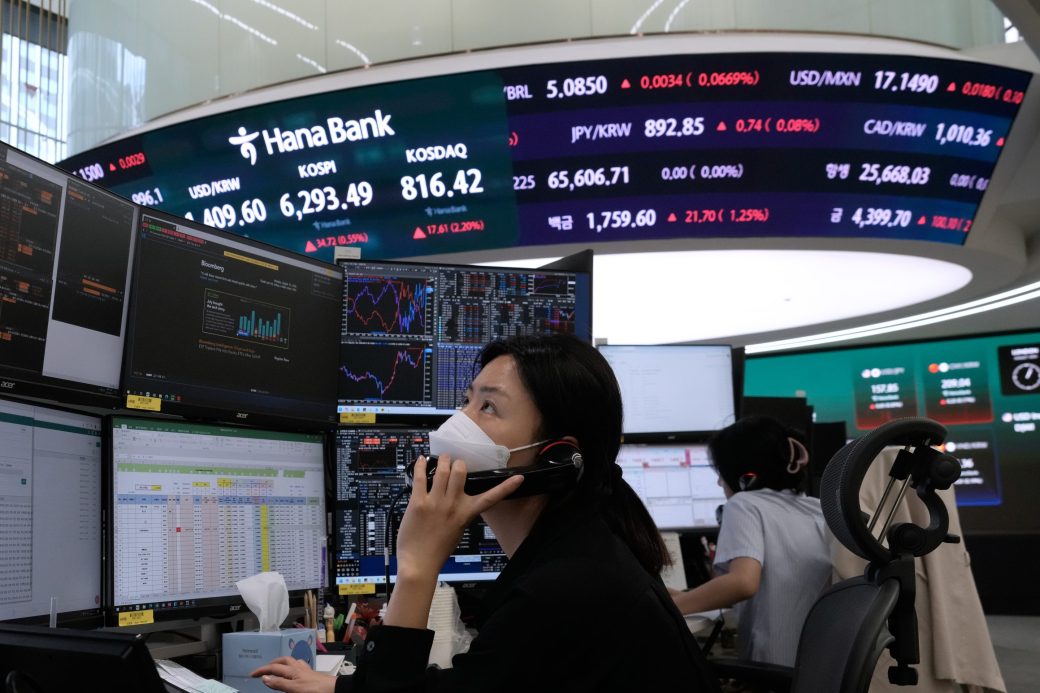
Asian stocks and futures edged lower while oil held recent gains as optimism over a deal affecting the Strait of Hormuz faded, reviving inflation concerns. Treasury yields rose, the yen weakened, and Australian bonds fell ahead of a policy decision.
9:08 PMEconomic Times
Uncertainty surrounding Iran pushed oil prices higher and dragged down major stock indexes on Monday. The report previews the developments expected to influence trading in the next session.
6:54 PMCNBC
U.S. Treasury prices declined and yields rose as investors prepared for consumer and producer inflation data. Middle East tensions and upcoming Treasury auctions added uncertainty, while traders modestly reduced expectations for further Federal Reserve rate hikes.
2:37 PMEconomic Times
Oil prices rose as European and Asian stocks traded unevenly, while analysts linked a decline in Big Tech shares to traders taking profits after recent gains.
8:50 AMFortune
Gold rose for a third consecutive session to a two-month high as traders awaited major U.S. inflation data and reassessed the outlook for interest rates after weaker employment signals.
10:03 PMEconomic Times
JPMorgan expects July's consumer price index report to produce potentially significant moves in stocks. The market's reaction will depend on how the data changes expectations for Federal Reserve policy.
4:00 PMCNBC
A softer U.S. labor market could support stocks if weaker hiring allows the Federal Reserve to cut rates while wage growth remains contained.
9:30 AMMarketWatch
The yen stabilized after a sharp decline, but traders remained doubtful that coordinated U.S. and Japanese intervention would produce a lasting recovery. The Australian dollar climbed to an eight-week high ahead of the Reserve Bank of Australia's policy decision.
10:11 PMEconomic Times
Attention is turning to the Bank of Japan after a weak jobs report, with markets assessing how the data should affect monetary policy.
1:30 AMFinancial Times
Hong Kong may extend a new tax regime to trading firms including Jane Street and Citadel Securities, broadening incentives that have already attracted interest from hedge funds.
11:18 PMBloomberg Markets
Investors are shifting money from cryptocurrency stocks into artificial intelligence companies, driving AI valuations higher while putting pressure on crypto-related equities. The move reflects a broader preference for AI's perceived commercial momentum over crypto's more speculative investment case.
4:04 PMPYMNTS
Apollo Chief Economist Torsten Slok argues that the AI boom is producing growth without a sustainable profit model. He says investors are effectively funding reported profits because customer revenue has not yet justified the industry's spending and valuations.
3:00 AMFortune
Singapore raised its 2026 growth forecast to 4.5% to 5.5%, more than doubling the lower end of its previous 2% to 4% range, as artificial intelligence-related activity strengthens the outlook.
10:58 PMCNBC
The article argues that returning inflation to the Federal Reserve's 2% target will not resolve the United States' debt burden. Sustained inflation may instead be needed to reduce the real value of government liabilities, even at the cost of weaker purchasing power.
10:21 AMMarketWatch
The Congressional Budget Office projects a $2.1 trillion federal deficit for 2026, while the administration's tariff regime faces a constitutional challenge that could undermine its expected contribution to deficit reduction.
3:13 PMFortune
President Trump said he recently spoke with Federal Reserve Chairman Warsh but denied maintaining regular contact with him. His comments came amid concerns that White House pressure could undermine the central bank's independence.
5:23 PMCNBC
9:08 PMEconomic Times
Global Market Today: Asian shares trade lower; oil holds gains
Summary
Asian stocks and futures edged lower while oil held recent gains as optimism over a deal affecting the Strait of Hormuz faded, reviving inflation concerns. Treasury yields rose, the yen weakened, and Australian bonds fell ahead of a policy decision.
The market is repricing the risk that prolonged energy disruption keeps inflation elevated, putting upward
Unlock the full First Pass Analysis to get a better understanding of why this story matters
Why it matters
Energy risk is again linking higher inflation expectations to weaker risk assets and tighter financial conditions across Asia.
S&P 500 closes little changed as oil rises on Iran uncertainty, Intel leads chips lower
Summary
U.S. stock futures edged lower after the three major indexes posted their strongest weekly gains since April. The S&P 500 also ended Friday at a record closing high as traders focused on developments around the Strait of Hormuz and upcoming inflation data.
The market's record run is meeting two immediate tests: whether the Hormuz dispute keeps energy
Unlock the full First Pass Analysis to get a better understanding of why this story matters
Why it matters
Markets are vulnerable to a sharp reversal because record equity prices now depend on both geopolitical de-escalation and benign inflation.
US Stocks: Nasdaq ends down as expectations of Hormuz deal fade
Summary
U.S. stocks fell as hopes for a resolution involving the Strait of Hormuz weakened and crude oil prices rose amid the Middle East crisis. Intel shares dropped after announcing a large stock sale, while easing expectations for Federal Reserve rate hikes added to market uncertainty.
Higher oil prices are reviving the risk of an inflation shock just as investors reassess
Unlock the full First Pass Analysis to get a better understanding of why this story matters
Why it matters
A prolonged Hormuz disruption could turn an equity pullback into a broader inflation and growth problem.
Oil prices, stocks surge as Hormuz closure drags on
Summary
Oil prices and stocks rose as the closure of the Strait of Hormuz continued, even though US gasoline prices fell nine cents last week. Analysts warn that petrol costs could rise again if the disruption persists.
Markets are absorbing the immediate shock without yet pricing a sustained fuel shortage, which explains
Unlock the full First Pass Analysis to get a better understanding of why this story matters
Why it matters
The longer Hormuz remains closed, the greater the chance an energy disruption becomes a broader inflation and growth shock.
Tuesday's big stock stories: What’s likely to move the market in the next trading session
Summary
Uncertainty surrounding Iran pushed oil prices higher and dragged down major stock indexes on Monday. The report previews the developments expected to influence trading in the next session.
The immediate market transmission remains the oil price: geopolitical uncertainty raises energy costs, which can
Unlock the full First Pass Analysis to get a better understanding of why this story matters
Why it matters
Geopolitical risk is affecting stocks primarily through its impact on energy prices and inflation.
US bonds fall as markets weight inflation, Middle East risks
Summary
U.S. Treasury prices declined and yields rose as investors prepared for consumer and producer inflation data. Middle East tensions and upcoming Treasury auctions added uncertainty, while traders modestly reduced expectations for further Federal Reserve rate hikes.
Bond markets are balancing two opposing forces: weaker expected Fed tightening and a higher risk
Unlock the full First Pass Analysis to get a better understanding of why this story matters
Why it matters
Inflation data and auction demand could determine whether rising yields reflect better growth prospects or worsening fiscal and geopolitical risk.
Oil prices rise and analysts see Big Tech selloff linked to traders locking in gains
Summary
Oil prices rose as European and Asian stocks traded unevenly, while analysts linked a decline in Big Tech shares to traders taking profits after recent gains.
Profit-taking can pressure high-flying technology stocks without signaling a broad change in fundamentals, but rising
Unlock the full First Pass Analysis to get a better understanding of why this story matters
Why it matters
The combination of higher oil and profit-taking threatens both inflation-sensitive assets and richly valued technology stocks.
Gold rises for third straight session, inflation prints in focus
Summary
Gold rose for a third consecutive session to a two-month high as traders awaited major U.S. inflation data and reassessed the outlook for interest rates after weaker employment signals.
The weaker labor backdrop has reduced expectations for additional Federal Reserve tightening, lowering the opportunity
Unlock the full First Pass Analysis to get a better understanding of why this story matters
Why it matters
Gold is being used as a direct gauge of changing expectations for U.S. rates and real yields.
Here's how the market may react to July's CPI report, according to JPMorgan
Summary
JPMorgan expects July's consumer price index report to produce potentially significant moves in stocks. The market's reaction will depend on how the data changes expectations for Federal Reserve policy.
The CPI release is a near-term test of whether markets have priced inflation and interest
Unlock the full First Pass Analysis to get a better understanding of why this story matters
Why it matters
One inflation report could quickly reprice both the Fed outlook and equity valuations.
Yen steadies as intervention boost fades; RBA in focus
Summary
The yen stabilized after a sharp decline, but traders remained doubtful that coordinated U.S. and Japanese intervention would produce a lasting recovery. The Australian dollar climbed to an eight-week high ahead of the Reserve Bank of Australia's policy decision.
The yen's stabilization without a durable rebound suggests intervention can slow market moves but may
Unlock the full First Pass Analysis to get a better understanding of why this story matters
Why it matters
Currency markets are testing the limits of intervention while positioning for a potentially market-moving Australian policy signal.
Hong Kong May Expand Tax Breaks to Trading Firms, FT Says
Summary
Hong Kong may extend a new tax regime to trading firms including Jane Street and Citadel Securities, broadening incentives that have already attracted interest from hedge funds.
Including market makers would widen the reforms beyond traditional asset managers and lower the cost
Unlock the full First Pass Analysis to get a better understanding of why this story matters
Why it matters
Tax treatment for trading firms could influence where global liquidity and market-making operations are based.
Hong Kong set to include trading firms in ‘big bang’ tax reforms
Summary
Hong Kong is expected to include trading firms in broad tax reforms designed to make the territory more competitive with Singapore for high-end financial talent.
Extending the incentives to trading firms would make the reform a broader effort to rebuild
Unlock the full First Pass Analysis to get a better understanding of why this story matters
Why it matters
Hong Kong is using tax policy to compete directly for the people and infrastructure that power global markets.
Investors are shifting money from cryptocurrency stocks into artificial intelligence companies, driving AI valuations higher while putting pressure on crypto-related equities. The move reflects a broader preference for AI's perceived commercial momentum over crypto's more speculative investment case.
Capital is rotating toward AI because investors now see clearer revenue growth and strategic demand
Unlock the full First Pass Analysis to get a better understanding of why this story matters
Why it matters
The trade shows how quickly investor enthusiasm can reprice entire technology sectors around a new growth narrative.
Top economist warns that the AI math doesn’t make sense: ‘Profits are currently being funded by investors rather than earned from customers’
Summary
Apollo Chief Economist Torsten Slok argues that the AI boom is producing growth without a sustainable profit model. He says investors are effectively funding reported profits because customer revenue has not yet justified the industry's spending and valuations.
The core vulnerability is the gap between capital flowing into AI and cash being generated
Unlock the full First Pass Analysis to get a better understanding of why this story matters
Why it matters
AI's expansion may be constrained less by technical progress than by whether customers will pay enough to support its infrastructure costs.
Singapore revises its annual growth forecast sharply higher on AI-related boost
Summary
Singapore raised its 2026 growth forecast to 4.5% to 5.5%, more than doubling the lower end of its previous 2% to 4% range, as artificial intelligence-related activity strengthens the outlook.
The upgrade signals that AI investment and related trade are producing a broader lift for
Unlock the full First Pass Analysis to get a better understanding of why this story matters
Why it matters
Singapore is becoming an early test of whether the AI investment cycle can materially lift advanced Asian economies.
Wall Street thinks inflation is under control. Here’s why investors shouldn’t buy it.
Summary
The article argues that returning inflation to the Federal Reserve's 2% target will not resolve the United States' debt burden. Sustained inflation may instead be needed to reduce the real value of government liabilities, even at the cost of weaker purchasing power.
The debt constraint now limits how durable a strict disinflation policy can be. Policymakers face
Unlock the full First Pass Analysis to get a better understanding of why this story matters
Why it matters
The debt outlook makes the Fed's inflation promise a test of fiscal credibility as much as monetary policy.
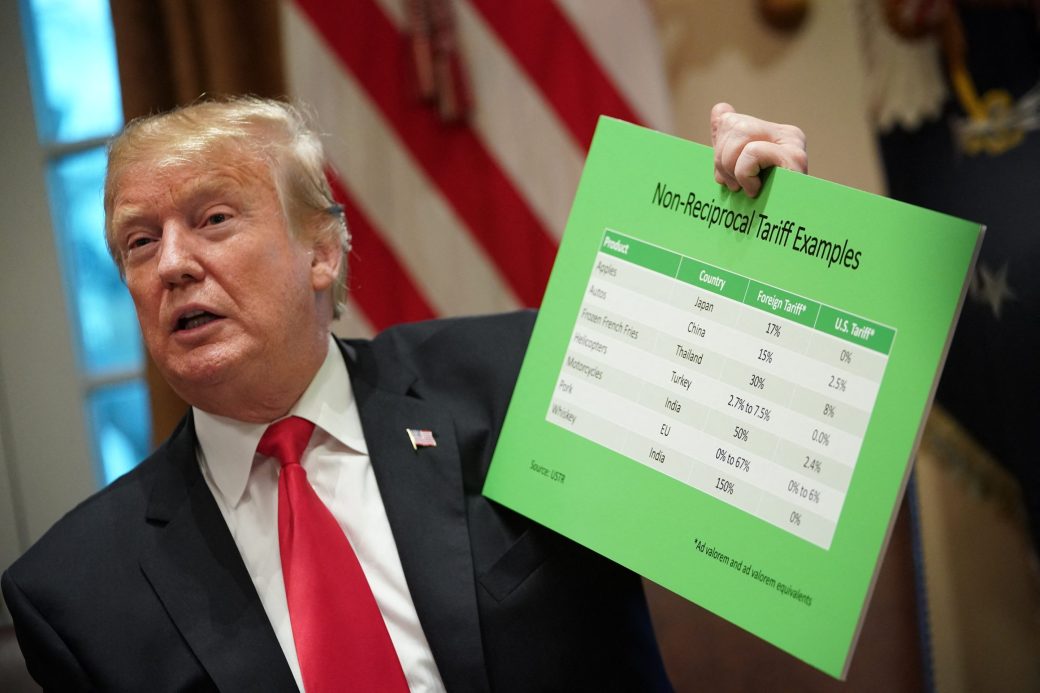
Trump’s $200 billion tariff hit swells budget deficit to $2.1 trillion for 2026, CBO confirms
Summary
The Congressional Budget Office projects a $2.1 trillion federal deficit for 2026, while the administration's tariff regime faces a constitutional challenge that could undermine its expected contribution to deficit reduction.
The key fiscal change is that tariffs cannot reliably serve as a deficit-reduction tool if
Unlock the full First Pass Analysis to get a better understanding of why this story matters
Why it matters
The tariff strategy's legal vulnerability could worsen an already projected trillion-dollar deficit.
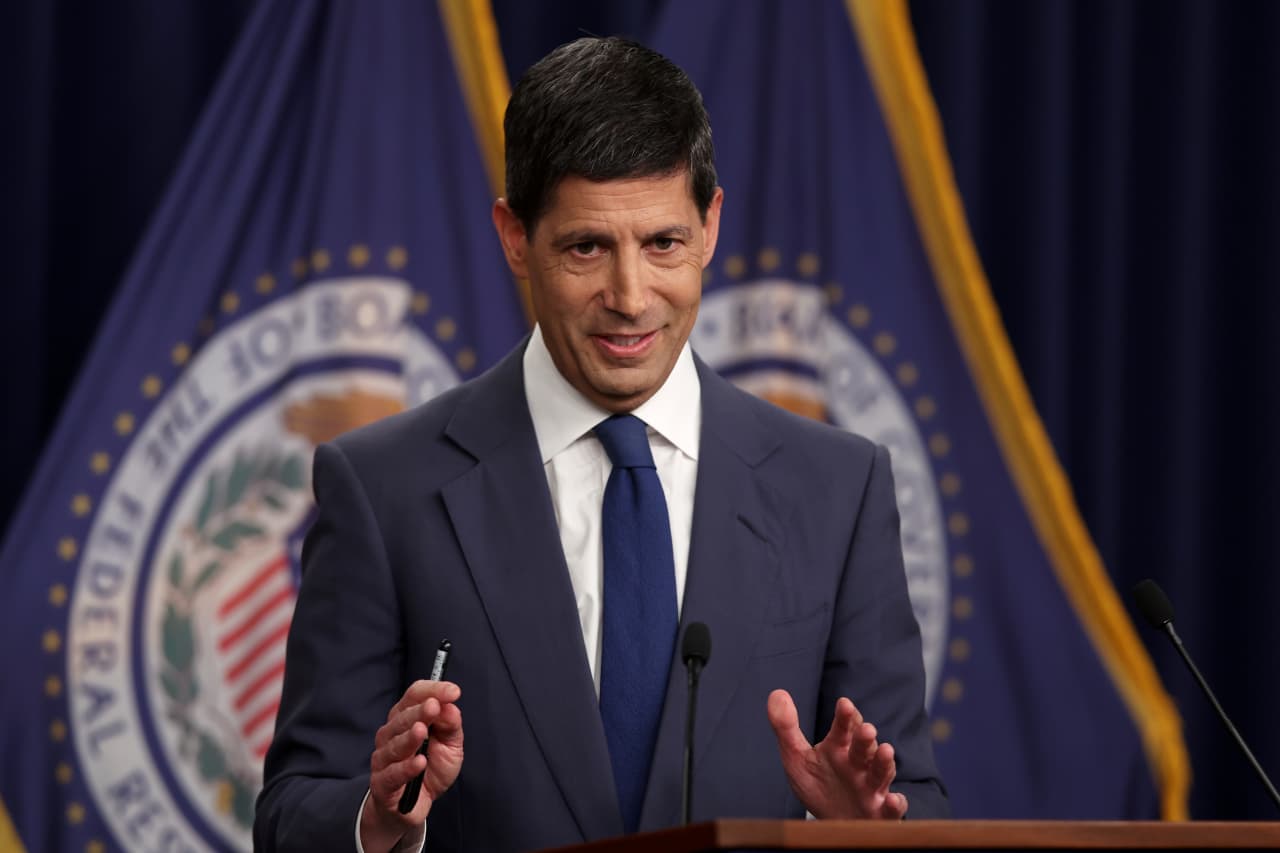
Trump says he spoke recently to Fed Chairman Warsh, denies regular calls
Summary
President Trump said he recently spoke with Federal Reserve Chairman Warsh but denied maintaining regular contact with him. His comments came amid concerns that White House pressure could undermine the central bank's independence.
The admission confirms direct presidential contact with the Fed chair while rejecting a pattern of
Unlock the full First Pass Analysis to get a better understanding of why this story matters
Why it matters
Perceived political influence over the Fed could raise borrowing costs and weaken confidence in U.S. monetary policy.
A curated list of other prominent stories from this day.
Analysts expect the yuan's recent period of stability to give way to renewed gains against the dollar as September approaches, supported by seasonal export strength and other recurring factors.
11:51 PMBloomberg Markets
Hong Kong is preparing to broaden its main technology stock benchmark with more companies from the artificial-intelligence and robotics sectors, giving investors greater exposure to China's technology industry.
11:35 PMBloomberg Markets
Vietnam is prioritizing the creation of large domestic conglomerates modeled partly on South Korea's chaebols, seeking to reduce its reliance on foreign investment and trade-led growth.
8:53 PMFinancial Times
Colombia's inflation cooled last month, giving the central bank some relief after it unexpectedly left interest rates unchanged at its latest meeting.
7:47 PMBloomberg Markets
Currency traders are increasing bullish options positions on the Taiwan dollar after its worst July performance since 2015.
7:00 PMBloomberg Markets
US-listed bitcoin ETFs attracted more than $850 million last week, their strongest inflows since April, after news of a crypto hack.
10:05 AMPYMNTS
JPMorgan raised its year-end target for the S&P 500 to 8,000 from 7,800.
5:19 AMMarketWatch
German Economy Minister Katherina Reiche warned that the AfD’s political rise could discourage investors as Berlin seeks to attract €3.75 trillion in private capital by 2040.
12:00 AMFinancial Times
11:51 PMBloomberg Markets
Yuan’s March Against Dollar May Resume Next Month, Analysts Say
Summary
Analysts expect the yuan's recent period of stability to give way to renewed gains against the dollar as September approaches, supported by seasonal export strength and other recurring factors.
The yuan could regain momentum if stronger autumn exports increase foreign-currency receipts and improve confidence
Unlock the full First Pass Analysis to get a better understanding of why this story matters
Why it matters
The yuan's direction will influence China's policy flexibility and regional currency markets.
Hong Kong Tech Index Set for Overhaul With More Firms, AI Focus
Summary
Hong Kong is preparing to broaden its main technology stock benchmark with more companies from the artificial-intelligence and robotics sectors, giving investors greater exposure to China's technology industry.
The overhaul would redirect index demand toward newer technology leaders and make the benchmark more
Unlock the full First Pass Analysis to get a better understanding of why this story matters
Why it matters
Index changes can move capital toward AI and robotics firms and reshape how investors access Chinese technology.
Communist Vietnam bets on Korean-style ‘chaebols’ to boost growth
Summary
Vietnam is prioritizing the creation of large domestic conglomerates modeled partly on South Korea's chaebols, seeking to reduce its reliance on foreign investment and trade-led growth.
The policy shifts Hanoi's focus toward building national champions with enough scale to drive investment,
Unlock the full First Pass Analysis to get a better understanding of why this story matters
Why it matters
Vietnam is trying to move from an investment destination to a more self-sustaining industrial power, with governance risks built into the strategy.
German economy minister warns AfD’s rise could deter investors
Summary
German Economy Minister Katherina Reiche warned that the AfD’s political rise could discourage investors as Berlin seeks to attract €3.75 trillion in private capital by 2040.
Political uncertainty is becoming a direct obstacle to Germany’s investment plans. If investors view the
Unlock the full First Pass Analysis to get a better understanding of why this story matters
Why it matters
Germany’s ability to finance its long-term growth and infrastructure goals depends on preserving investor confidence.