
Yields on 10-year and 30-year US government bonds rose again Monday after falling sharply the previous week. The move reflects renewed concern about the Treasury’s financing needs and the bond market’s capacity to absorb supply.
3:45 PMMarketWatch106 stories from 9 sources
Supporting Articles
Yields on 10-year and 30-year US government bonds rose again Monday after falling sharply the previous week. The move reflects renewed concern about the Treasury’s financing needs and the bond market’s capacity to absorb supply.
3:45 PMMarketWatch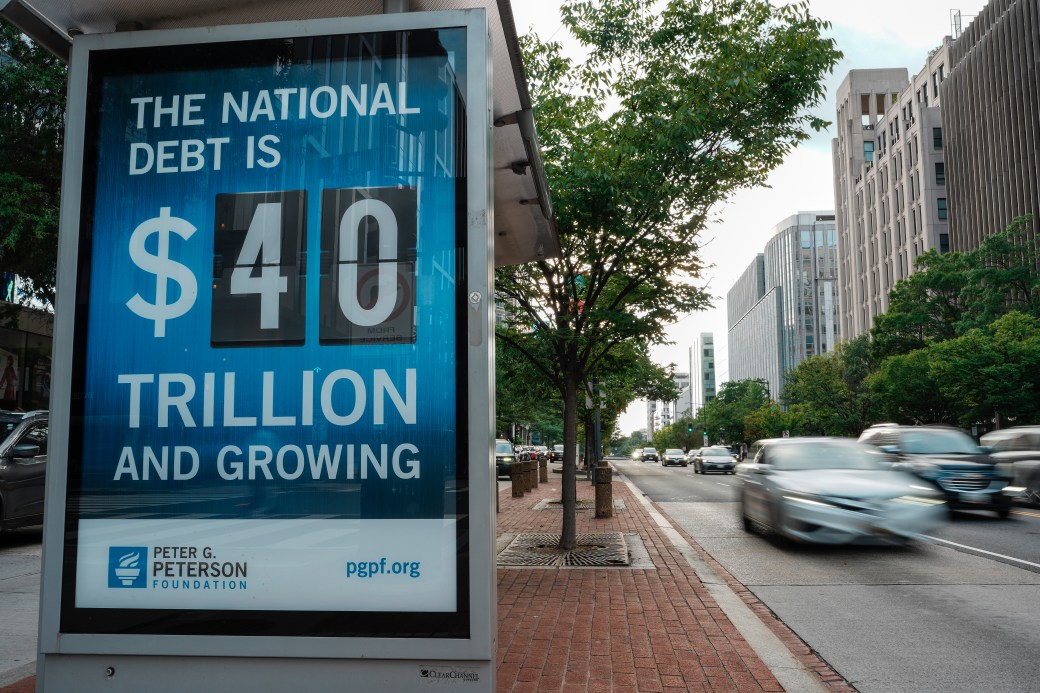
Moody's chief economist warns that rising US debt and interest costs are nearing a point where higher bond yields could increase the government's interest burden and push yields even higher.
10:13 AMFortune
Technology stocks rebounded on Monday after last week’s sharp decline, raising hopes that the selloff cleared excess positioning. Investors remain uncertain whether the recovery can last.
4:57 PMCNBCThe stock market has reached a positive milestone even as investors grow more concerned about the sustainability of the artificial intelligence trade.
9:28 AMCNBC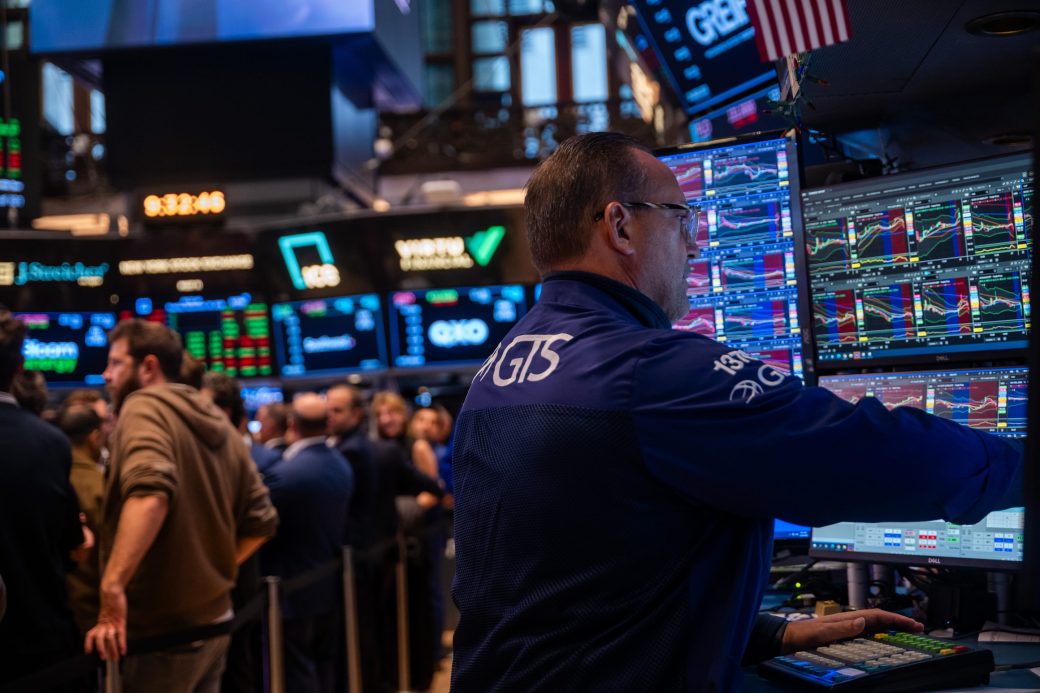
Falling bond yields have encouraged investors to buy stocks that had been pressured by higher discount rates and financing costs. The retreat in yields offers relief to technology companies, whose AI investment plans depend heavily on access to capital.
6:26 AMFortune
Nasdaq 100 futures rose 1.3% after the index suffered its largest weekly decline since the previous year's market selloff tied to Trump's tariff announcement. The move points to an attempted rebound in technology shares.
5:16 AMFinancial TimesThe article examines what a roughly $1 trillion loss during the AI selloff reveals about credit exposure, leverage, and the investors bearing the risk.
4:52 AMFinextraBank Indonesia is under growing pressure to raise interest rates after MSCI threatened to downgrade Indonesia's market to standalone status. The warning triggered a selloff in stocks and weakened the rupiah.
11:59 PMCNBCIndonesian stocks recovered after their worst selloff in almost four decades as authorities announced measures to prevent MSCI from pursuing a two-step downgrade of the market.
10:11 PMBloomberg Markets
Brent crude rose 21 cents to $109.76 a barrel, after reaching $110.70 in the previous session, its highest level since May 20. US WTI crude also gained, reaching about $104 a barrel.
10:20 PMEconomic Times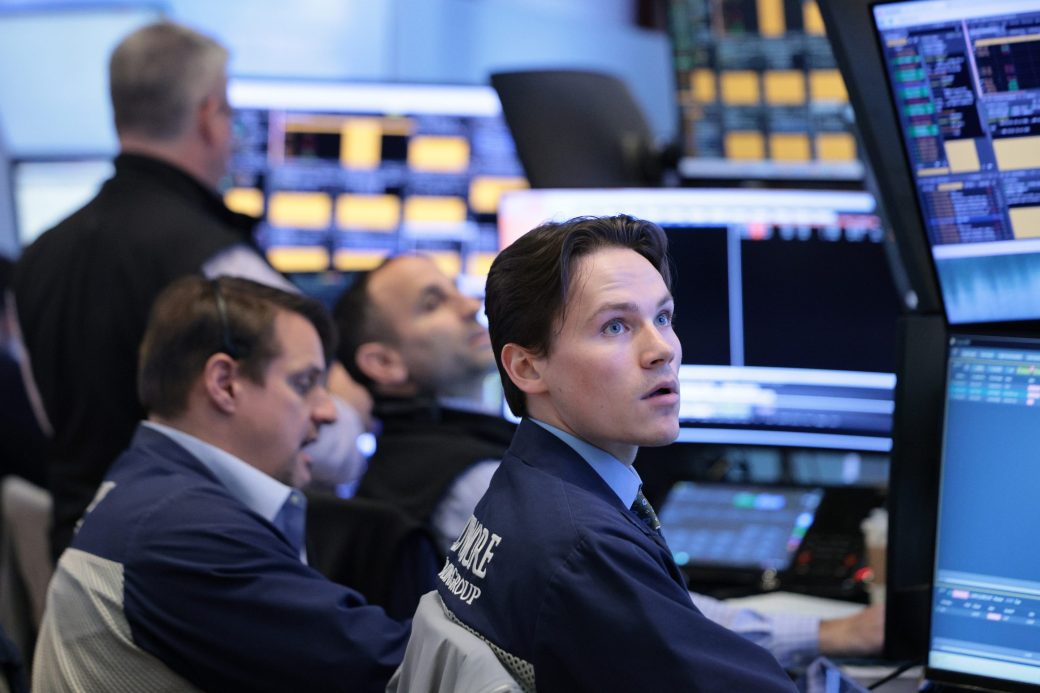
European stocks declined as violent protests in France weighed on sentiment, with the CAC 40 among the hardest-hit markets. Oil prices fell about 2% after Donald Trump delayed sanctions on Russia, adding to broader global market moves.
10:09 AMFortune
The SEC has conditionally approved expanded trading hours for five US exchanges, paving the way for stock trading for up to 23 hours a day, five days a week. Financial firms will need to upgrade technology, risk controls and overnight operations.
12:25 PMPYMNTS
China's economy grew 4.5 percent in the third quarter, accelerating from the previous quarter and exceeding forecasts. Export growth linked to artificial intelligence helped support the expansion.
1:56 AMAl JazeeraThe People’s Bank of China is considering replacing its current policy-rate benchmark with the overnight reverse-repurchase rate, a change analysts say would lower borrowing costs and support bond demand.
10:34 PMBloomberg MarketsJapan's 20-year government bond auction attracted its strongest demand on record. The result suggests that higher yields are drawing domestic investors back into longer-dated debt.
11:39 PMBloomberg Markets
Japan's Nikkei declined as technology shares came under pressure from rising bond yields and persistent inflation concerns. Investors are reassessing equity valuations as borrowing costs and price pressures remain elevated.
11:20 PMEconomic TimesSummary
Yields on 10-year and 30-year US government bonds rose again Monday after falling sharply the previous week. The move reflects renewed concern about the Treasury’s financing needs and the bond market’s capacity to absorb supply.
The key shift is a return of pressure at the long end of the curve,
Unlock the full First Pass Analysis to get a better understanding of why this story mattersWhy it matters
Treasury supply is becoming a market risk in its own right, potentially keeping rates high even if the Federal Reserve eases.
Summary
Moody's chief economist warns that rising US debt and interest costs are nearing a point where higher bond yields could increase the government's interest burden and push yields even higher.
The risk is shifting from debt size alone to debt service dynamics. If investors demand
Unlock the full First Pass Analysis to get a better understanding of why this story mattersWhy it matters
A self-reinforcing rise in borrowing costs would constrain fiscal policy and raise the baseline rate for global markets.
Summary
Technology stocks rebounded on Monday after last week’s sharp decline, raising hopes that the selloff cleared excess positioning. Investors remain uncertain whether the recovery can last.
This week’s earnings will test whether the rebound reflects improving fundamentals or merely short-term buying
Unlock the full First Pass Analysis to get a better understanding of why this story mattersWhy it matters
Big-tech earnings will determine whether the market is stabilizing or just pausing during a broader repricing.
Summary
The stock market has reached a positive milestone even as investors grow more concerned about the sustainability of the artificial intelligence trade.
The market's advance is now diverging from confidence in AI stocks, suggesting that broader earnings,
Unlock the full First Pass Analysis to get a better understanding of why this story mattersWhy it matters
A rally that survives pressure on its most crowded theme may have broader support, but its durability remains untested.
Summary
Falling bond yields have encouraged investors to buy stocks that had been pressured by higher discount rates and financing costs. The retreat in yields offers relief to technology companies, whose AI investment plans depend heavily on access to capital.
Lower yields have reopened appetite for riskier and more rate-sensitive stocks after borrowing costs threatened
Unlock the full First Pass Analysis to get a better understanding of why this story mattersWhy it matters
The stock rally now depends partly on whether bond markets keep easing financial conditions.
Summary
Nasdaq 100 futures rose 1.3% after the index suffered its largest weekly decline since the previous year's market selloff tied to Trump's tariff announcement. The move points to an attempted rebound in technology shares.
The futures bounce shows dip-buying after a sharp unwind in AI exposures, not a resolution
Unlock the full First Pass Analysis to get a better understanding of why this story mattersWhy it matters
The rebound will reveal whether the AI selloff was a temporary positioning shock or the start of a broader repricing of technology stocks.
Summary
The article examines what a roughly $1 trillion loss during the AI selloff reveals about credit exposure, leverage, and the investors bearing the risk.
The central issue is whether the decline reflects a repricing of technology shares or exposes
Unlock the full First Pass Analysis to get a better understanding of why this story mattersWhy it matters
The market impact depends less on the headline loss than on where the leverage sits and how quickly it must be unwound.
Summary
Bank Indonesia is under growing pressure to raise interest rates after MSCI threatened to downgrade Indonesia's market to standalone status. The warning triggered a selloff in stocks and weakened the rupiah.
The market rout has turned an index-classification dispute into a currency and credibility problem for
Unlock the full First Pass Analysis to get a better understanding of why this story mattersWhy it matters
Indonesia must now balance market access and currency stability against the economic cost of defending them with tighter policy.
Summary
Indonesian stocks recovered after their worst selloff in almost four decades as authorities announced measures to prevent MSCI from pursuing a two-step downgrade of the market.
The immediate shift is from unchecked market stress to an official effort to address MSCI's
Unlock the full First Pass Analysis to get a better understanding of why this story mattersWhy it matters
Indonesia is trying to protect its standing in global benchmarks before passive fund outflows turn a confidence shock into a deeper market dislocation.
Summary
Brent crude rose 21 cents to $109.76 a barrel, after reaching $110.70 in the previous session, its highest level since May 20. US WTI crude also gained, reaching about $104 a barrel.
Fresh attacks are pushing supply-risk premiums above the relief offered by easing Russian sanctions. Higher
Unlock the full First Pass Analysis to get a better understanding of why this story mattersWhy it matters
Oil is nearing a level that could quickly feed into global inflation and household energy costs.
Summary
European stocks declined as violent protests in France weighed on sentiment, with the CAC 40 among the hardest-hit markets. Oil prices fell about 2% after Donald Trump delayed sanctions on Russia, adding to broader global market moves.
The session combined a country-specific political shock with a broader shift in energy and geopolitical
Unlock the full First Pass Analysis to get a better understanding of why this story mattersWhy it matters
European markets are absorbing both domestic political risk and rapid changes in the geopolitical premium embedded in oil.
Summary
The SEC has conditionally approved expanded trading hours for five US exchanges, paving the way for stock trading for up to 23 hours a day, five days a week. Financial firms will need to upgrade technology, risk controls and overnight operations.
Longer hours will spread liquidity, pricing and operational risk across more of the day rather
Unlock the full First Pass Analysis to get a better understanding of why this story mattersWhy it matters
Near-continuous trading could reshape market structure and increase the frequency of overnight volatility.
2 stories · 2 sources
Summary
China's economy grew 4.5 percent in the third quarter, accelerating from the previous quarter and exceeding forecasts. Export growth linked to artificial intelligence helped support the expansion.
The stronger headline growth suggests that external demand is offsetting weakness in China's domestic economy.
Unlock the full First Pass Analysis to get a better understanding of why this story mattersWhy it matters
China's export-led rebound can lift global trade while also intensifying tensions over industrial competition and market access.
2 stories · 2 sources
Summary
The People’s Bank of China is considering replacing its current policy-rate benchmark with the overnight reverse-repurchase rate, a change analysts say would lower borrowing costs and support bond demand.
A shift to the overnight reverse-repo rate would make policy transmission more direct and likely
Unlock the full First Pass Analysis to get a better understanding of why this story mattersWhy it matters
China may be preparing a clearer easing signal as it tries to support growth through lower market financing costs.
Summary
Japan's 20-year government bond auction attracted its strongest demand on record. The result suggests that higher yields are drawing domestic investors back into longer-dated debt.
The decisive shift is stronger demand at the long end despite elevated yields. That demand
Unlock the full First Pass Analysis to get a better understanding of why this story mattersWhy it matters
A deeper domestic bid could reduce volatility as Japan normalizes monetary policy and issues more debt.
Summary
Japan's Nikkei declined as technology shares came under pressure from rising bond yields and persistent inflation concerns. Investors are reassessing equity valuations as borrowing costs and price pressures remain elevated.
Higher yields directly reduce the appeal of long-duration technology stocks and increase sensitivity to future
Unlock the full First Pass Analysis to get a better understanding of why this story mattersWhy it matters
Japan's rate and inflation outlook is becoming a larger driver of regional equity valuations.
A curated list of other prominent stories from this day.
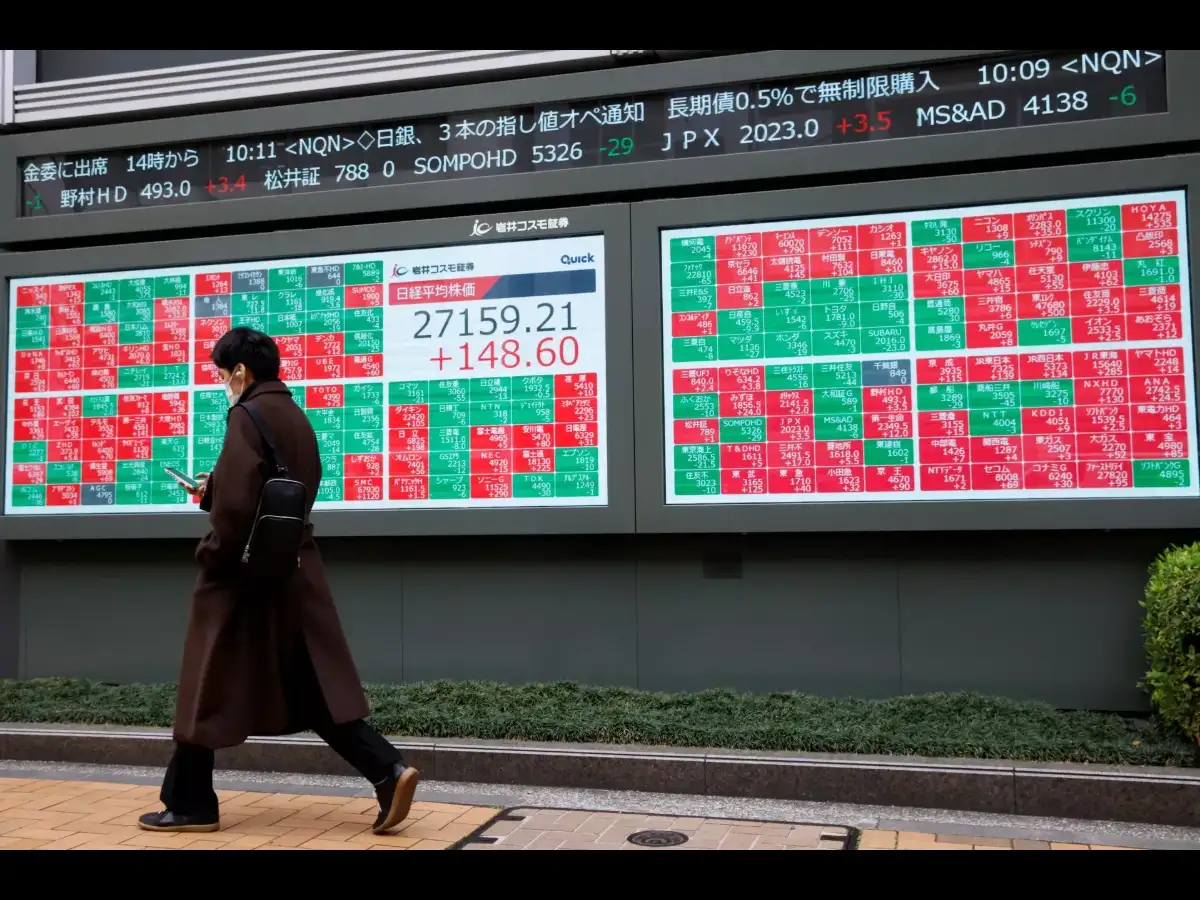
Elice shares fell 28% in their Seoul debut after the AI cloud and software company raised 201.1 billion won, or about $150 million, in its IPO. The company plans to use most of the proceeds to launch portable modular data centers and related infrastructure.
11:23 PMEconomic TimesCopper prices remained slightly lower as traders assessed the possibility that the United States will not impose a tariff on imports of refined copper.
11:05 PMBloomberg MarketsSouth Korean stocks fell as chipmakers led losses, foreign investors cut exposure amid higher Treasury yields and a data center company suffered a weak market debut.
10:24 PMBloomberg Markets
The euro held at $1.1216, while the pound rose 0.1% to $1.3308. The Australian and New Zealand dollars also edged higher, gaining 0.1% each.
10:04 PMEconomic Times
Credit markets are sending unusually conflicting signals, with the weakest junk bonds raising concerns even as other parts of the market remain more resilient.
5:36 PMMarketWatch
US stocks have historically posted strong gains in the six months after midterm elections, suggesting the coming cycle could provide a favorable seasonal backdrop.
5:00 PMMarketWatch
The article argues that France’s unrest reflects a combination of high inflation, rising public debt, and deteriorating public services. It contends that the United States faces similar underlying problems, with stronger economic growth masking the risks.
3:31 PMFortune
A key relationship in global financial markets has weakened sharply over the past several weeks, prompting investors to reassess its economic and portfolio implications.
1:43 PMMarketWatchGoldman Sachs identified defensive stocks that could benefit if investors retreat from the AI trade, including companies that have recently lagged the broader market.
1:28 PMCNBC
Protests across France, Italy, Spain and Portugal reflect growing public anger over rising living costs. The unrest shows that household financial pressure has become a broader political issue across southern Europe.
11:19 AMAl Jazeera
Defense stocks fell as investors priced in a possible Democratic election victory that could weaken support for Donald Trump's proposed $500 billion increase in military spending. Bipartisan backing for a larger Pentagon budget is also showing signs of strain.
9:04 AMFinancial Times
CME plans to launch tungsten futures as demand rises for the critical mineral used in armor-piercing munitions. China's restrictions on tungsten exports have added to supply concerns.
6:30 AMFinancial TimesSummary
Elice shares fell 28% in their Seoul debut after the AI cloud and software company raised 201.1 billion won, or about $150 million, in its IPO. The company plans to use most of the proceeds to launch portable modular data centers and related infrastructure.
The weak debut shows investors are discounting data center expansion plans even when companies can
Unlock the full First Pass Analysis to get a better understanding of why this story mattersWhy it matters
A poor IPO debut makes it harder for smaller AI infrastructure companies to fund the next phase of expansion.
Summary
Copper prices remained slightly lower as traders assessed the possibility that the United States will not impose a tariff on imports of refined copper.
The market is pricing policy uncertainty rather than a clear supply shock. If the tariff
Unlock the full First Pass Analysis to get a better understanding of why this story mattersWhy it matters
US tariff decisions could redirect global copper supplies and widen price differences between regions.
Summary
South Korean stocks fell as chipmakers led losses, foreign investors cut exposure amid higher Treasury yields and a data center company suffered a weak market debut.
Higher US yields are tightening global financial conditions and making Korean equities less attractive to
Unlock the full First Pass Analysis to get a better understanding of why this story mattersWhy it matters
Korea's market is showing how rising US yields can quickly amplify sector-specific weakness in export and technology stocks.
Summary
The euro held at $1.1216, while the pound rose 0.1% to $1.3308. The Australian and New Zealand dollars also edged higher, gaining 0.1% each.
The narrow currency moves show that investors lack a clear catalyst to reset major exchange-rate
Unlock the full First Pass Analysis to get a better understanding of why this story mattersWhy it matters
A directionless dollar market can shift quickly when central-bank expectations or risk sentiment change.
Summary
Credit markets are sending unusually conflicting signals, with the weakest junk bonds raising concerns even as other parts of the market remain more resilient.
The divergence suggests investors are distinguishing sharply between borrowers rather than pricing credit risk uniformly.
Unlock the full First Pass Analysis to get a better understanding of why this story mattersWhy it matters
Weakness in low-quality credit can reveal financial stress before it appears in broader equity indexes.
Summary
US stocks have historically posted strong gains in the six months after midterm elections, suggesting the coming cycle could provide a favorable seasonal backdrop.
The post-midterm pattern reflects reduced political uncertainty and clearer policy expectations, not a guaranteed market
Unlock the full First Pass Analysis to get a better understanding of why this story mattersWhy it matters
Election timing may support equities, but fundamentals will decide whether the pattern holds.
Summary
The article argues that France’s unrest reflects a combination of high inflation, rising public debt, and deteriorating public services. It contends that the United States faces similar underlying problems, with stronger economic growth masking the risks.
Growth currently separates the US from France by supporting incomes and tax revenue, but it
Unlock the full First Pass Analysis to get a better understanding of why this story mattersWhy it matters
The comparison warns that US resilience may depend more on continued growth than on sustainable public finances.
Summary
A key relationship in global financial markets has weakened sharply over the past several weeks, prompting investors to reassess its economic and portfolio implications.
The breakdown matters because strategies built on the relationship's stability may no longer provide reliable
Unlock the full First Pass Analysis to get a better understanding of why this story mattersWhy it matters
When a major market correlation fails, risk models and portfolio hedges can stop working as expected.
Summary
Goldman Sachs identified defensive stocks that could benefit if investors retreat from the AI trade, including companies that have recently lagged the broader market.
A failure of the AI rally would likely trigger a rotation rather than a uniform
Unlock the full First Pass Analysis to get a better understanding of why this story mattersWhy it matters
The trade offers a way to hedge concentrated AI exposure without abandoning stocks entirely.
Summary
Protests across France, Italy, Spain and Portugal reflect growing public anger over rising living costs. The unrest shows that household financial pressure has become a broader political issue across southern Europe.
The decisive shift is from isolated price increases to sustained political pressure. Governments face demands
Unlock the full First Pass Analysis to get a better understanding of why this story mattersWhy it matters
Persistent living-cost pressure can reshape fiscal policy, elections and investor confidence across southern Europe.
Summary
Defense stocks fell as investors priced in a possible Democratic election victory that could weaken support for Donald Trump's proposed $500 billion increase in military spending. Bipartisan backing for a larger Pentagon budget is also showing signs of strain.
The immediate shift is in expectations for future defense spending, not current military contracts. A
Unlock the full First Pass Analysis to get a better understanding of why this story mattersWhy it matters
Defense companies are beginning to price political constraints into a sector that has long relied on steady bipartisan spending growth.
Summary
CME plans to launch tungsten futures as demand rises for the critical mineral used in armor-piercing munitions. China's restrictions on tungsten exports have added to supply concerns.
The planned contract would give manufacturers and investors a clearer way to hedge exposure to
Unlock the full First Pass Analysis to get a better understanding of why this story mattersWhy it matters
Tungsten is becoming both a defense input and a market with greater geopolitical supply risk.
Make it yours
Pick your topics, set your cadence, and receive your personalized First Pass in your inbox. It’s that simple!
