
Brent crude rose above $106 a barrel as the 10-year US Treasury yield reached 5.2%, intensifying pressure on government bonds.
2:00 AMFinancial Times107 stories from 8 sources
Supporting Articles
Brent crude rose above $106 a barrel as the 10-year US Treasury yield reached 5.2%, intensifying pressure on government bonds.
2:00 AMFinancial Times
The dollar held near a two-month high as Treasury yields climbed and investors awaited US economic data that could shape expectations for another Federal Reserve rate hike. Brent crude approached $106 a barrel, adding to market volatility.
10:07 PMEconomic Times
Treasury yields moved modestly higher as investors awaited new US economic data. The move came amid broader pressure on government bonds globally.
4:31 PMCNBC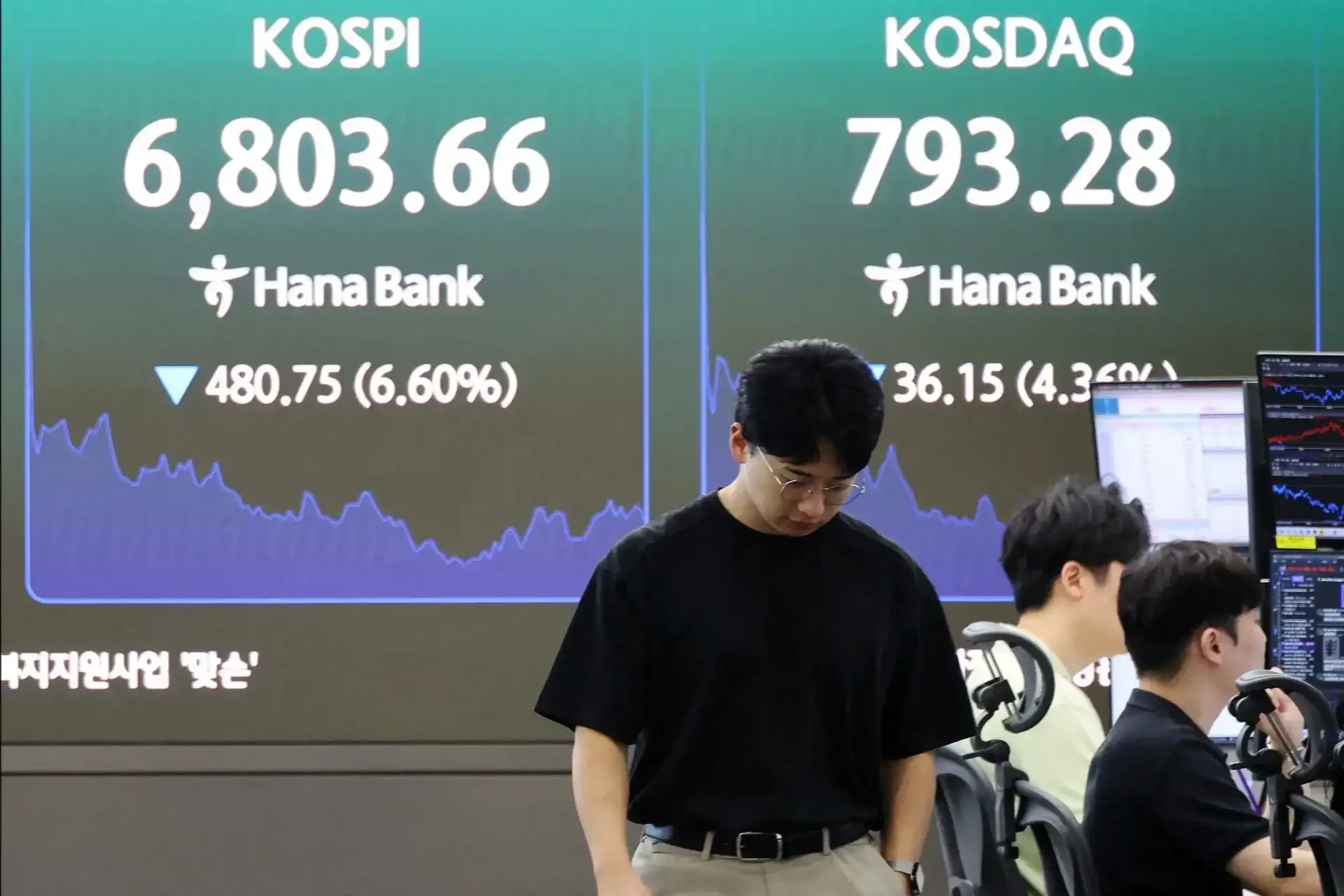
Asian equity futures were mixed while US stock futures edged higher after the S&P 500 gave up its monthly advance and the Nasdaq 100 fell 1.1%. Rising oil prices and Treasury yields weighed on risk sentiment.
8:54 PMEconomic TimesStrong corporate earnings are helping equities withstand rising bond yields and concerns about stretched AI valuations, but that support could fade if profit-growth expectations weaken.
8:25 PMBloomberg Markets
Treasury yields continued rising after last week’s selloff, challenging hopes that the bond market’s losses had peaked. The move renewed concerns about pressure on technology stocks.
4:43 PMMarketWatch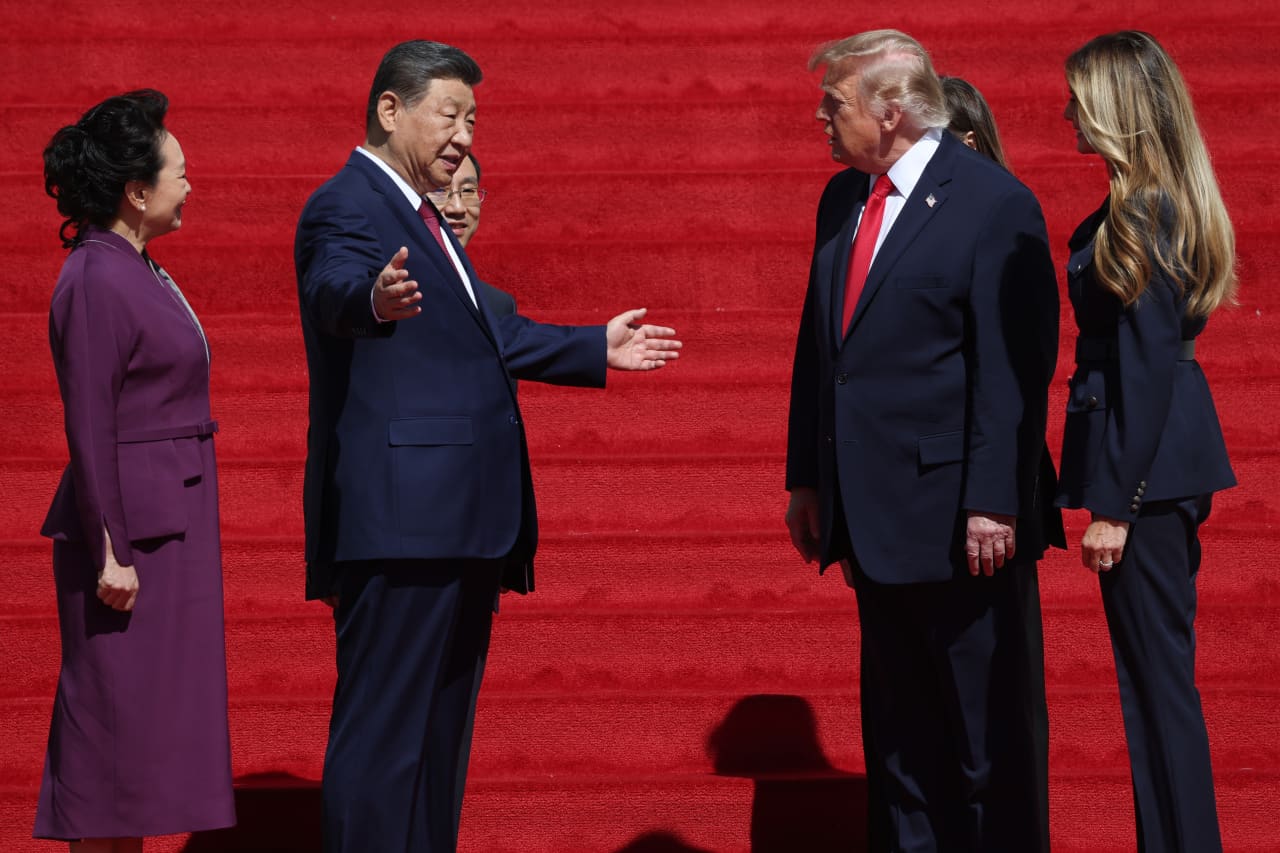
The United States and China agreed to reduce tariffs covering about $60 billion in goods, including dolls and fireworks. The arrangement did not resolve major disputes involving rare earths, artificial intelligence, Iran or Taiwan.
2:15 PMMarketWatch
The United States and China have agreed to lower tariffs on about $60 billion of non-sensitive goods, ranging from foie gras to camels. The arrangement is intended to ease tensions while keeping strategically sensitive trade outside the agreement.
12:04 AMFinancial TimesChina plans to introduce additional measures to support economic growth and is studying policies to stabilize the property market. The initial focus is expected to fall on investment rather than directly reviving weak household consumption.
11:16 PMBloomberg Markets
Gold remained near a seven-week low as investors awaited US employment and inflation data amid continued concern about higher Federal Reserve interest rates. Oil prices rose on fears of Middle East supply disruptions, adding to inflation risks.
10:06 PMEconomic Times
The Indian rupee fell to a two-month low of 96.1450 per dollar as rising oil prices intensified economic concerns. Brent crude climbed above $107 a barrel amid Middle East disruptions, while foreign investors also reduced exposure to Indian assets.
11:59 PMEconomic TimesJapan's 40-year government bond auction attracted its strongest demand in six years as higher yields drew investors back to the country's longest-dated debt. The result offers temporary support to a market that has faced persistent selling pressure.
11:43 PMBloomberg Markets
The SEC urged financial firms to apply greater rigor when valuing private assets, including private credit, and to improve related fair-value disclosures. The guidance came from senior officials in the agency’s accounting and investment-management divisions.
3:50 PMPYMNTSSummary
Brent crude rose above $106 a barrel as the 10-year US Treasury yield reached 5.2%, intensifying pressure on government bonds.
Higher oil prices are reviving inflation concerns just as bond yields are already elevated, reducing
Unlock the full First Pass Analysis to get a better understanding of why this story mattersWhy it matters
Oil is reinforcing the bond-market selloff by making inflation harder for central banks to ignore.
Summary
The dollar held near a two-month high as Treasury yields climbed and investors awaited US economic data that could shape expectations for another Federal Reserve rate hike. Brent crude approached $106 a barrel, adding to market volatility.
Higher US yields are supporting the dollar, but rising oil prices could make the same
Unlock the full First Pass Analysis to get a better understanding of why this story mattersWhy it matters
The dollar, bond yields and oil are now tightly linked through the next Federal Reserve decision.
Summary
Treasury yields moved modestly higher as investors awaited new US economic data. The move came amid broader pressure on government bonds globally.
The immediate driver is positioning ahead of data that could reset expectations for growth and
Unlock the full First Pass Analysis to get a better understanding of why this story mattersWhy it matters
Treasury yields are sitting at the intersection of global bond weakness and changing expectations for US rates.
Summary
Asian equity futures were mixed while US stock futures edged higher after the S&P 500 gave up its monthly advance and the Nasdaq 100 fell 1.1%. Rising oil prices and Treasury yields weighed on risk sentiment.
The pullback in US technology shares shows that higher yields are again challenging growth-stock valuations,
Unlock the full First Pass Analysis to get a better understanding of why this story mattersWhy it matters
Markets are testing whether rising yields and energy costs can break the equity rally beyond its most rate-sensitive sectors.
Summary
Strong corporate earnings are helping equities withstand rising bond yields and concerns about stretched AI valuations, but that support could fade if profit-growth expectations weaken.
Earnings growth is currently offsetting the valuation damage caused by higher yields, particularly in large
Unlock the full First Pass Analysis to get a better understanding of why this story mattersWhy it matters
The durability of the equity rally now depends on profit delivery, not just investor tolerance for high valuations.
Summary
Treasury yields continued rising after last week’s selloff, challenging hopes that the bond market’s losses had peaked. The move renewed concerns about pressure on technology stocks.
Higher yields raise the discount rate applied to future corporate earnings, making richly valued technology
Unlock the full First Pass Analysis to get a better understanding of why this story mattersWhy it matters
The bond market is again setting the risk threshold for high-growth equities.
Summary
The United States and China agreed to reduce tariffs covering about $60 billion in goods, including dolls and fireworks. The arrangement did not resolve major disputes involving rare earths, artificial intelligence, Iran or Taiwan.
The tariff cuts ease pressure on selected consumer and industrial goods without changing the broader
Unlock the full First Pass Analysis to get a better understanding of why this story mattersWhy it matters
The deal lowers immediate trade friction but leaves the most consequential sources of U.S.-China rivalry untouched.
Summary
The United States and China have agreed to lower tariffs on about $60 billion of non-sensitive goods, ranging from foie gras to camels. The arrangement is intended to ease tensions while keeping strategically sensitive trade outside the agreement.
The deal creates a limited commercial truce rather than a broad settlement of the trade
Unlock the full First Pass Analysis to get a better understanding of why this story mattersWhy it matters
The agreement can stabilize some trade flows while preserving the core rivalry between the two economies.
Summary
China plans to introduce additional measures to support economic growth and is studying policies to stabilize the property market. The initial focus is expected to fall on investment rather than directly reviving weak household consumption.
The policy pivot points to faster state-led support, but investment-heavy measures may provide less durable
Unlock the full First Pass Analysis to get a better understanding of why this story mattersWhy it matters
The scale and composition of China's stimulus will shape demand for commodities, regional currencies, and global industrial assets.
Summary
Gold remained near a seven-week low as investors awaited US employment and inflation data amid continued concern about higher Federal Reserve interest rates. Oil prices rose on fears of Middle East supply disruptions, adding to inflation risks.
Gold’s weakness shows that rate expectations are outweighing its traditional safe-haven appeal. Incoming US data
Unlock the full First Pass Analysis to get a better understanding of why this story mattersWhy it matters
Gold faces a difficult setup as inflation risk limits policy relief and higher yields raise the cost of holding it.
3 stories · 3 sources
Summary
The Indian rupee fell to a two-month low of 96.1450 per dollar as rising oil prices intensified economic concerns. Brent crude climbed above $107 a barrel amid Middle East disruptions, while foreign investors also reduced exposure to Indian assets.
The rupee is facing a worsening external balance as costlier oil increases India's import bill
Unlock the full First Pass Analysis to get a better understanding of why this story mattersWhy it matters
A weaker rupee could make India's inflation and financing outlook more sensitive to any further oil shock.
Summary
Japan's 40-year government bond auction attracted its strongest demand in six years as higher yields drew investors back to the country's longest-dated debt. The result offers temporary support to a market that has faced persistent selling pressure.
The auction suggests that yield levels are beginning to restore demand for Japanese duration, even
Unlock the full First Pass Analysis to get a better understanding of why this story mattersWhy it matters
A more stable Japanese bond market could reduce one source of spillover volatility into global fixed income.
Summary
The SEC urged financial firms to apply greater rigor when valuing private assets, including private credit, and to improve related fair-value disclosures. The guidance came from senior officials in the agency’s accounting and investment-management divisions.
The SEC is raising scrutiny of valuations in markets where assets trade infrequently and reported
Unlock the full First Pass Analysis to get a better understanding of why this story mattersWhy it matters
More credible valuations would make private-credit risks easier to compare with those in public markets.
A curated list of other prominent stories from this day.

South Korean shares were little changed as gains in semiconductor stocks offset declines elsewhere. Investors are awaiting September trade data and Micron Technology's earnings for evidence of AI-chip demand, while higher oil prices, Treasury yields and foreign selling weigh on the market.
11:50 PMEconomic TimesAustralian household spending was unchanged in August, pointing to weaker consumer demand as the Reserve Bank is expected to resume raising interest rates.
9:48 PMBloomberg Markets
With a digital asset market structure bill stalled in the Senate, the Securities and Exchange Commission is pursuing its own crypto agenda. The approach could affect how crypto firms raise capital and which platforms are permitted to operate trading markets.
6:04 PMPYMNTS
Mortgage rates could reach 9% only if the 10-year Treasury yield rises above 6% and mortgage spreads widen materially. Without both moves, even a hawkish Federal Reserve would not make that outcome likely.
5:58 PMHousing Wire
President Recep Tayyip Erdoğan said those involved in alleged market manipulation would be held accountable as a deputy chair of the governing party resigned. The response follows a scandal that has raised concerns about the integrity of Turkey’s stock market.
4:57 PMFinancial TimesUtilities have become deeply oversold after suffering from higher rates, increasing the odds of a short-term rebound in the sector, according to market technician Katie Stockton.
4:26 PMCNBC
October has historically produced the highest stock-market volatility, but four widely cited explanations do not withstand scrutiny. Past seasonal patterns provide no reliable basis for expecting the same behavior in future Octobers.
4:02 PMMarketWatch
The University of Michigan’s final September consumer-sentiment index fell 7% from August and 12.7% from a year earlier. Respondents cited high prices and renewed trade disputes as key concerns.
3:11 PMPYMNTSUBS says rising rates will not affect all bonds equally and argues that investors must focus more closely on credit quality when selecting fixed-income assets.
3:09 PMCNBCAlmost half of the stocks in the S&P 500 have negative beta, meaning they tend to move against the index rather than with it. The divergence shows that the index's performance masks sharply different conditions among its constituents.
1:53 PMCNBC
A sell-off in US government bonds is increasing pressure on the Trump administration to use dollar-backed stablecoins to create new demand for Treasuries and reinforce the dollar’s global role. Officials are considering overseas promotion of these stablecoins through private-sector projects, potentially with support from the Treasury and State departments.
11:45 AMPYMNTS
Jim Paulsen's lagged-indicator model suggests that the stock market's typical November-to-April strength may not recur this year. Backtests extending to 1970 produced only modest returns under similar conditions.
11:01 AMMarketWatch
Yields on the 10-year and 30-year Treasury reached 19-year highs on Sept. 23, with the 10-year yield hitting 5.1 percent. The increase is raising financing costs across commercial real estate and putting pressure on property values and deal activity.
6:30 AMHousing Wire
The article argues that the Federal Reserve’s rate increase should be viewed as a measure aimed at protecting households rather than as a concession to financial markets, and that Republicans should support the approach associated with Kevin Warsh.
12:00 AMFinancial Times
The enormous capital requirements of AI infrastructure are forcing companies and governments to rethink how they raise and structure debt.
12:00 AMFinancial TimesSummary
South Korean shares were little changed as gains in semiconductor stocks offset declines elsewhere. Investors are awaiting September trade data and Micron Technology's earnings for evidence of AI-chip demand, while higher oil prices, Treasury yields and foreign selling weigh on the market.
The market is treating upcoming trade data and Micron's results as near-term tests of the
Unlock the full First Pass Analysis to get a better understanding of why this story mattersWhy it matters
The data and earnings releases could determine whether chip strength can withstand worsening macroeconomic pressure.
Summary
Australian household spending was unchanged in August, pointing to weaker consumer demand as the Reserve Bank is expected to resume raising interest rates.
Flat spending makes another rate hike harder to absorb, especially for households already facing higher
Unlock the full First Pass Analysis to get a better understanding of why this story mattersWhy it matters
Australia’s rate path is beginning to collide directly with weakening household demand.
Summary
With a digital asset market structure bill stalled in the Senate, the Securities and Exchange Commission is pursuing its own crypto agenda. The approach could affect how crypto firms raise capital and which platforms are permitted to operate trading markets.
The SEC's actions may fill the legislative gap while giving the agency more influence over
Unlock the full First Pass Analysis to get a better understanding of why this story mattersWhy it matters
Regulatory action rather than legislation may decide which crypto companies can access capital and control trading infrastructure.
Summary
Mortgage rates could reach 9% only if the 10-year Treasury yield rises above 6% and mortgage spreads widen materially. Without both moves, even a hawkish Federal Reserve would not make that outcome likely.
The constraint is market pricing, not the Fed’s policy rate alone. A 9% mortgage rate
Unlock the full First Pass Analysis to get a better understanding of why this story mattersWhy it matters
Homebuyers should watch long-term Treasury yields and lending spreads, not just Fed decisions, when assessing mortgage-rate risk.
Summary
President Recep Tayyip Erdoğan said those involved in alleged market manipulation would be held accountable as a deputy chair of the governing party resigned. The response follows a scandal that has raised concerns about the integrity of Turkey’s stock market.
The resignation and Erdoğan’s warning signal an effort to contain damage before it spreads into
Unlock the full First Pass Analysis to get a better understanding of why this story mattersWhy it matters
The handling of the scandal will affect Turkey’s credibility with domestic savers and foreign capital alike.
Summary
Utilities have become deeply oversold after suffering from higher rates, increasing the odds of a short-term rebound in the sector, according to market technician Katie Stockton.
The potential rally is a trading signal, not evidence that the sector’s rate headwind has
Unlock the full First Pass Analysis to get a better understanding of why this story mattersWhy it matters
A utilities rebound would test whether investors are buying oversold conditions or positioning for a broader change in rate expectations.
Summary
October has historically produced the highest stock-market volatility, but four widely cited explanations do not withstand scrutiny. Past seasonal patterns provide no reliable basis for expecting the same behavior in future Octobers.
The key shift is from treating October volatility as a recurring mechanism to viewing it
Unlock the full First Pass Analysis to get a better understanding of why this story mattersWhy it matters
Seasonal reputation is not a substitute for evidence when setting portfolio risk.
Summary
The University of Michigan’s final September consumer-sentiment index fell 7% from August and 12.7% from a year earlier. Respondents cited high prices and renewed trade disputes as key concerns.
The decline shows that tariff uncertainty is adding to, rather than replacing, the pressure from
Unlock the full First Pass Analysis to get a better understanding of why this story mattersWhy it matters
A less confident consumer raises the risk that trade tensions will weaken demand as well as raise costs.
Summary
UBS says rising rates will not affect all bonds equally and argues that investors must focus more closely on credit quality when selecting fixed-income assets.
Higher yields improve bond income, but they also expose weaker borrowers to rising interest costs
Unlock the full First Pass Analysis to get a better understanding of why this story mattersWhy it matters
Credit quality, rather than yield alone, will determine whether investors are being paid adequately for bond risk.
Summary
Almost half of the stocks in the S&P 500 have negative beta, meaning they tend to move against the index rather than with it. The divergence shows that the index's performance masks sharply different conditions among its constituents.
The market is behaving less like a unified risk trade and more like a split
Unlock the full First Pass Analysis to get a better understanding of why this story mattersWhy it matters
Investors who rely on the S&P 500 as a single proxy for market health may be underestimating dispersion and portfolio risk.
Summary
A sell-off in US government bonds is increasing pressure on the Trump administration to use dollar-backed stablecoins to create new demand for Treasuries and reinforce the dollar’s global role. Officials are considering overseas promotion of these stablecoins through private-sector projects, potentially with support from the Treasury and State departments.
The administration is treating stablecoins as a tool of statecraft, not only as a payments
Unlock the full First Pass Analysis to get a better understanding of why this story mattersWhy it matters
Stablecoins could become a new channel for extending dollar power and financing US government debt.
Summary
Jim Paulsen's lagged-indicator model suggests that the stock market's typical November-to-April strength may not recur this year. Backtests extending to 1970 produced only modest returns under similar conditions.
The signal challenges a seasonal strategy that investors often treat as a reliable tailwind. Weak
Unlock the full First Pass Analysis to get a better understanding of why this story mattersWhy it matters
Investors may need current economic and valuation signals to replace a seasonal advantage that appears less dependable.
Summary
Yields on the 10-year and 30-year Treasury reached 19-year highs on Sept. 23, with the 10-year yield hitting 5.1 percent. The increase is raising financing costs across commercial real estate and putting pressure on property values and deal activity.
Higher risk-free rates are forcing commercial property owners to refinance at much steeper costs while
Unlock the full First Pass Analysis to get a better understanding of why this story mattersWhy it matters
Persistently high Treasury yields could extend the commercial real estate downturn by eroding valuations, tightening credit, and exposing refinancing risks.
Summary
The article argues that the Federal Reserve’s rate increase should be viewed as a measure aimed at protecting households rather than as a concession to financial markets, and that Republicans should support the approach associated with Kevin Warsh.
The central policy question is whether tighter rates can contain inflation without imposing disproportionate costs
Unlock the full First Pass Analysis to get a better understanding of why this story mattersWhy it matters
The debate shows how monetary policy is becoming more directly entangled with political claims about household welfare.
Summary
The enormous capital requirements of AI infrastructure are forcing companies and governments to rethink how they raise and structure debt.
AI hyperscalers are making borrowing a core part of the technology race, not merely a
Unlock the full First Pass Analysis to get a better understanding of why this story mattersWhy it matters
The AI buildout could reshape credit markets by tying financial risk more closely to infrastructure spending and uncertain future demand.
Make it yours
Pick your topics, set your cadence, and receive your personalized First Pass in your inbox. It’s that simple!
