
Gold fell as higher oil prices revived inflation concerns and strengthened expectations that the Federal Reserve could keep interest rates higher for longer. Silver and platinum also declined.
10:01 PMEconomic Times36 stories from 7 sources
Supporting Articles
Gold fell as higher oil prices revived inflation concerns and strengthened expectations that the Federal Reserve could keep interest rates higher for longer. Silver and platinum also declined.
10:01 PMEconomic Times
The dollar strengthened as investors prepared for US inflation data and central bank decisions, while US-Iran tensions pushed oil prices higher. Rising energy costs increased expectations that the Federal Reserve may maintain or raise interest rates.
9:58 PMEconomic Times
Treasury prices fell again as oil rallied after President Donald Trump rejected Iran's proposal to reopen the Strait of Hormuz, renewing fears of an energy-driven inflation shock.
9:50 PMBloomberg Markets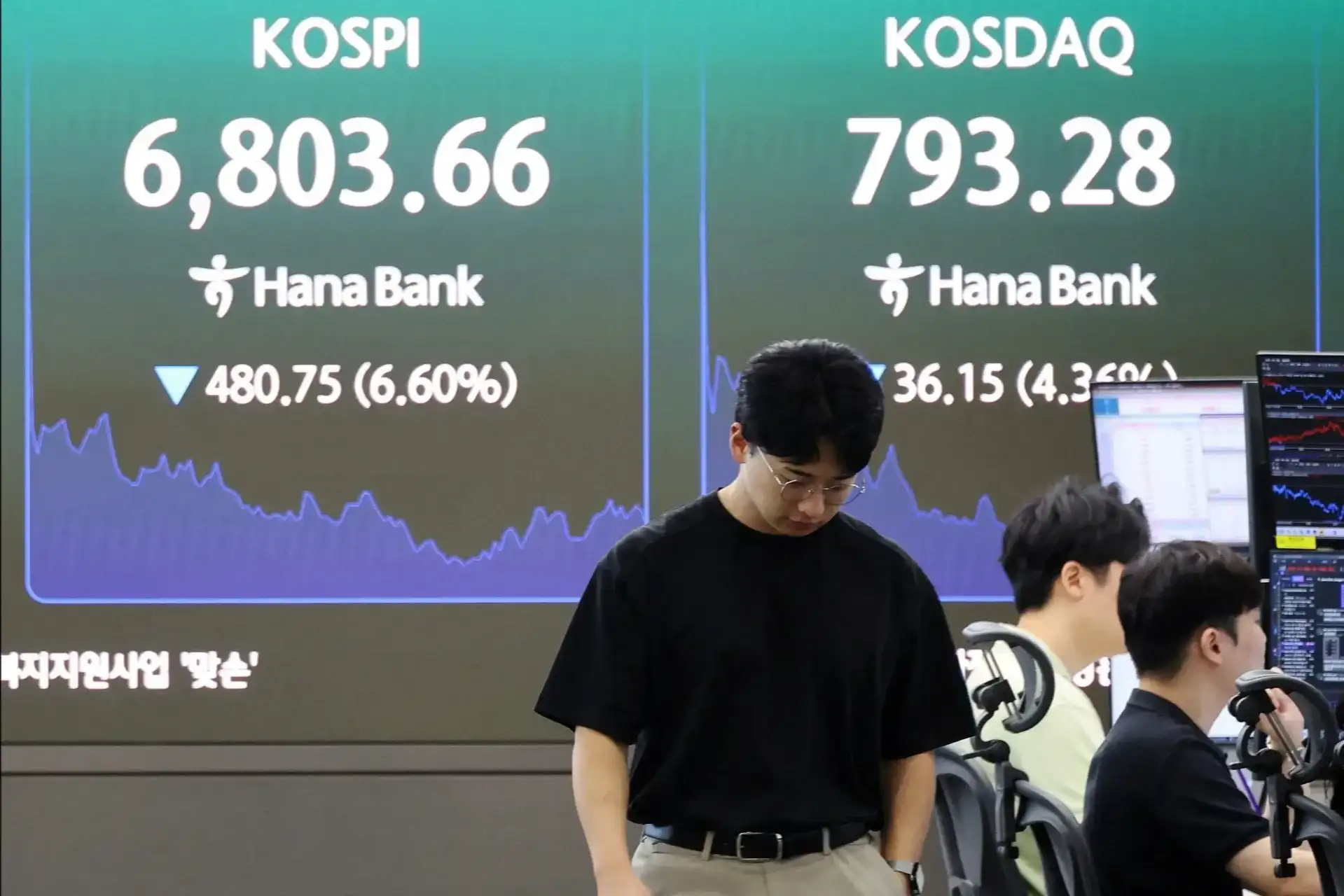
Asian equities opened mostly lower as higher oil prices revived concerns about inflation and interest-rate increases. South Korean shares declined after the market reopened from a holiday, Japanese stocks edged higher, and S&P 500 futures fell about 0.2%.
8:42 PMEconomic TimesGold fell as the unresolved Strait of Hormuz disruption kept energy costs high and reinforced expectations that the Federal Reserve may raise interest rates further to contain persistent inflation.
7:59 PMBloomberg Markets
A renewed Federal Reserve tightening cycle could lift US yields, strengthen the dollar and pressure emerging market currencies. In India, that could push government bond yields higher, especially at the longer end, while making the rupee and foreign capital flows more vulnerable.
11:46 PMEconomic Times
The Federal Reserve's rate hike may already be reflected in market prices, but the direction of US bond yields and the dollar remains the key issue. Attractive US bond yields could create a stronger alternative to Indian equities.
11:34 PMEconomic Times
Investors are reducing exposure to the riskiest emerging-market bonds as higher US Treasury yields and a selloff in global credit markets make speculative debt less attractive. Some managers are favoring higher-rated borrowers such as Indonesia and the Philippines while cutting exposure elsewhere.
8:21 PMEconomic Times
U.S. Treasury borrowing costs are running near 5%, while medium-term nominal economic growth is expected to be closer to 4%. That gap raises the risk that debt service will compound faster than the economy's capacity to support it.
1:24 PMFortuneJapan’s two-year government bond yield is approaching 2% as investors increase their expectations for further Bank of Japan rate hikes.
11:18 PMBloomberg MarketsJapanese Finance Minister Satsuki Katayama says higher bond yields partly reflect strong global demand for capital to build AI infrastructure. She warned that the investment boom will eventually lose momentum.
8:04 PMBloomberg MarketsThe AI infrastructure buildout continues, but rising Treasury yields are increasing the cost of financing it. Companies relying heavily on debt now face more expensive capital as they expand data centers and computing capacity.
11:35 AMCNBCGlobal fund managers are reducing their long-standing underweight positions in Chinese equities after four years of retreat. Attractive valuations and potential gains from artificial intelligence are driving the shift.
10:41 PMBloomberg Markets
Redemption requests from retail investors in private-credit vehicles have slowed, easing immediate pressure on the sector. Market participants still warn that it is too early to conclude that conditions have bottomed.
12:00 AMFinancial Times
Indonesia is cutting the minimum trading price for listed shares to a tiny fraction of a US cent in an effort to improve market liquidity.
10:51 PMFinancial TimesGoTo Group shares fell sharply after Indonesia's stock exchange removed the 50-rupiah minimum trading price. The change allowed investors who had been trapped at the floor to sell their holdings.
10:03 PMBloomberg MarketsSummary
Gold fell as higher oil prices revived inflation concerns and strengthened expectations that the Federal Reserve could keep interest rates higher for longer. Silver and platinum also declined.
The key shift is that an energy shock is now being priced as a monetary-policy
Unlock the full First Pass Analysis to get a better understanding of why this story mattersWhy it matters
Oil-driven inflation is undermining one of gold’s main supports by pushing markets toward higher interest rates.
Summary
The dollar strengthened as investors prepared for US inflation data and central bank decisions, while US-Iran tensions pushed oil prices higher. Rising energy costs increased expectations that the Federal Reserve may maintain or raise interest rates.
The dollar is benefiting from a familiar combination of geopolitical risk and widening rate support,
Unlock the full First Pass Analysis to get a better understanding of why this story mattersWhy it matters
A stronger dollar and costlier oil tighten financial conditions globally and raise pressure on other central banks.
Summary
Treasury prices fell again as oil rallied after President Donald Trump rejected Iran's proposal to reopen the Strait of Hormuz, renewing fears of an energy-driven inflation shock.
The breakdown over Hormuz has revived the market's worst-case scenario: higher energy costs feeding inflation
Unlock the full First Pass Analysis to get a better understanding of why this story mattersWhy it matters
The Iran standoff is tightening financial conditions far beyond the energy market.
Summary
Asian equities opened mostly lower as higher oil prices revived concerns about inflation and interest-rate increases. South Korean shares declined after the market reopened from a holiday, Japanese stocks edged higher, and S&P 500 futures fell about 0.2%.
The immediate market shift is a broad reduction in risk appetite as investors reassess the
Unlock the full First Pass Analysis to get a better understanding of why this story mattersWhy it matters
Oil is turning a regional equity pause into a wider test of whether markets can sustain current valuations.
Summary
Gold fell as the unresolved Strait of Hormuz disruption kept energy costs high and reinforced expectations that the Federal Reserve may raise interest rates further to contain persistent inflation.
Higher oil prices are shifting markets toward a more hawkish Fed outlook, weakening gold's appeal
Unlock the full First Pass Analysis to get a better understanding of why this story mattersWhy it matters
A prolonged energy shock could transmit from the Middle East into US rates, gold prices, and broader financial conditions.
Summary
A renewed Federal Reserve tightening cycle could lift US yields, strengthen the dollar and pressure emerging market currencies. In India, that could push government bond yields higher, especially at the longer end, while making the rupee and foreign capital flows more vulnerable.
Higher US yields would tighten financial conditions for India even without a domestic rate increase.
Unlock the full First Pass Analysis to get a better understanding of why this story mattersWhy it matters
The next move in Indian bonds and the rupee may depend more on US yields and dollar strength than on domestic fundamentals.
Summary
The Federal Reserve's rate hike may already be reflected in market prices, but the direction of US bond yields and the dollar remains the key issue. Attractive US bond yields could create a stronger alternative to Indian equities.
The risk for Indian equities now comes from what follows the rate hike, not simply
Unlock the full First Pass Analysis to get a better understanding of why this story mattersWhy it matters
Indian equities face greater competition for global capital as US bonds once again offer compelling yields.
Summary
Investors are reducing exposure to the riskiest emerging-market bonds as higher US Treasury yields and a selloff in global credit markets make speculative debt less attractive. Some managers are favoring higher-rated borrowers such as Indonesia and the Philippines while cutting exposure elsewhere.
The decisive change is a move from yield-seeking to credit selectivity as US rates rise
Unlock the full First Pass Analysis to get a better understanding of why this story mattersWhy it matters
Higher US yields are narrowing emerging markets’ financing options and increasing the penalty for weak credit quality.
Summary
U.S. Treasury borrowing costs are running near 5%, while medium-term nominal economic growth is expected to be closer to 4%. That gap raises the risk that debt service will compound faster than the economy's capacity to support it.
The decisive shift is the unfavorable gap between the government's effective borrowing costs and nominal
Unlock the full First Pass Analysis to get a better understanding of why this story mattersWhy it matters
A widening growth-to-interest gap could raise Treasury yields, tighten global financial conditions, and constrain U.S. fiscal policy.
Summary
Japan’s two-year government bond yield is approaching 2% as investors increase their expectations for further Bank of Japan rate hikes.
Short-term Japanese borrowing costs are repricing toward a more normal rate environment, reversing the legacy
Unlock the full First Pass Analysis to get a better understanding of why this story mattersWhy it matters
Japan’s rate outlook is becoming a larger driver of global bond and currency markets.
Summary
Japanese Finance Minister Satsuki Katayama says higher bond yields partly reflect strong global demand for capital to build AI infrastructure. She warned that the investment boom will eventually lose momentum.
Japan is framing the yield rise as a consequence of real capital demand rather than
Unlock the full First Pass Analysis to get a better understanding of why this story mattersWhy it matters
A slowdown in AI spending could reverse one of the forces currently pushing bond yields higher worldwide.
Summary
The AI infrastructure buildout continues, but rising Treasury yields are increasing the cost of financing it. Companies relying heavily on debt now face more expensive capital as they expand data centers and computing capacity.
Higher yields put pressure on AI firms before they generate enough cash to fund expansion
Unlock the full First Pass Analysis to get a better understanding of why this story mattersWhy it matters
More expensive debt could slow the AI buildout or concentrate it among companies with the strongest balance sheets.
Summary
Global fund managers are reducing their long-standing underweight positions in Chinese equities after four years of retreat. Attractive valuations and potential gains from artificial intelligence are driving the shift.
The change marks a tentative move from broad China avoidance toward selective re-entry. It could
Unlock the full First Pass Analysis to get a better understanding of why this story mattersWhy it matters
Even a modest repositioning by global funds can ease pressure on Chinese markets after years of foreign selling.
Summary
Redemption requests from retail investors in private-credit vehicles have slowed, easing immediate pressure on the sector. Market participants still warn that it is too early to conclude that conditions have bottomed.
Slower withdrawals reduce the near-term risk of forced asset sales, but they do not resolve
Unlock the full First Pass Analysis to get a better understanding of why this story mattersWhy it matters
The liquidity strain is moderating, but confidence in private credit remains fragile.
Summary
Indonesia is cutting the minimum trading price for listed shares to a tiny fraction of a US cent in an effort to improve market liquidity.
The change targets a basic market constraint: high nominal prices can make small lots too
Unlock the full First Pass Analysis to get a better understanding of why this story mattersWhy it matters
Indonesia is using market plumbing to support liquidity as weak performance threatens participation.
Summary
GoTo Group shares fell sharply after Indonesia's stock exchange removed the 50-rupiah minimum trading price. The change allowed investors who had been trapped at the floor to sell their holdings.
The rule change converted a technical trading constraint into immediate selling pressure. GoTo now faces
Unlock the full First Pass Analysis to get a better understanding of why this story mattersWhy it matters
Removing a price floor can reveal the full extent of investor pessimism almost instantly.
A curated list of other prominent stories from this day.

Swati Khemani of Carnelian Asset Management argues that de-rating is an underappreciated investment risk and the counterpart to alpha. The danger rises when market expectations grow faster than the underlying business, leaving little room for positive surprises.
11:59 PMEconomic TimesNomura North Asia CIO Julia Wang says the US economy can withstand additional interest-rate increases without falling into recession. She points to resilient consumer spending, continued AI investment and loose fiscal policy as growth supports.
8:51 PMBloomberg MarketsStrategists see room for the Malaysian ringgit to appreciate as higher oil prices improve external support and the AI boom boosts investment demand. Malaysia stands to benefit from both commodity exposure and technology-related capital spending.
7:57 PMBloomberg Markets
Bank regulators and federal lawmakers are concerned that contracts betting on bank failures could amplify fear and destabilize confidence. The contracts have appeared on Polymarket's international platform but are not permitted on its U.S. exchange.
5:06 PMPYMNTS
With mortgage rates above 7%, the S&P 500 has substantially outperformed housing as an investment over the past decade. But buying a home also combines an investment decision with the practical choice of where to live.
4:20 PMFortuneMarkets will track data on both sides of the Federal Reserve's mandate, including inflation and employment. Investors will also assess Micron's earnings and Eli Lilly's updates on its obesity-drug pipeline.
12:16 PMCNBC
Major US stock indexes remain near record highs even as elevated oil prices, rising Treasury yields and the prospect of further Federal Reserve rate hikes pressure markets. The headline rally therefore masks growing strain beneath the surface.
9:00 AMMarketWatchWall Street analysts identify three dividend stocks for investors seeking more reliable income. The recommendations are presented as potential additions to portfolios focused on cash generation and stability.
7:33 AMCNBCInstitutional investors are again exerting more influence over stock-market direction than individual traders. One analysis views their activity as a constructive signal for risk appetite.
7:32 AMCNBCThe Technology Select SPDR, or XLK, may be positioned to turn its recent rebound into a broader breakout. Technical analyst Frank Cappelleri sees room for the move to strengthen.
7:27 AMCNBC
A stronger-than-expected jobs report could push 10-year and 30-year Treasury yields higher. It could also increase pressure on the Federal Reserve to raise interest rates again in October.
7:00 AMMarketWatch
Investors are pursuing Dubai-based investment group AIX after it allegedly skipped or delayed payments on bond-like products that promised double-digit annual returns. The disputes raise questions about the products' repayment capacity and investor protections.
5:38 AMFinancial Times
Joel Tillinghast argues that long-term investors should focus on business fundamentals rather than short-term share-price movements. He emphasizes competitive advantages, growth prospects, deep analysis, and the discipline to hold promising companies through price gains.
4:46 AMEconomic Times
New AI companies are reaching public markets with ambitious growth narratives but relatively small revenue bases. Their valuations make the gap between projected potential and current income unusually stark.
12:00 AMFinancial TimesSummary
Swati Khemani of Carnelian Asset Management argues that de-rating is an underappreciated investment risk and the counterpart to alpha. The danger rises when market expectations grow faster than the underlying business, leaving little room for positive surprises.
The warning is about the gap between valuation and execution, not simply weak business performance.
Unlock the full First Pass Analysis to get a better understanding of why this story mattersWhy it matters
High expectations can turn an apparently strong company into a poor investment when business performance cannot keep pace with its valuation.
Summary
Nomura North Asia CIO Julia Wang says the US economy can withstand additional interest-rate increases without falling into recession. She points to resilient consumer spending, continued AI investment and loose fiscal policy as growth supports.
The argument implies that strong private demand and public spending could give the Federal Reserve
Unlock the full First Pass Analysis to get a better understanding of why this story mattersWhy it matters
If the economy absorbs higher rates, investors may need to reset expectations for both Fed cuts and bond yields.
Summary
Strategists see room for the Malaysian ringgit to appreciate as higher oil prices improve external support and the AI boom boosts investment demand. Malaysia stands to benefit from both commodity exposure and technology-related capital spending.
The ringgit is gaining from two distinct channels: stronger trade prospects through energy and greater
Unlock the full First Pass Analysis to get a better understanding of why this story mattersWhy it matters
Malaysia offers investors a way to combine commodity exposure with the regional AI investment cycle.
Summary
Bank regulators and federal lawmakers are concerned that contracts betting on bank failures could amplify fear and destabilize confidence. The contracts have appeared on Polymarket's international platform but are not permitted on its U.S. exchange.
The regulatory concern centers on feedback risk: public bets on a bank's failure could spread
Unlock the full First Pass Analysis to get a better understanding of why this story mattersWhy it matters
Prediction markets could become a new channel for turning doubts about banks into self-reinforcing runs.
Summary
With mortgage rates above 7%, the S&P 500 has substantially outperformed housing as an investment over the past decade. But buying a home also combines an investment decision with the practical choice of where to live.
The decisive distinction is that stocks and homes serve different purposes: equities are liquid financial
Unlock the full First Pass Analysis to get a better understanding of why this story mattersWhy it matters
Higher financing costs make the tradeoff between housing consumption and portfolio returns harder for buyers to ignore.
Summary
Markets will track data on both sides of the Federal Reserve's mandate, including inflation and employment. Investors will also assess Micron's earnings and Eli Lilly's updates on its obesity-drug pipeline.
The week's central question is whether incoming data strengthen the case for rate cuts or
Unlock the full First Pass Analysis to get a better understanding of why this story mattersWhy it matters
The data and company updates could move both interest-rate expectations and two of the market's most crowded growth trades.
Summary
Major US stock indexes remain near record highs even as elevated oil prices, rising Treasury yields and the prospect of further Federal Reserve rate hikes pressure markets. The headline rally therefore masks growing strain beneath the surface.
Rising input costs and bond yields are narrowing the room for stocks to sustain high
Unlock the full First Pass Analysis to get a better understanding of why this story mattersWhy it matters
Record index levels may be disguising a deteriorating backdrop for equities.
Summary
Wall Street analysts identify three dividend stocks for investors seeking more reliable income. The recommendations are presented as potential additions to portfolios focused on cash generation and stability.
Dividend stocks can provide income and reduce dependence on price appreciation, but their resilience depends
Unlock the full First Pass Analysis to get a better understanding of why this story mattersWhy it matters
Income strategies are becoming more selective as investors compare dividend yields with increasingly competitive fixed-income returns.
Summary
Institutional investors are again exerting more influence over stock-market direction than individual traders. One analysis views their activity as a constructive signal for risk appetite.
The shift gives market momentum more dependence on professional allocations, earnings views, and macro positioning
Unlock the full First Pass Analysis to get a better understanding of why this story mattersWhy it matters
The market's next move will increasingly reflect institutional conviction rather than retail trading flows.
Summary
The Technology Select SPDR, or XLK, may be positioned to turn its recent rebound into a broader breakout. Technical analyst Frank Cappelleri sees room for the move to strengthen.
A confirmed breakout would signal renewed leadership from large technology stocks and could pull broader
Unlock the full First Pass Analysis to get a better understanding of why this story mattersWhy it matters
XLK's next move could help determine whether technology resumes its role as the market's primary engine.
Summary
A stronger-than-expected jobs report could push 10-year and 30-year Treasury yields higher. It could also increase pressure on the Federal Reserve to raise interest rates again in October.
A hot labor report would challenge expectations for slowing growth and keep inflation concerns embedded
Unlock the full First Pass Analysis to get a better understanding of why this story mattersWhy it matters
The jobs data could reset expectations for both the Fed's next move and the cost of capital across markets.
Summary
Investors are pursuing Dubai-based investment group AIX after it allegedly skipped or delayed payments on bond-like products that promised double-digit annual returns. The disputes raise questions about the products' repayment capacity and investor protections.
Missed payments turn high-yield promises into an immediate test of liquidity and credit risk. Investors
Unlock the full First Pass Analysis to get a better understanding of why this story mattersWhy it matters
The episode shows how quickly illiquid, high-return products can expose investors to payment and enforcement risk.
Summary
Joel Tillinghast argues that long-term investors should focus on business fundamentals rather than short-term share-price movements. He emphasizes competitive advantages, growth prospects, deep analysis, and the discipline to hold promising companies through price gains.
The approach shifts attention from market noise to a company's ability to compound value over
Unlock the full First Pass Analysis to get a better understanding of why this story mattersWhy it matters
A fundamentals-first process can reduce emotional trading and improve decisions when market prices move faster than business performance.
Summary
New AI companies are reaching public markets with ambitious growth narratives but relatively small revenue bases. Their valuations make the gap between projected potential and current income unusually stark.
The IPO market is pricing AI companies on expected dominance rather than demonstrated scale. That
Unlock the full First Pass Analysis to get a better understanding of why this story mattersWhy it matters
AI IPOs will test whether investor enthusiasm can survive contact with ordinary revenue and profit metrics.
Make it yours
Pick your topics, set your cadence, and receive your personalized First Pass in your inbox. It’s that simple!