US stock-index futures were little changed as the United States and Canada appeared close to an all-out trade conflict. The threat involves two major trading partners with deeply integrated economies.
11:02 PMMarketWatch40 stories from 8 sources
Supporting Articles
US stock-index futures were little changed as the United States and Canada appeared close to an all-out trade conflict. The threat involves two major trading partners with deeply integrated economies.
11:02 PMMarketWatch
A 50 percent U.S. tariff on selected Canadian imports will raise prices on an unusual mix of products, including buoys, dog muzzles, capes, flags and metal statuettes. The list shows that the measures extend well beyond major industrial goods.
12:14 PMThe New York Times
Canada and the United States are imposing retaliatory tariffs that will raise costs for businesses and consumers in both economies. The trade confrontation threatens to weaken economic activity on both sides of the border.
11:54 AMAl Jazeera
Canada suspended trade talks, after which President Trump imposed 50 percent tariffs on a range of Canadian goods. Prime Minister Mark Carney said Canada would respond with matching tariffs on U.S. products.
2:49 PMThe New York Times
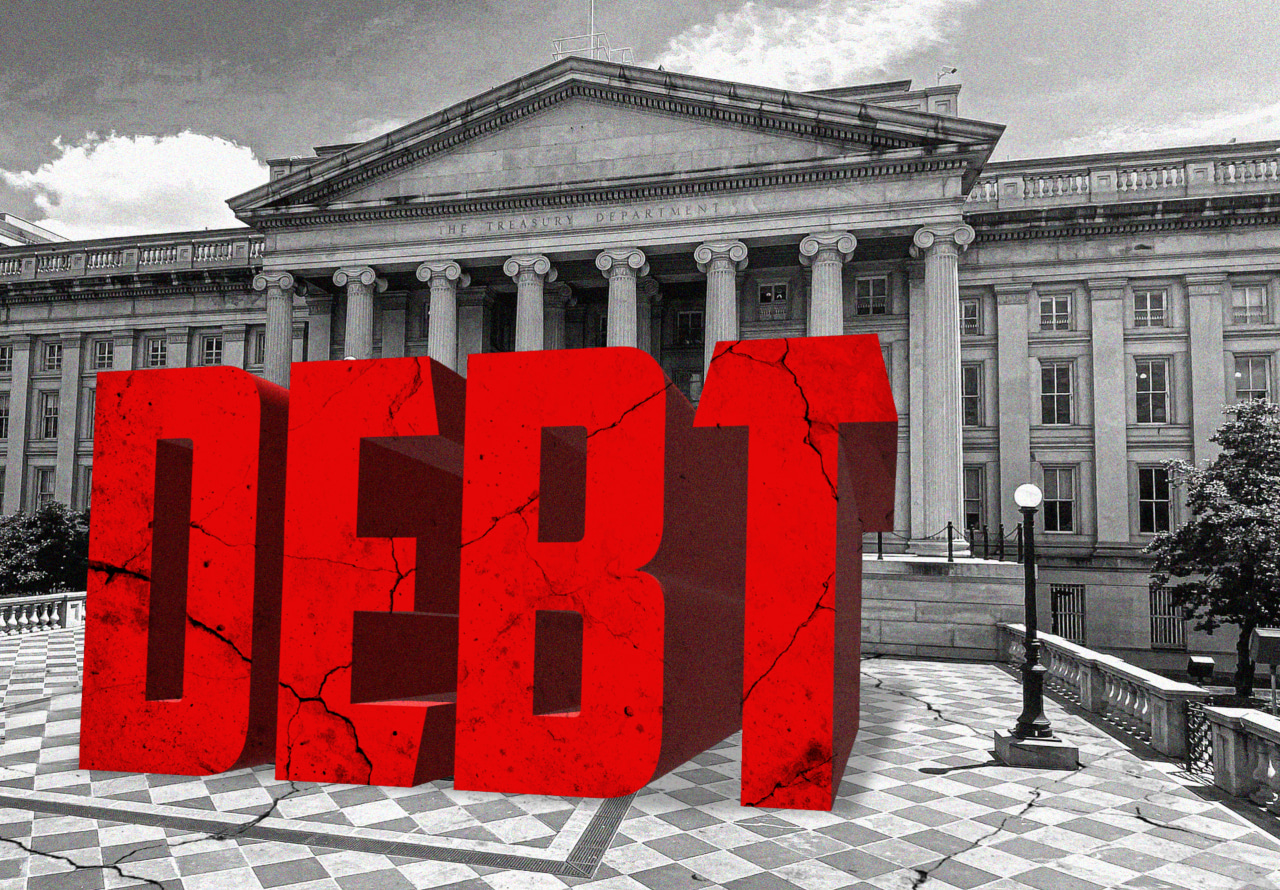
Pepperstone Research strategist Dilin Wu said Treasury yields are rising because of structural economic pressures and argued that Fed Chair Kevin Warsh faces difficult choices over the cost of servicing US debt.
11:04 PMBloomberg MarketsPimco expects the additional compensation investors demand for holding long-term government bonds to remain elevated unless the economy suffers an unexpected downturn. The firm sees higher yields as an opportunity to buy bonds.
9:50 PMBloomberg Markets
Treasury Secretary Scott Bessent’s effort to lower long-term borrowing costs through a so-called Treasury twist failed to prevent yields from rebounding. Record federal debt and rising corporate borrowing are keeping upward pressure on rates, while market participants may also be reacting to misinformation about the deficit.
9:37 PMEconomic TimesMinneapolis Fed President Neel Kashkari said the Treasury market is functioning well despite rising US yields. His comments followed Treasury Secretary Scott Bessent’s plan to buy back long-term government debt.
8:31 PMBloomberg Markets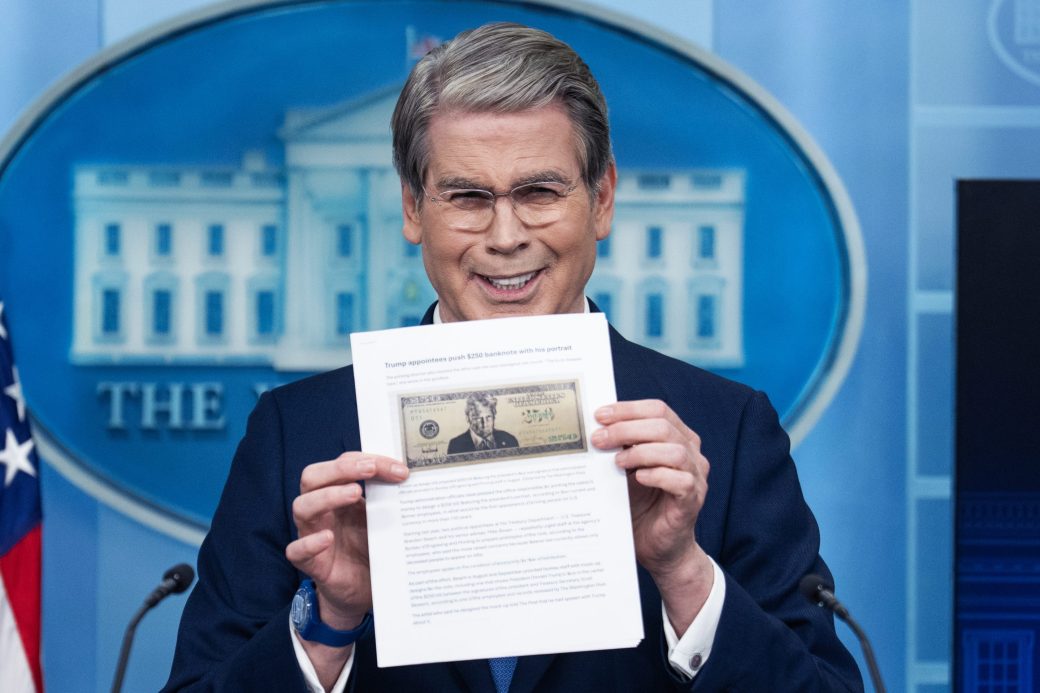
Recent Treasury actions in bond and currency markets have prompted a warning that policymakers may be pursuing a softer form of financial repression to reduce government borrowing costs. The argument is that if Treasury bond prices cannot adjust lower, the dollar may weaken instead, reducing the foreign exchange value of bonds held by overseas investors.
1:22 PMFortune
Samsung Electronics shares fell 8% after its record 79 billion dollar shareholder-return plan failed to meet investor expectations. The plan includes 90 trillion won to 110 trillion won in distributions this year, including 30 trillion won in third-quarter dividends, but analysts criticized the limited clarity on buybacks.
11:49 PMEconomic Times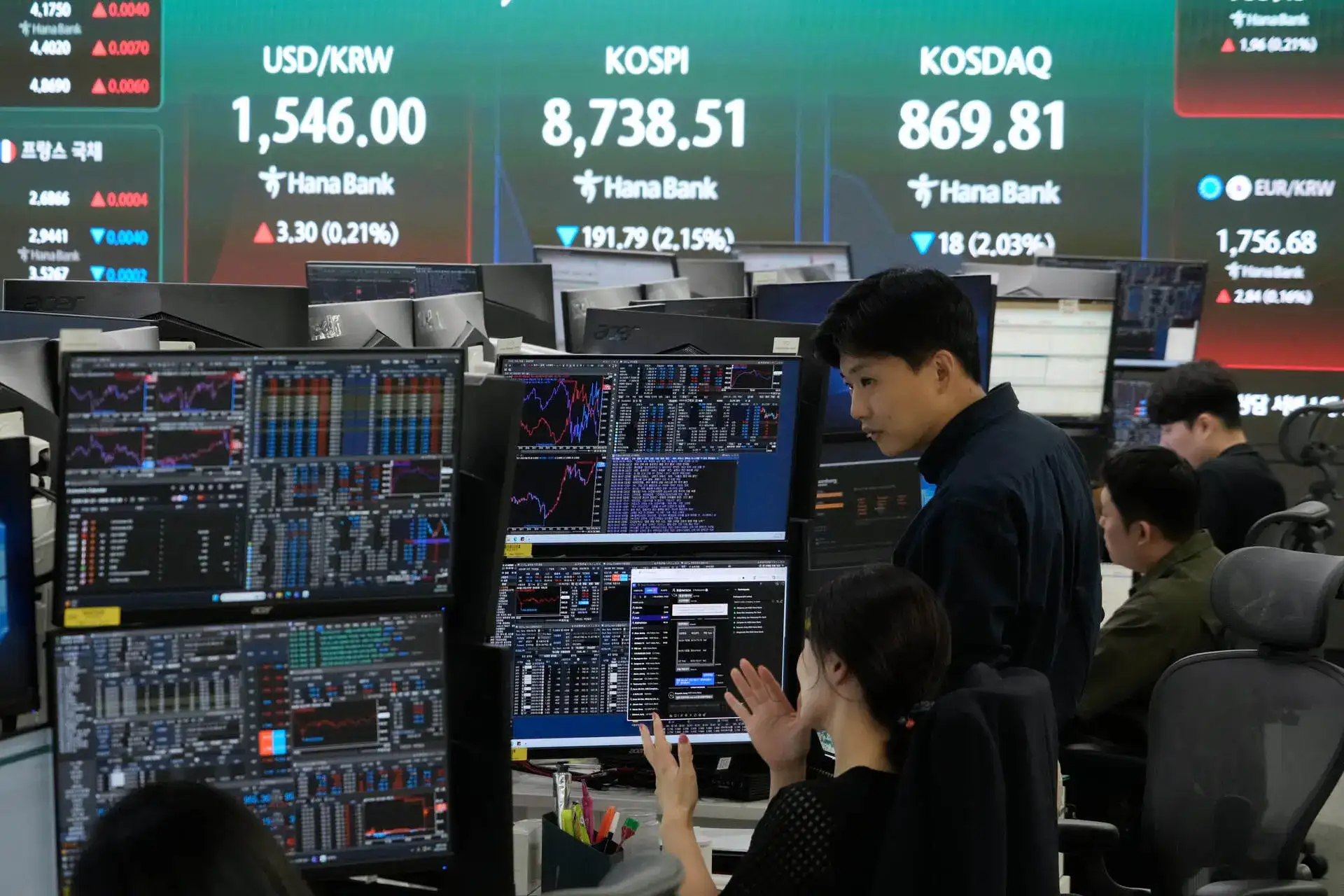
Asian equities edged lower, with the MSCI Asia Pacific index falling 0.1% and South Korea's Kospi dropping 1.2% as investors reassessed AI-linked stocks. US equity futures recovered from earlier losses, with Nasdaq 100 contracts rising 0.1%, while oil prices declined.
9:03 PMEconomic TimesMarkets will focus on Nvidia’s earnings and Kevin Warsh’s first speech at the Jackson Hole symposium. The two events will test both the durability of the AI-driven equity rally and expectations for Federal Reserve policy.
12:56 PMCNBC
Leveraged single-stock ETFs drew billions of dollars in net inflows even as semiconductor shares and related funds plunged during the market sell-off.
12:00 AMFinancial Times
The dollar is trading near multi-month lows as investors weigh US debt concerns, sanctions, and upcoming policy speeches. The Canadian dollar weakened after trade talks stopped, while the euro and yen stabilized and the Australian and New Zealand dollars reached three-month highs.
10:00 PMEconomic TimesHedge funds are increasing bearish positions against the dollar while awaiting details of Treasury Secretary Scott Bessent’s fiscal plan. The plan is intended to address high US borrowing costs, but its currency implications remain unclear.
9:40 PMBloomberg Markets
Emerging-market carry trades have produced their strongest sustained run since 2008, helped by a weaker US dollar and gains in several emerging-market currencies. Colombia has benefited from both bond and currency returns, while Turkey's high local yields have offset losses from currency depreciation.
9:12 PMEconomic TimesChina’s planned $119 billion funding program to support investment has yet to begin nearly six months after its announcement, according to Caitong Securities. The delay comes as economic growth slows and weakens the program’s potential impact.
10:32 PMBloomberg MarketsZijin Mining said flooding at a major mine in Congo threatens its full-year copper production target as copper prices trade near a record high.
11:42 PMBloomberg Markets
Gold climbed to a more than three-month high as investors awaited US inflation data and a speech from Federal Reserve Chair Kevin Warsh for clues on interest rates. Poland’s central bank also increased its gold reserves, adding to official-sector demand.
9:58 PMEconomic Times
A surprise Treasury bond buyback triggered a sharp market move that forced more than $4 billion in bearish crypto positions to liquidate. Bitcoin broke above $77,000 as the squeeze overwhelmed traders betting it would remain below $67,000.
10:07 AMFortuneSummary
US stock-index futures were little changed as the United States and Canada appeared close to an all-out trade conflict. The threat involves two major trading partners with deeply integrated economies.
The decisive change is that tariff risk is moving from political rhetoric toward a direct
Unlock the full First Pass Analysis to get a better understanding of why this story mattersWhy it matters
A US-Canada trade war would turn a bilateral policy dispute into a broad North American growth risk.
Summary
A 50 percent U.S. tariff on selected Canadian imports will raise prices on an unusual mix of products, including buoys, dog muzzles, capes, flags and metal statuettes. The list shows that the measures extend well beyond major industrial goods.
The tariffs will hit niche Canadian exporters and U.S. buyers even where the trade flows
Unlock the full First Pass Analysis to get a better understanding of why this story mattersWhy it matters
The tariff list shows how a broad trade fight can raise costs in mundane markets far removed from headline industries.
Summary
Canada and the United States are imposing retaliatory tariffs that will raise costs for businesses and consumers in both economies. The trade confrontation threatens to weaken economic activity on both sides of the border.
Higher tariffs shift the burden onto companies and households through more expensive imported goods and
Unlock the full First Pass Analysis to get a better understanding of why this story mattersWhy it matters
The dispute turns trade policy into a shared inflation and growth problem for two closely integrated economies.
Summary
Canada suspended trade talks, after which President Trump imposed 50 percent tariffs on a range of Canadian goods. Prime Minister Mark Carney said Canada would respond with matching tariffs on U.S. products.
The breakdown in negotiations has shifted the dispute from bargaining to reciprocal economic pressure. Dollar-for-dollar
Unlock the full First Pass Analysis to get a better understanding of why this story mattersWhy it matters
A tariff cycle between two closely integrated economies can disrupt supply chains, raise prices and weaken North American growth.
2 stories · 2 sources
Summary
Pepperstone Research strategist Dilin Wu said Treasury yields are rising because of structural economic pressures and argued that Fed Chair Kevin Warsh faces difficult choices over the cost of servicing US debt.
Higher Treasury yields are becoming a fiscal constraint, not just a signal of changing monetary
Unlock the full First Pass Analysis to get a better understanding of why this story mattersWhy it matters
The Fed may face a conflict between price stability and the Treasury's rising cost of borrowing.
Summary
Pimco expects the additional compensation investors demand for holding long-term government bonds to remain elevated unless the economy suffers an unexpected downturn. The firm sees higher yields as an opportunity to buy bonds.
The market is repricing long-duration debt around persistent inflation, fiscal, and supply risks rather than
Unlock the full First Pass Analysis to get a better understanding of why this story mattersWhy it matters
Higher term premiums could keep long-term borrowing costs elevated even as central banks ease, reshaping bond allocation and government financing conditions.
Summary
Treasury Secretary Scott Bessent’s effort to lower long-term borrowing costs through a so-called Treasury twist failed to prevent yields from rebounding. Record federal debt and rising corporate borrowing are keeping upward pressure on rates, while market participants may also be reacting to misinformation about the deficit.
The rebound shows that Treasury operations have limited power against the larger supply of government
Unlock the full First Pass Analysis to get a better understanding of why this story mattersWhy it matters
Persistently high yields would raise financing costs for the government, companies, and households, limiting the administration’s room to support growth.
2 stories · 2 sources
Summary
Minneapolis Fed President Neel Kashkari said the Treasury market is functioning well despite rising US yields. His comments followed Treasury Secretary Scott Bessent’s plan to buy back long-term government debt.
Kashkari’s assessment pushes back against the idea that higher yields signal a market dysfunction requiring
Unlock the full First Pass Analysis to get a better understanding of why this story mattersWhy it matters
The Fed’s confidence in market functioning reduces pressure for emergency action, while leaving the government to address the underlying supply and debt burden.
Summary
Recent Treasury actions in bond and currency markets have prompted a warning that policymakers may be pursuing a softer form of financial repression to reduce government borrowing costs. The argument is that if Treasury bond prices cannot adjust lower, the dollar may weaken instead, reducing the foreign exchange value of bonds held by overseas investors.
The key shift is a possible transfer of adjustment from Treasury yields to the dollar.
Unlock the full First Pass Analysis to get a better understanding of why this story mattersWhy it matters
Debt management that relies on dollar depreciation could lower near-term funding pressure while raising longer-term risks for inflation, capital flows, and the dollar’s credibility.
Summary
Samsung Electronics shares fell 8% after its record 79 billion dollar shareholder-return plan failed to meet investor expectations. The plan includes 90 trillion won to 110 trillion won in distributions this year, including 30 trillion won in third-quarter dividends, but analysts criticized the limited clarity on buybacks.
The selloff reflects a gap between headline payout size and the quality of the capital
Unlock the full First Pass Analysis to get a better understanding of why this story mattersWhy it matters
For large semiconductor companies, investors are judging not only cash returns but also how precisely management allocates capital.
Summary
Asian equities edged lower, with the MSCI Asia Pacific index falling 0.1% and South Korea's Kospi dropping 1.2% as investors reassessed AI-linked stocks. US equity futures recovered from earlier losses, with Nasdaq 100 contracts rising 0.1%, while oil prices declined.
The immediate shift is a divergence between weaker AI-sensitive Asian markets and a more resilient
Unlock the full First Pass Analysis to get a better understanding of why this story mattersWhy it matters
Markets are separating enthusiasm for US technology from broader confidence in Asian growth and the global economic cycle.
Summary
Markets will focus on Nvidia’s earnings and Kevin Warsh’s first speech at the Jackson Hole symposium. The two events will test both the durability of the AI-driven equity rally and expectations for Federal Reserve policy.
Nvidia’s results could reset valuations across the technology sector, while Warsh’s remarks could shift expectations
Unlock the full First Pass Analysis to get a better understanding of why this story mattersWhy it matters
The week puts the market’s two main supports, AI earnings and monetary policy, under simultaneous scrutiny.
Summary
Leveraged single-stock ETFs drew billions of dollars in net inflows even as semiconductor shares and related funds plunged during the market sell-off.
The decisive shift was toward buying leveraged exposure during a sharp decline, turning a chip
Unlock the full First Pass Analysis to get a better understanding of why this story mattersWhy it matters
Heavy inflows into leveraged products can magnify both the next rebound and the next leg down.
Summary
The dollar is trading near multi-month lows as investors weigh US debt concerns, sanctions, and upcoming policy speeches. The Canadian dollar weakened after trade talks stopped, while the euro and yen stabilized and the Australian and New Zealand dollars reached three-month highs.
Debt anxiety is limiting demand for the dollar even as markets await clearer policy signals
Unlock the full First Pass Analysis to get a better understanding of why this story mattersWhy it matters
A weaker dollar can ease global financial conditions, but it also signals declining confidence in US fiscal and policy management.
Summary
Hedge funds are increasing bearish positions against the dollar while awaiting details of Treasury Secretary Scott Bessent’s fiscal plan. The plan is intended to address high US borrowing costs, but its currency implications remain unclear.
The dollar’s vulnerability reflects uncertainty over whether the plan will reduce fiscal risk or reinforce
Unlock the full First Pass Analysis to get a better understanding of why this story mattersWhy it matters
Dollar shorts are turning fiscal policy into a near-term market catalyst for currencies, Treasury yields, and global risk appetite.
Summary
Emerging-market carry trades have produced their strongest sustained run since 2008, helped by a weaker US dollar and gains in several emerging-market currencies. Colombia has benefited from both bond and currency returns, while Turkey's high local yields have offset losses from currency depreciation.
The key shift is that investors are earning from both yield differentials and currency appreciation,
Unlock the full First Pass Analysis to get a better understanding of why this story mattersWhy it matters
The carry trade is rewarding investors across multiple channels, but its unusually strong run raises the cost of a reversal in dollar and risk sentiment.
Summary
China’s planned $119 billion funding program to support investment has yet to begin nearly six months after its announcement, according to Caitong Securities. The delay comes as economic growth slows and weakens the program’s potential impact.
The key change is the widening gap between Beijing’s policy announcements and actual fiscal deployment.
Unlock the full First Pass Analysis to get a better understanding of why this story mattersWhy it matters
China’s stimulus credibility is at stake, and prolonged delays could deepen concerns that official support will arrive after the economy has already weakened.
Summary
Zijin Mining said flooding at a major mine in Congo threatens its full-year copper production target as copper prices trade near a record high.
The disruption tightens an already constrained copper market and raises the risk that supply growth
Unlock the full First Pass Analysis to get a better understanding of why this story mattersWhy it matters
A single operational failure could extend copper's supply deficit and reinforce bullish pressure on prices.
Summary
Gold climbed to a more than three-month high as investors awaited US inflation data and a speech from Federal Reserve Chair Kevin Warsh for clues on interest rates. Poland’s central bank also increased its gold reserves, adding to official-sector demand.
Gold is benefiting from both near-term rate uncertainty and a broader effort by central banks
Unlock the full First Pass Analysis to get a better understanding of why this story mattersWhy it matters
Gold is serving as both a hedge against policy uncertainty and a reserve asset, broadening the forces supporting prices beyond investor speculation.
Summary
A surprise Treasury bond buyback triggered a sharp market move that forced more than $4 billion in bearish crypto positions to liquidate. Bitcoin broke above $77,000 as the squeeze overwhelmed traders betting it would remain below $67,000.
The episode shows how quickly a policy shock in the bond market can transmit into
Unlock the full First Pass Analysis to get a better understanding of why this story mattersWhy it matters
A bond-market intervention triggered one of crypto’s largest recent squeezes, exposing how leverage can turn a policy surprise into a rapid price surge.
A curated list of other prominent stories from this day.

A rupee at 96 to the dollar gives non-resident Indians more rupees for each dollar remitted, but it can also reduce the dollar value of rupee-denominated investments over time. The case for sending more money to India therefore depends on investment returns and currency risk, not just the exchange rate at the time of transfer.
11:42 PMEconomic TimesVietnamese equities secured a larger-than-expected weighting in FTSE Russell’s semiannual index review, potentially attracting about $3 billion in additional inflows. The upgrade offers a lift after a weak year for the market.
9:00 PMBloomberg Markets
A hawkish monetary-policy stance and the conflict in West Asia are complicating the outlook for India's rupee and bond yields. Large foreign-exchange inflows give the central bank room to intervene, while analysts expect the rupee to trade between 95.50 and 96.00.
8:20 PMEconomic Times
Russia's financial sector is losing deposits, creating a liquidity crunch that threatens the Kremlin's ability to fund the war. The strain could also push authorities toward more aggressive military recruitment.
7:15 PMFortune
Poor harvests, attacks on trade routes and escalating trade disputes are disrupting major food suppliers. The combined shocks threaten to push food prices higher worldwide.
2:02 PMThe New York Times
Michael Burry said he sold his Alibaba position after deciding the shares had become too expensive, reversing his earlier plan to buy back most of the stake after one or two months. His comments came before a share sale by the company.
1:58 PMFortuneEqual-weight stock ETFs are attracting heavy inflows as the equal-weight S&P 500 outperforms in 2026. Investors and strategists increasingly view the shift as a durable broadening of market leadership rather than a short-lived trend.
9:00 AMCNBC
Israel's debt burden is worsening as prolonged wars raise spending while tax revenues decline. The pressure is compounded by the departure of more high-income taxpayers.
3:46 AMAl JazeeraSummary
A rupee at 96 to the dollar gives non-resident Indians more rupees for each dollar remitted, but it can also reduce the dollar value of rupee-denominated investments over time. The case for sending more money to India therefore depends on investment returns and currency risk, not just the exchange rate at the time of transfer.
The weaker rupee improves the immediate conversion rate but does not guarantee better dollar-based wealth
Unlock the full First Pass Analysis to get a better understanding of why this story mattersWhy it matters
A favorable rupee conversion rate can still produce a poor outcome for investors measuring returns in dollars.
Summary
Vietnamese equities secured a larger-than-expected weighting in FTSE Russell’s semiannual index review, potentially attracting about $3 billion in additional inflows. The upgrade offers a lift after a weak year for the market.
The decisive shift is the increase in Vietnam’s representation in a major benchmark, which can
Unlock the full First Pass Analysis to get a better understanding of why this story mattersWhy it matters
A benchmark change could turn Vietnam into a near-term regional allocation story and provide a rare catalyst for its underperforming equity market.
Summary
A hawkish monetary-policy stance and the conflict in West Asia are complicating the outlook for India's rupee and bond yields. Large foreign-exchange inflows give the central bank room to intervene, while analysts expect the rupee to trade between 95.50 and 96.00.
The central bank's intervention capacity is the main stabilizing force, but it cannot remove the
Unlock the full First Pass Analysis to get a better understanding of why this story mattersWhy it matters
India can cushion near-term currency pressure with its reserves, but geopolitical shocks could still transmit quickly into the rupee and bond market.
Summary
Russia's financial sector is losing deposits, creating a liquidity crunch that threatens the Kremlin's ability to fund the war. The strain could also push authorities toward more aggressive military recruitment.
Deposit flight is becoming a constraint on both bank stability and wartime financing. If the
Unlock the full First Pass Analysis to get a better understanding of why this story mattersWhy it matters
Financial stress is narrowing the Kremlin's options for sustaining the war.
Summary
Poor harvests, attacks on trade routes and escalating trade disputes are disrupting major food suppliers. The combined shocks threaten to push food prices higher worldwide.
Food markets are facing simultaneous supply and distribution constraints, leaving less room to offset one
Unlock the full First Pass Analysis to get a better understanding of why this story mattersWhy it matters
Multiple shocks to food production and transport could turn localized disruptions into a broader inflation and food-security crisis.
Summary
Michael Burry said he sold his Alibaba position after deciding the shares had become too expensive, reversing his earlier plan to buy back most of the stake after one or two months. His comments came before a share sale by the company.
Burry’s shift signals a more cautious view of Alibaba’s valuation and weakens the case for
Unlock the full First Pass Analysis to get a better understanding of why this story mattersWhy it matters
A prominent investor’s reversal adds pressure to Alibaba’s valuation just as the company seeks to sell more shares.
Summary
Equal-weight stock ETFs are attracting heavy inflows as the equal-weight S&P 500 outperforms in 2026. Investors and strategists increasingly view the shift as a durable broadening of market leadership rather than a short-lived trend.
The $100 billion milestone signals that investors are moving beyond the largest technology stocks and
Unlock the full First Pass Analysis to get a better understanding of why this story mattersWhy it matters
The flow into equal-weight funds suggests market leadership is broadening, potentially changing how investors position for the next phase of the equity cycle.
Summary
Israel's debt burden is worsening as prolonged wars raise spending while tax revenues decline. The pressure is compounded by the departure of more high-income taxpayers.
Israel's fiscal squeeze is becoming structural, not temporary: security costs are rising as the tax
Unlock the full First Pass Analysis to get a better understanding of why this story mattersWhy it matters
A shrinking tax base and rising war costs could turn Israel's security burden into a broader sovereign-finance problem.
Make it yours
Pick your topics, set your cadence, and receive your personalized First Pass in your inbox. It’s that simple!