US-Japan yen intervention turns currency policy into market risk
Day’s Recap
“
”
Supporting Articles
Japan could support the yen through measures other than selling its more than $1.1 trillion of US Treasury holdings, according to Citigroup. The alternatives become more relevant as Japan’s stock of short-term debt holdings declines.
11:50 PMBloomberg Markets
US support for Japan’s yen signals a more active approach to currency policy, with Washington showing a willingness to disrupt trades that conflict with its economic interests.
6:37 AMFinancial Times
The yen held onto gains after coordinated action by Tokyo and Washington, while speculators remained cautious about rebuilding bearish positions. The dollar also weakened after the Federal Reserve held rates steady and oil prices fell, with the upcoming jobs report likely to shape expectations for future tightening.
9:45 PMEconomic Times
Treasury Secretary Scott Bessent is considering ways to support the yen without selling US Treasurys into a fragile bond market. That strategy could require assistance from the Federal Reserve.
9:12 AMCNBC
The article examines the scale of the American intervention in the yen market but concludes that its size cannot yet be determined with confidence.
1:14 PMFinancial Times
The article questions why the U.S. Treasury sold euros to buy yen in an effort to support Japan's weakening currency, calling the intervention unusual and potentially unwise.
11:21 AMFortune
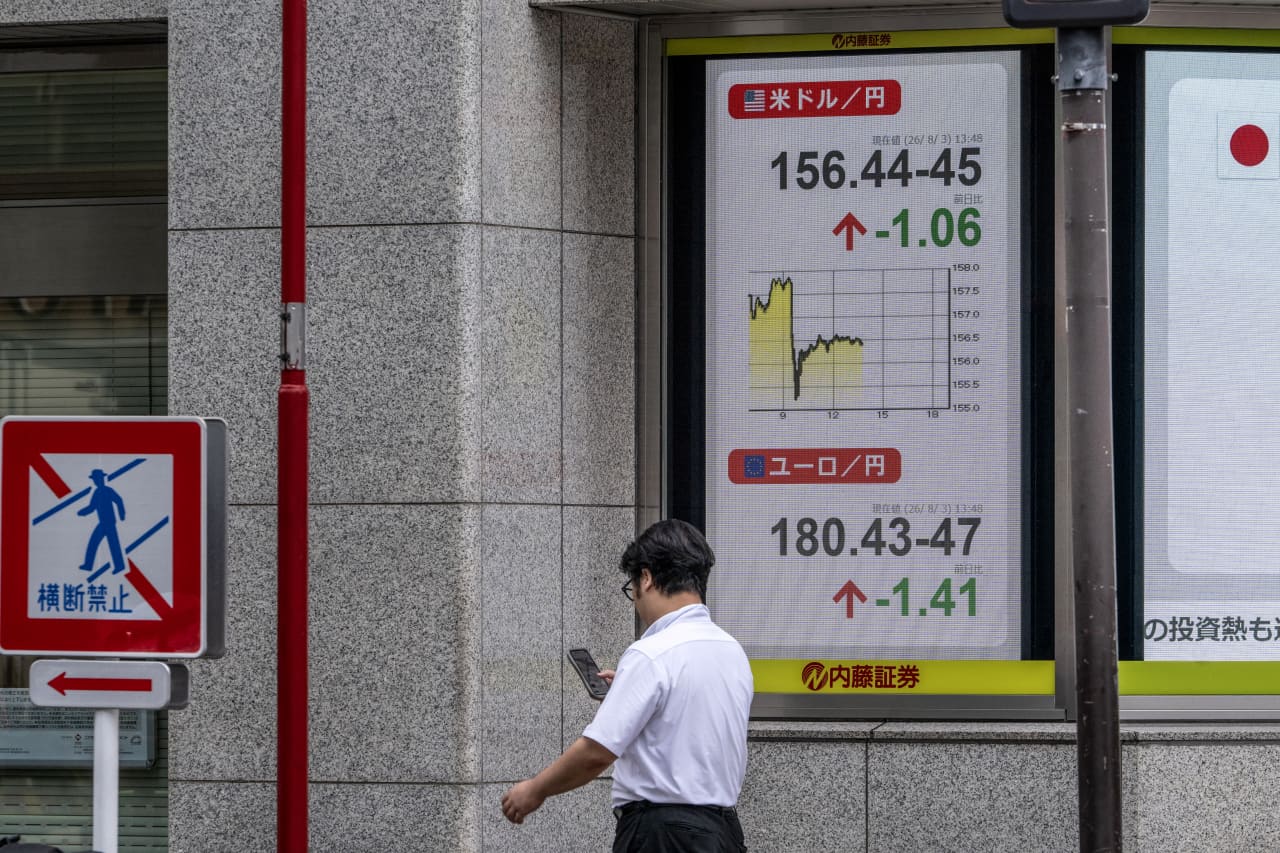
The yen reversed an early decline and rose as much as 1.4% against the dollar in Tokyo trading. The move followed speculation that Japanese authorities could intervene again, with support from the United States.
9:45 AMFortune
The article examines a puzzling intervention related to efforts to influence the yen.
1:30 AMFinancial Times
Volatility is rising in the roughly $30 trillion Treasury market as investors position for higher yields and a potentially turbulent period ahead.
4:32 PMMarketWatch
Rockefeller Capital Management’s Greg Fleming said the scale of US national debt is his primary concern. His comments frame fiscal deterioration as a central risk for markets and the broader economy.
12:28 PMFortune
A $92 million commercial mortgage-backed securities loan secured by Pittsburgh’s Gateway Center office complex was liquidated through a note sale. The transaction produced a $64.8 million loss for the CMBS trust.
12:15 PMHousing Wire
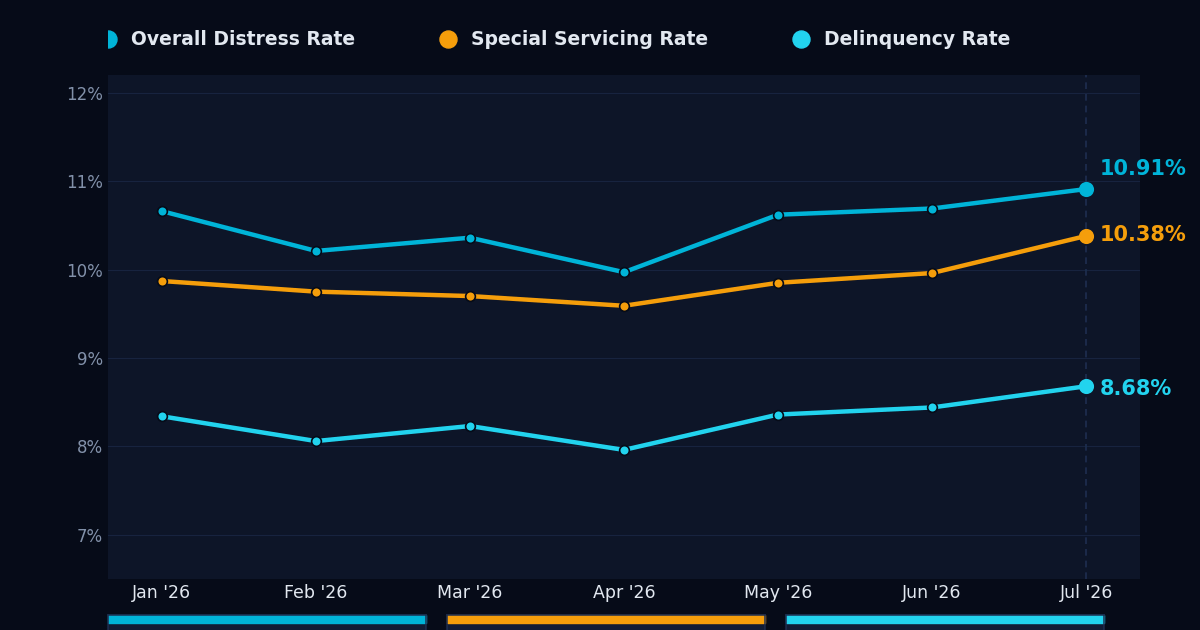
July data showed overall distress across the commercial mortgage-backed securities market reaching a 2026 high. The loan-level analysis covers more than $600 billion of CMBS and separates troubled loans by servicing status and deal characteristics.
8:00 AMHousing Wire
The yen’s rally lost momentum as Asian markets weighed currency developments alongside Donald Trump’s warning to Iran and conflicting signals about possible talks.
11:05 PMBloomberg Markets
US stocks moved close to a record high while oil prices fell after Donald Trump said talks with Iran were under way. Washington and Tehran offered conflicting accounts of the negotiations, leaving markets to price both de-escalation and renewed risk.
10:56 PMAl Jazeera
Asian shares rose after a technology-led rally on Wall Street, while the yen stabilized and oil prices declined as Middle East tensions eased. Investors are turning to corporate earnings and macroeconomic data for evidence that AI investment is translating into growth.
8:53 PMEconomic Times
Goldman Sachs chief global equity strategist Peter Oppenheimer said stock valuations may not be in a bubble, but corporate earnings expectations could be. The distinction points to a market supported by forecasts that may prove too optimistic.
12:03 PMFortune
JPMorgan strategists expect non-US equities to outperform in the second half of 2026 and favor semiconductor stocks over hyperscalers. Their view implies that the market may rotate away from the largest technology platforms toward cheaper regions and companies with more direct exposure to AI hardware demand.
11:03 AMMarketWatch
Foreign investors have sharply reduced buying of Indian government securities after a key index inclusion was delayed. Higher US Treasury yields are drawing capital away, while traders await the next monetary policy signal.
8:22 PMEconomic Times
BlackRock is expanding its cash management strategy with two tokenized money market offerings: OnChain Shares of the BlackRock Select Treasury Based Liquidity Fund and the BlackRock Daily Reinvestment Stablecoin Reserve Vehicle.
3:09 PMPYMNTS
Trading in leveraged ETFs linked to South Korea’s two largest chipmakers has fallen sharply after regulators introduced measures to curb demand. The products had become a major channel for speculative exposure and recent market volatility.
10:31 PMBloomberg Markets
11:50 PMBloomberg Markets
Citi Says Japan Has Yen Defense Tools Beyond Treasury Sales
Summary
Japan could support the yen through measures other than selling its more than $1.1 trillion of US Treasury holdings, according to Citigroup. The alternatives become more relevant as Japan’s stock of short-term debt holdings declines.
Japan’s ability to intervene without disrupting Treasury markets gives policymakers more room to counter excessive
Unlock the full First Pass Analysis to get a better understanding of why this story matters
Why it matters
The prospect of intervention without Treasury liquidation limits one major source of forced selling risk in US government bonds.
Bessent’s yen intervention signals new era of US ‘currency activism’
Summary
US support for Japan’s yen signals a more active approach to currency policy, with Washington showing a willingness to disrupt trades that conflict with its economic interests.
The decisive change is that US officials are treating exchange rates as an instrument of
Unlock the full First Pass Analysis to get a better understanding of why this story matters
Why it matters
More assertive US currency policy could weaken the assumption that major foreign-exchange markets operate largely outside direct political intervention.
Yen clings to intervention gains as traders stay alert to more
Summary
The yen held onto gains after coordinated action by Tokyo and Washington, while speculators remained cautious about rebuilding bearish positions. The dollar also weakened after the Federal Reserve held rates steady and oil prices fell, with the upcoming jobs report likely to shape expectations for future tightening.
Intervention is working first through positioning rather than fundamentals, as traders hesitate to challenge authorities
Unlock the full First Pass Analysis to get a better understanding of why this story matters
Why it matters
The yen’s durability now depends on whether official deterrence can withstand a stronger dollar and higher US rate expectations.
Why the U.S. decided to help Japan by boosting the flailing yen
Summary
US and Japanese intervention strengthened the yen, but strategists argue that interest-rate differentials will ultimately determine its direction. Japanese rates remain well below US rates.
Intervention can slow or reverse a currency move, but it cannot permanently offset the incentive
Unlock the full First Pass Analysis to get a better understanding of why this story matters
Why it matters
The yen’s rebound remains vulnerable unless the economic forces supporting the dollar begin to change.
Japan vows further yen intervention with US if needed
Summary
Japan's finance minister says Tokyo and Washington are prepared to act together again against disorderly yen movements. The commitment signals that previous intervention was not a one-off response.
The key shift is Japan's willingness to preserve a US-backed intervention option rather than rely
Unlock the full First Pass Analysis to get a better understanding of why this story matters
Why it matters
Coordinated intervention could limit yen volatility while intensifying scrutiny of Japan's currency policy.
US and Japan take action to prop up yen in rare joint move
Summary
The US and Japan have jointly acted to support the yen, an unusual intervention aimed at countering the currency's weakness. Both governments say they will not hesitate to intervene together again.
The new element is an explicit commitment to repeat coordinated intervention, which raises the stakes
Unlock the full First Pass Analysis to get a better understanding of why this story matters
Why it matters
A promise of future joint intervention creates a standing deterrent against renewed yen selling.
Analysis: How Bessent is pushing Warsh’s Fed to expand backstop for Japan’s yen defense
Summary
Treasury Secretary Scott Bessent is considering ways to support the yen without selling US Treasurys into a fragile bond market. That strategy could require assistance from the Federal Reserve.
The constraint is clear: defending the yen through Treasury sales could push US yields higher,
Unlock the full First Pass Analysis to get a better understanding of why this story matters
Why it matters
A yen rescue could become a US bond-market and Federal Reserve problem rather than a bilateral currency operation.
America’s ‘weird’ and ‘unwise’ intervention in the Japanese yen: ‘The last thing you want is to give markets any kind of reason to ask questions’
Summary
The article questions why the U.S. Treasury sold euros to buy yen in an effort to support Japan's weakening currency, calling the intervention unusual and potentially unwise.
The decisive issue is credibility: an unconventional U.S. operation could raise more questions about policy
Unlock the full First Pass Analysis to get a better understanding of why this story matters
Why it matters
Questionable intervention tactics can undermine confidence in the policy response they are meant to strengthen.
Yen rises amid speculation of more intervention after U.S. support
Summary
The yen reversed an early decline and rose as much as 1.4% against the dollar in Tokyo trading. The move followed speculation that Japanese authorities could intervene again, with support from the United States.
The prospect of coordinated support has increased the perceived cost of betting against the yen.
Unlock the full First Pass Analysis to get a better understanding of why this story matters
Why it matters
Intervention risk can quickly unwind yen short positions and transmit volatility through global currency markets.
‘A fantastic amount of money to have borrowed’: a top Wall Street wealth advisor is stunned by the national debt
Summary
Rockefeller Capital Management’s Greg Fleming said the scale of US national debt is his primary concern. His comments frame fiscal deterioration as a central risk for markets and the broader economy.
The growing concern is that debt is shifting from a long-term policy issue into a
Unlock the full First Pass Analysis to get a better understanding of why this story matters
Why it matters
Rising debt service can pressure bonds, equities and the dollar while narrowing policymakers’ options.
CMBS Loan Backed by Pittsburgh’s Gateway Center Liquidates at $65M Loss
Summary
A $92 million commercial mortgage-backed securities loan secured by Pittsburgh’s Gateway Center office complex was liquidated through a note sale. The transaction produced a $64.8 million loss for the CMBS trust.
The loss implies a recovery of only about $27.2 million, or roughly 30% of the
Unlock the full First Pass Analysis to get a better understanding of why this story matters
Why it matters
A major office-loan wipeout provides another concrete measure of how severely weak demand is eroding commercial property values.
July data showed overall distress across the commercial mortgage-backed securities market reaching a 2026 high. The loan-level analysis covers more than $600 billion of CMBS and separates troubled loans by servicing status and deal characteristics.
The rise in distress indicates that stress in commercial real estate is broadening or becoming
Unlock the full First Pass Analysis to get a better understanding of why this story matters
Why it matters
Rising CMBS distress signals growing pressure on commercial real estate financing and credit markets.
Yen Rally Loses Steam; Trump Threatens Iran's 'Last Chance' | The Asia Trade 8/4/2026
Summary
The yen’s rally lost momentum as Asian markets weighed currency developments alongside Donald Trump’s warning to Iran and conflicting signals about possible talks.
The fading yen rally suggests traders are reluctant to extend positions without clearer policy or
Unlock the full First Pass Analysis to get a better understanding of why this story matters
Why it matters
The combination of a stalled yen move and uncertain Iran diplomacy leaves Asian assets exposed to abrupt changes in rates, oil and risk appetite.
US stocks near record high, oil falls as Trump claims Iran talks under way
Summary
US stocks moved close to a record high while oil prices fell after Donald Trump said talks with Iran were under way. Washington and Tehran offered conflicting accounts of the negotiations, leaving markets to price both de-escalation and renewed risk.
Markets are treating the possibility of diplomacy as more important than the uncertainty surrounding the
Unlock the full First Pass Analysis to get a better understanding of why this story matters
Why it matters
Investors are pricing a geopolitical thaw before either side has confirmed a durable negotiating channel.
Global Market Today: Asian shares rise after Wall Street rally driven by tech stocks
Summary
Asian shares rose after a technology-led rally on Wall Street, while the yen stabilized and oil prices declined as Middle East tensions eased. Investors are turning to corporate earnings and macroeconomic data for evidence that AI investment is translating into growth.
The market is shifting from liquidity and positioning toward proof of earnings, making this week’s
Unlock the full First Pass Analysis to get a better understanding of why this story matters
Why it matters
Markets need earnings to validate the AI rally while investors reassess the consequences of stronger economic activity for interest rates.
Wall Street’s bulls are starting to admit the earnings bubble is real — and the 60/40 portfolio may be the first casualty
Summary
Goldman Sachs chief global equity strategist Peter Oppenheimer said stock valuations may not be in a bubble, but corporate earnings expectations could be. The distinction points to a market supported by forecasts that may prove too optimistic.
The immediate risk is an earnings reset, not necessarily a collapse in valuation multiples. If
Unlock the full First Pass Analysis to get a better understanding of why this story matters
Why it matters
Investors may face losses in both major asset classes if optimistic earnings forecasts unwind alongside weak bond performance.
Why tech stocks are likely to take a back seat for the rest of 2026, according to JPMorgan strategists
Summary
JPMorgan strategists expect non-US equities to outperform in the second half of 2026 and favor semiconductor stocks over hyperscalers. Their view implies that the market may rotate away from the largest technology platforms toward cheaper regions and companies with more direct exposure to AI hardware demand.
The decisive change is a rotation within the AI trade and across regions, rather than
Unlock the full First Pass Analysis to get a better understanding of why this story matters
Why it matters
The call challenges the concentration that has driven US equity returns and raises the stakes for global diversification.
FPI inflows into Indian G-Secs dry up as US rate hike looms
Summary
Foreign investors have sharply reduced buying of Indian government securities after a key index inclusion was delayed. Higher US Treasury yields are drawing capital away, while traders await the next monetary policy signal.
The immediate shift is a weaker relative appeal for Indian debt as US yields rise
Unlock the full First Pass Analysis to get a better understanding of why this story matters
Why it matters
India could lose a major source of external bond demand just as global investors favor higher-yielding US assets.
BlackRock Intros Pair of Tokenized Money Market Offerings
Summary
BlackRock is expanding its cash management strategy with two tokenized money market offerings: OnChain Shares of the BlackRock Select Treasury Based Liquidity Fund and the BlackRock Daily Reinvestment Stablecoin Reserve Vehicle.
BlackRock is moving tokenization from an experimental use case toward core cash management products. The
Unlock the full First Pass Analysis to get a better understanding of why this story matters
Why it matters
A major asset manager is using tokenization to reshape how short-term cash products are issued, held, and moved.
South Korea’s Leveraged ETF Trading Plummets Under New Curbs
Summary
Trading in leveraged ETFs linked to South Korea’s two largest chipmakers has fallen sharply after regulators introduced measures to curb demand. The products had become a major channel for speculative exposure and recent market volatility.
The abrupt decline shows that regulators can quickly reduce leverage-driven flows by tightening access to
Unlock the full First Pass Analysis to get a better understanding of why this story matters
Why it matters
South Korea’s market is testing whether curbs can contain retail leverage without weakening liquidity more broadly.
A curated list of other prominent stories from this day.
Goldman Sachs strategist Timothy Moe said Japanese equities face a possible tactical pullback after recent currency intervention, while corporate earnings and the market’s longer-term fundamentals remain comparatively resilient.
11:49 PMBloomberg Markets
Gold prices held steady as investors weighed conflicting reports about possible US-Iran talks and awaited US jobs data for signals on Federal Reserve policy. Higher interest rates typically pressure gold, while South Korea’s central bank plans to increase its holdings.
9:46 PMEconomic Times
China’s artificial-intelligence gains are attracting investors, but the country’s policy shifts have often appeared abrupt, from the 2015 yuan devaluation to recent regulatory crackdowns. The newsletter examines how that history shapes the risks around China’s AI boom.
7:00 PMCNBC
A recent rush by stock-market timers to exit equities is being read as a bullish contrarian signal, suggesting that investor positioning has become less crowded.
4:44 PMMarketWatch
JPMorgan analysts identified a group of stocks they expect to outperform in August. The list reflects the bank's preferred equity exposures as the new month begins.
3:42 PMCNBC
Dividend-paying stocks beat the S&P 500 in July, and Wall Street analysts expect selected names to continue rising. The recommendations come as investors use dividend stocks to navigate market volatility.
2:12 PMCNBC
The Financial Conduct Authority is introducing new rules intended to make transaction reporting more efficient, simpler and more proportionate.
Goldman Sachs strategist Timothy Moe said Japanese equities face a possible tactical pullback after recent currency intervention, while corporate earnings and the market’s longer-term fundamentals remain comparatively resilient.
The intervention-driven currency move raises near-term risks for Japanese stocks, particularly exporters that benefited from
Unlock the full First Pass Analysis to get a better understanding of why this story matters
Why it matters
Japan’s equity story may remain intact, but investors face a sharper near-term divide between resilient fundamentals and unstable currency conditions.
Gold steady with Middle East turmoil, US jobs data in focus
Summary
Gold prices held steady as investors weighed conflicting reports about possible US-Iran talks and awaited US jobs data for signals on Federal Reserve policy. Higher interest rates typically pressure gold, while South Korea’s central bank plans to increase its holdings.
Gold is caught between competing forces: geopolitical uncertainty supports demand, while stronger employment data and
Unlock the full First Pass Analysis to get a better understanding of why this story matters
Why it matters
The jobs report could determine whether monetary policy or geopolitical risk dominates gold pricing.
CNBC's The China Connection newsletter: AI wins come with an old investor risk
Summary
China’s artificial-intelligence gains are attracting investors, but the country’s policy shifts have often appeared abrupt, from the 2015 yuan devaluation to recent regulatory crackdowns. The newsletter examines how that history shapes the risks around China’s AI boom.
AI enthusiasm does not remove the policy risk embedded in Chinese assets, where regulatory or
Unlock the full First Pass Analysis to get a better understanding of why this story matters
Why it matters
China’s AI opportunity may be large, but policy unpredictability can erase gains faster than operating results can offset them.
This indicator is giving the bull market another lease on life
Summary
A recent rush by stock-market timers to exit equities is being read as a bullish contrarian signal, suggesting that investor positioning has become less crowded.
The key shift is in sentiment rather than corporate fundamentals: bearish positioning can create buying
Unlock the full First Pass Analysis to get a better understanding of why this story matters
Why it matters
Pessimistic positioning may extend the bull market if investors are forced back into stocks.
Here are some of JPMorgan's favorite stocks as August trading kicks off
Summary
JPMorgan analysts identified a group of stocks they expect to outperform in August. The list reflects the bank's preferred equity exposures as the new month begins.
JPMorgan's recommendations mark a tactical shift toward stocks the bank expects to lead over the
Unlock the full First Pass Analysis to get a better understanding of why this story matters
Why it matters
The picks provide a concentrated view of where a major bank sees near-term upside as trading enters August.
Dividend stocks outperformed the S&P in July. Wall Street says these names will go higher
Summary
Dividend-paying stocks beat the S&P 500 in July, and Wall Street analysts expect selected names to continue rising. The recommendations come as investors use dividend stocks to navigate market volatility.
July's outperformance gives income-oriented equities momentum as investors seek stability, but it also raises the
Unlock the full First Pass Analysis to get a better understanding of why this story matters
Why it matters
Dividend stocks are moving from a volatility hedge into a market leadership trade, increasing the importance of valuation and earnings support.