
Japan and the United States have confirmed a rare joint effort to strengthen the yen. President Donald Trump described support for the currency as a sign of friendship between the two countries.
9:34 PMAl Jazeera42 stories from 5 sources
Supporting Articles
Japan and the United States have confirmed a rare joint effort to strengthen the yen. President Donald Trump described support for the currency as a sign of friendship between the two countries.
9:34 PMAl Jazeera
Japan is expected to announce that Tokyo and Washington took joint action to support the yen, according to people familiar with the matter. Finance Minister Satsuki Katayama is likely to emphasize both governments’ resolve to counter what they view as excessive declines in the currency.
6:28 PMCNBC
The US Treasury may be using euros instead of dollars to finance yen purchases, according to strategists. The approach would support Japan's currency without directly selling dollars and weakening the greenback.
11:26 PMBloomberg MarketsJapan could use a Federal Reserve repo facility to support the yen, an approach backed by Treasury Secretary Scott Bessent. The mechanism could provide dollar liquidity without forcing Japan to sell large amounts of US Treasuries.
9:26 PMBloomberg MarketsIron ore fell to its lowest level in more than a year as concerns about a major physical trader added pressure to an already weak market. The decline reflects both immediate trading stress and doubts about future demand.
9:56 PMBloomberg MarketsA private survey showed China’s manufacturing activity slowing in July, particularly among export-oriented firms. The result matched an official gauge and pointed to weaker industrial momentum.
9:46 PMBloomberg MarketsZepto delayed its initial public offering as India’s once-frenzied listing market shows signs of slowing. Other issuers, including Manipal Health, Indo-MIM and Juniper Green Energy, have reduced offer sizes to improve their chances of completing deals.
10:38 PMBloomberg MarketsIndia’s IPO proceeds have fallen by a fifth from a year earlier as companies reduce deal sizes, accept lower valuations and delay listings. The slowdown raises questions about whether the market can sustain momentum after two record years.
9:30 PMBloomberg MarketsSouth Korean authorities promoted high-risk investment products as the stock market surged, hoping to attract capital and support the won. The strategy is now drawing criticism as market volatility has intensified.
9:30 PMBloomberg Markets
South Korea’s Kospi surged 18% on Friday, its largest one-day gain on record and a fresh signal of renewed appetite for risk across global markets. The rally came as President Trump reversed course on Iran, easing fears of an immediate escalation.
6:59 PMFortune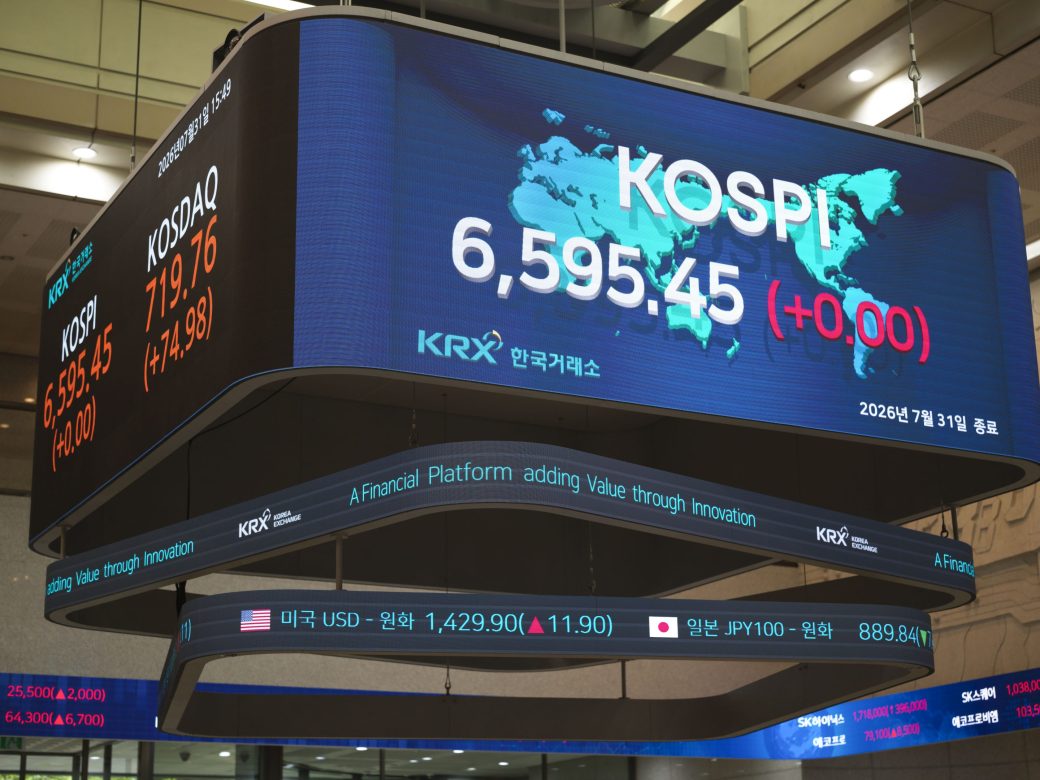
South Korean retail investors sold a record amount of Kospi shares on Friday even as the index rebounded 18%, voicing anger at President Lee and pledging to stay out of the market.
11:03 AMFortune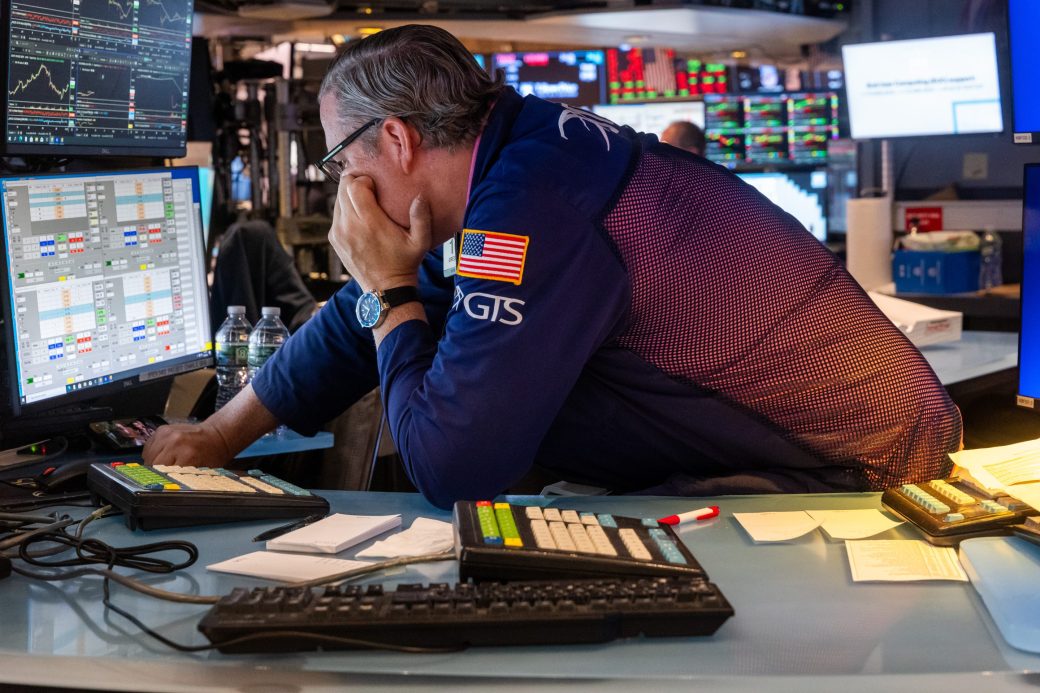
The Philadelphia Stock Exchange Semiconductor Index fell 21% in July, its worst monthly performance since October 2008, as chip stocks swung sharply and a heavily favored trade unraveled.
11:19 AMFortune
The Nasdaq-100 suffered its steepest monthly decline since March 2025, but eight constituent stocks still gained in July and are viewed as potential outperformers.
7:59 AMCNBC
Bank stocks have broken out to record highs as the sector delivers strong earnings and remains attractively valued. Those conditions point to further gains for financial shares.
8:00 AMMarketWatch
Financial stocks have outperformed this month as investors rotate into the sector, but the rally’s durability depends partly on the Federal Reserve’s next policy decision.
8:00 AMMarketWatchSummary
Japan and the United States have confirmed a rare joint effort to strengthen the yen. President Donald Trump described support for the currency as a sign of friendship between the two countries.
The decisive change is the public confirmation of direct US participation in supporting the yen,
Unlock the full First Pass Analysis to get a better understanding of why this story mattersWhy it matters
Joint intervention makes yen support more credible while turning exchange-rate policy into a visible bilateral commitment.
6 stories · 2 sources
Summary
Japan is expected to announce that Tokyo and Washington took joint action to support the yen, according to people familiar with the matter. Finance Minister Satsuki Katayama is likely to emphasize both governments’ resolve to counter what they view as excessive declines in the currency.
The key shift is a move from unilateral Japanese concern to a stated joint effort
Unlock the full First Pass Analysis to get a better understanding of why this story mattersWhy it matters
Explicit US-Japan coordination would increase pressure on yen sellers and could affect global currency, bond, and trade markets.
Summary
The US Treasury may be using euros instead of dollars to finance yen purchases, according to strategists. The approach would support Japan's currency without directly selling dollars and weakening the greenback.
The funding choice would let Washington support the yen while preserving its stated preference for
Unlock the full First Pass Analysis to get a better understanding of why this story mattersWhy it matters
Using euros could separate yen support from the destabilizing signal of deliberate dollar selling.
Summary
Japan could use a Federal Reserve repo facility to support the yen, an approach backed by Treasury Secretary Scott Bessent. The mechanism could provide dollar liquidity without forcing Japan to sell large amounts of US Treasuries.
The facility would separate currency support from reserve liquidation, reducing the risk that intervention adds
Unlock the full First Pass Analysis to get a better understanding of why this story mattersWhy it matters
A financing-based intervention tool could stabilize the yen while limiting a new source of stress for US government bonds.
Summary
Iron ore fell to its lowest level in more than a year as concerns about a major physical trader added pressure to an already weak market. The decline reflects both immediate trading stress and doubts about future demand.
The selloff shows that market-specific concerns are amplifying a deteriorating demand outlook. Steel production and
Unlock the full First Pass Analysis to get a better understanding of why this story mattersWhy it matters
Lower iron ore prices threaten miners’ earnings and signal growing caution about China’s industrial demand.
Summary
A private survey showed China’s manufacturing activity slowing in July, particularly among export-oriented firms. The result matched an official gauge and pointed to weaker industrial momentum.
The convergence of private and official data suggests the slowdown is broad rather than a
Unlock the full First Pass Analysis to get a better understanding of why this story mattersWhy it matters
China’s industrial slowdown could weaken global trade and reinforce expectations for economic stimulus.
Summary
Zepto delayed its initial public offering as India’s once-frenzied listing market shows signs of slowing. Other issuers, including Manipal Health, Indo-MIM and Juniper Green Energy, have reduced offer sizes to improve their chances of completing deals.
Issuers are now prioritizing execution over valuation and scale. The shift gives investors more negotiating
Unlock the full First Pass Analysis to get a better understanding of why this story mattersWhy it matters
A slower pipeline could reduce funding options for Indian growth companies and temper expectations for the country’s equity market.
Summary
India’s IPO proceeds have fallen by a fifth from a year earlier as companies reduce deal sizes, accept lower valuations and delay listings. The slowdown raises questions about whether the market can sustain momentum after two record years.
Weaker market conditions are shifting bargaining power toward investors and forcing issuers to prioritize execution
Unlock the full First Pass Analysis to get a better understanding of why this story mattersWhy it matters
The IPO retreat signals that India’s equity boom is becoming more selective and less supportive of ambitious valuations.
Summary
South Korean authorities promoted high-risk investment products as the stock market surged, hoping to attract capital and support the won. The strategy is now drawing criticism as market volatility has intensified.
The policy has increased political exposure to market losses by tying the government to retail
Unlock the full First Pass Analysis to get a better understanding of why this story mattersWhy it matters
A market-promotion strategy is becoming a policy liability as losses and volatility raise the cost for retail investors.
Summary
South Korea’s Kospi surged 18% on Friday, its largest one-day gain on record and a fresh signal of renewed appetite for risk across global markets. The rally came as President Trump reversed course on Iran, easing fears of an immediate escalation.
The decisive shift is a sharp return to buying, led by a market that has
Unlock the full First Pass Analysis to get a better understanding of why this story mattersWhy it matters
A record equity surge tied to easing geopolitical risk could reset global market sentiment, but it depends heavily on whether the Iran de-escalation lasts.
Summary
South Korean retail investors sold a record amount of Kospi shares on Friday even as the index rebounded 18%, voicing anger at President Lee and pledging to stay out of the market.
The selling suggests the rebound failed to restore confidence among the country’s most active domestic
Unlock the full First Pass Analysis to get a better understanding of why this story mattersWhy it matters
Retail distrust threatens to blunt the recovery in South Korea’s stock market even after a dramatic rebound.
Summary
The Philadelphia Stock Exchange Semiconductor Index fell 21% in July, its worst monthly performance since October 2008, as chip stocks swung sharply and a heavily favored trade unraveled.
The selloff shows how quickly crowded exposure to semiconductors can turn when investors reassess growth
Unlock the full First Pass Analysis to get a better understanding of why this story mattersWhy it matters
A collapse in the market’s most crowded growth trade can amplify volatility across global equities.
Summary
The Nasdaq-100 suffered its steepest monthly decline since March 2025, but eight constituent stocks still gained in July and are viewed as potential outperformers.
The dispersion shows that investors are no longer rewarding the index’s technology exposure uniformly. The
Unlock the full First Pass Analysis to get a better understanding of why this story mattersWhy it matters
Leadership is narrowing, making stock selection more important as index-level momentum weakens.
Summary
Bank stocks have broken out to record highs as the sector delivers strong earnings and remains attractively valued. Those conditions point to further gains for financial shares.
The decisive shift is that financial stocks now have both price momentum and fundamental support,
Unlock the full First Pass Analysis to get a better understanding of why this story mattersWhy it matters
A sustained financial-sector rally could broaden the market beyond its dominant growth stocks and reshape leadership across equities.
Summary
Financial stocks have outperformed this month as investors rotate into the sector, but the rally’s durability depends partly on the Federal Reserve’s next policy decision.
The rotation reflects expectations that policy could improve banks’ earnings outlook through lending, capital markets
Unlock the full First Pass Analysis to get a better understanding of why this story mattersWhy it matters
Financial stocks are becoming a direct market bet on both Fed policy and economic resilience.
A curated list of other prominent stories from this day.
Fanuc shares suffered their steepest decline in four decades after the factory-robot maker raised its profit outlook by less than investors expected. The muted upgrade intensified concerns that higher material costs will erode margins.
10:13 PMBloomberg MarketsChinese government bond futures began trading in Hong Kong, giving international investors a new tool to hedge exposure to mainland sovereign debt. The launch marks Beijing’s third attempt to use futures to deepen access to its bond market.
9:35 PMBloomberg MarketsTraders expect the Reserve Bank of India to keep interest rates unchanged while banks receive a large cash surplus. They are positioning for short-dated bonds to outperform longer-duration debt, steepening the yield curve.
9:00 PMBloomberg MarketsIndian exchanges are preparing to introduce a closing auction that aligns the market close with practices used by major global exchanges. The change could reduce returns for arbitrage funds.
9:00 PMBloomberg MarketsSouth Korean stocks fell as major chipmakers gave back part of Friday’s record gains. Investors also unwound leveraged positions, adding to the pressure across the market.
8:59 PMBloomberg MarketsCXMT has become one of Asia’s most divisive stocks, with analyst price targets separated by roughly $1 trillion. The unusually wide range reflects opposing views on the memory-chip maker’s growth prospects and strategic position.
8:00 PMBloomberg Markets
Success in prediction markets such as Kalshi and Polymarket requires more than reading quoted probabilities. Traders can gain an advantage through faster information processing and methods that identify when prices do not reflect new evidence.
12:54 PMCNBC
Four companies in the portfolio are scheduled to report earnings, while a dense slate of jobs data will shape expectations for the economy and interest rates.
11:36 AMCNBC
The U.S.-Iran war created sharp oil-price volatility that generated substantial gains for some investors. The outlook is less favorable for investors seeking to hold the trade, with longer-term energy themes offering potentially better opportunities.
9:00 AMCNBC
The article identifies three dividend stocks favored by highly rated Wall Street analysts as potential sources of passive income and starting points for further research.
8:01 AMCNBCSummary
Fanuc shares suffered their steepest decline in four decades after the factory-robot maker raised its profit outlook by less than investors expected. The muted upgrade intensified concerns that higher material costs will erode margins.
The market treated the forecast as evidence that Fanuc cannot fully pass rising input costs
Unlock the full First Pass Analysis to get a better understanding of why this story mattersWhy it matters
Fanuc’s plunge shows how quickly cost inflation can overwhelm demand optimism in Japan’s machinery sector.
Summary
Chinese government bond futures began trading in Hong Kong, giving international investors a new tool to hedge exposure to mainland sovereign debt. The launch marks Beijing’s third attempt to use futures to deepen access to its bond market.
The new contract expands offshore participation without requiring investors to transact entirely inside mainland markets.
Unlock the full First Pass Analysis to get a better understanding of why this story mattersWhy it matters
A liquid Hong Kong futures market could make Chinese government bonds easier to trade and hedge for global investors.
Summary
Traders expect the Reserve Bank of India to keep interest rates unchanged while banks receive a large cash surplus. They are positioning for short-dated bonds to outperform longer-duration debt, steepening the yield curve.
A policy hold combined with abundant liquidity should support the front end of the bond
Unlock the full First Pass Analysis to get a better understanding of why this story mattersWhy it matters
India’s yield curve is becoming a clearer expression of stable near-term policy and greater long-term fiscal or inflation uncertainty.
Summary
Indian exchanges are preparing to introduce a closing auction that aligns the market close with practices used by major global exchanges. The change could reduce returns for arbitrage funds.
A formal closing auction will likely reduce pricing gaps and execution opportunities around the final
Unlock the full First Pass Analysis to get a better understanding of why this story mattersWhy it matters
Market plumbing changes can compress a profitable trading strategy without altering the broader market direction.
Summary
South Korean stocks fell as major chipmakers gave back part of Friday’s record gains. Investors also unwound leveraged positions, adding to the pressure across the market.
The reversal shows how quickly momentum trades can turn after crowded gains in semiconductor stocks.
Unlock the full First Pass Analysis to get a better understanding of why this story mattersWhy it matters
Korean stocks remain highly exposed to both the semiconductor cycle and forced selling from leveraged investors.
Summary
CXMT has become one of Asia’s most divisive stocks, with analyst price targets separated by roughly $1 trillion. The unusually wide range reflects opposing views on the memory-chip maker’s growth prospects and strategic position.
The valuation gap shows that investors are pricing radically different outcomes for CXMT, from a
Unlock the full First Pass Analysis to get a better understanding of why this story mattersWhy it matters
CXMT’s valuation has become a market test of how much investors are willing to pay for China’s semiconductor ambitions.
Summary
Success in prediction markets such as Kalshi and Polymarket requires more than reading quoted probabilities. Traders can gain an advantage through faster information processing and methods that identify when prices do not reflect new evidence.
The edge comes from execution and information quality, not simply from choosing the contract with
Unlock the full First Pass Analysis to get a better understanding of why this story mattersWhy it matters
Prediction-market prices are tradable signals, not objective forecasts.
Summary
Four companies in the portfolio are scheduled to report earnings, while a dense slate of jobs data will shape expectations for the economy and interest rates.
Corporate results and labor-market readings will test whether investors can sustain current valuations without stronger
Unlock the full First Pass Analysis to get a better understanding of why this story mattersWhy it matters
Earnings and jobs data could reset both profit expectations and the market’s path for interest rates.
Summary
The U.S.-Iran war created sharp oil-price volatility that generated substantial gains for some investors. The outlook is less favorable for investors seeking to hold the trade, with longer-term energy themes offering potentially better opportunities.
The easy gains came from a geopolitical price shock, not a durable change in energy
Unlock the full First Pass Analysis to get a better understanding of why this story mattersWhy it matters
The conflict rewarded tactical oil trades, but it may be a poor foundation for a sustained buy-and-hold strategy.
Summary
The article identifies three dividend stocks favored by highly rated Wall Street analysts as potential sources of passive income and starting points for further research.
The change for income investors is a narrowed shortlist, not a guarantee of performance or
Unlock the full First Pass Analysis to get a better understanding of why this story mattersWhy it matters
Dividend yield matters less than whether the underlying cash flow can support it through a downturn.
Make it yours
Pick your topics, set your cadence, and receive your personalized First Pass in your inbox. It’s that simple!