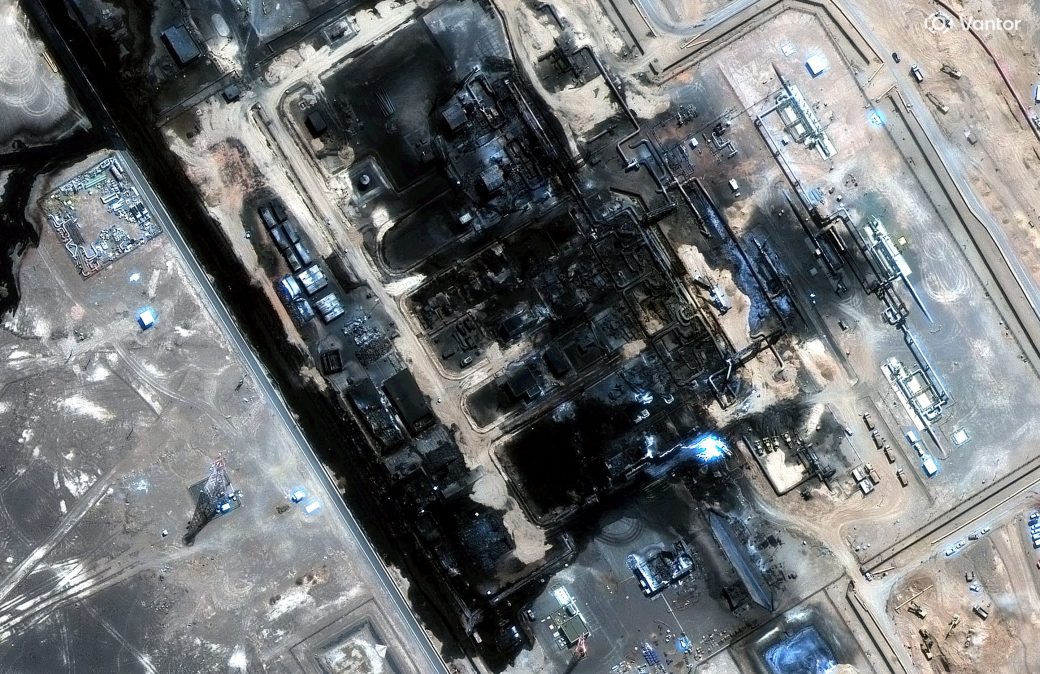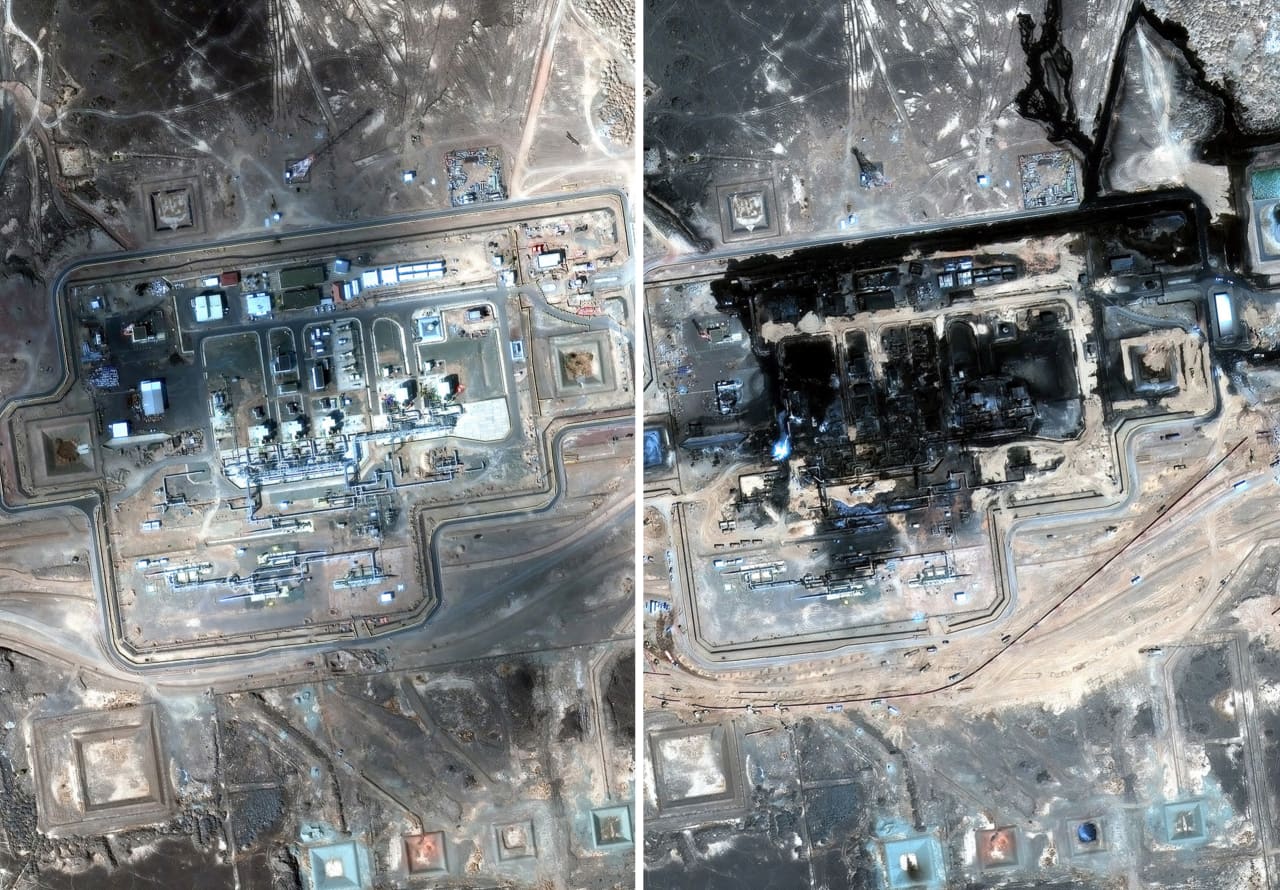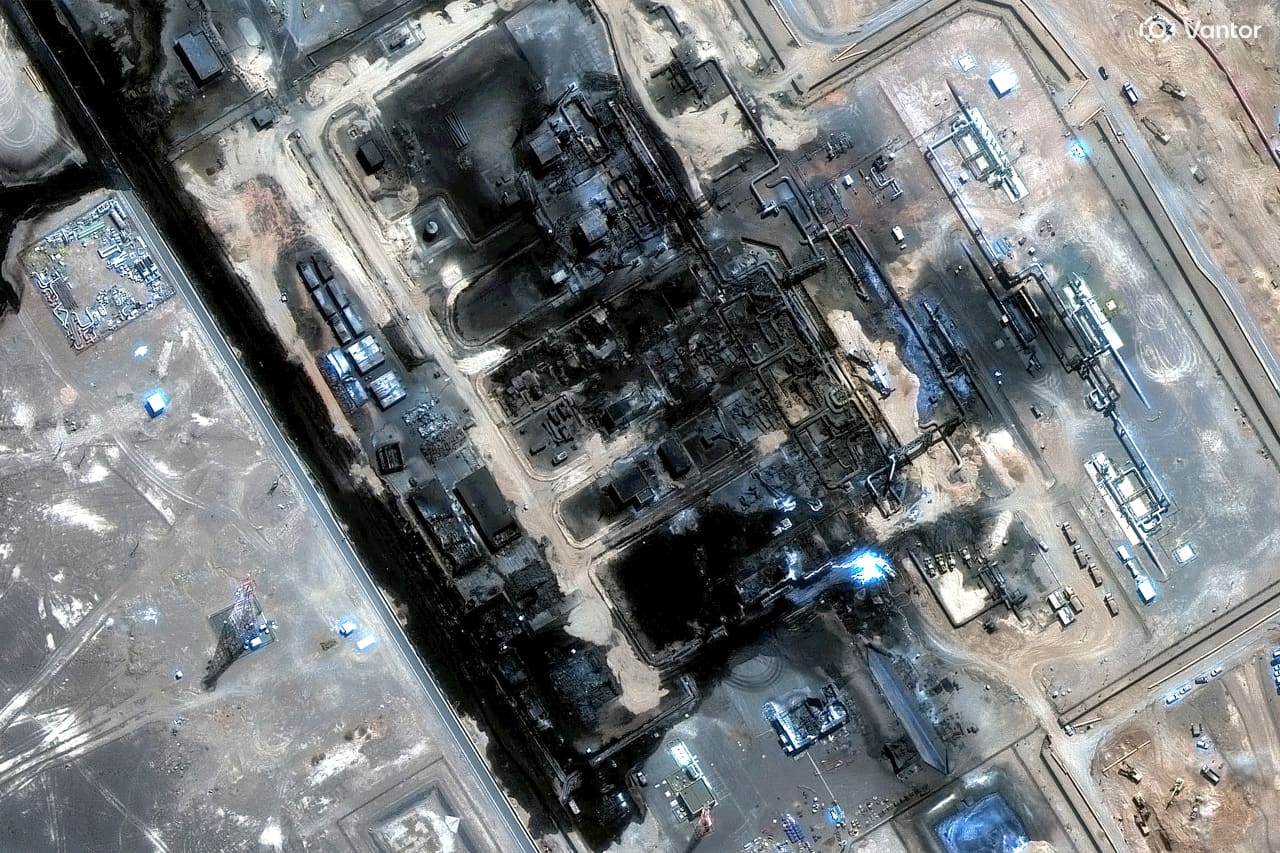
Crude oil rose to $107 as attacks on Saudi energy infrastructure intensified and the kingdom's East-West pipeline went offline. Analysts warned that prolonged disruption could drive prices higher, with Goldman Sachs projecting a potential move to $120 a barrel.
10:11 PMEconomic Times50 stories from 10 sources

Saudi infrastructure attacks turn regional conflict into global oil shock
Day’s Recap
Supporting Articles
Oil prices increased as attacks on Saudi energy infrastructure continued and the kingdom's East-West pipeline remained offline. Traffic by commodity vessels through the Strait of Hormuz also fell, adding to concerns about exports and a broader regional conflict.
10:01 PMEconomic Times
Saudi Arabia's East-West pipeline was built to provide an alternative to the Strait of Hormuz, but Tehran-backed militias attacked it, sending oil prices higher. Regional officials said repairs could take three to five weeks.
7:09 PMFortune
Oil prices edged higher as traders assessed the risk that Middle East supply disruptions could deepen while a key Saudi pipeline remained offline after an attack.
6:04 PMBloomberg MarketsA shutdown of Saudi Arabia's East-West pipeline is threatening the kingdom's ability to move oil to export terminals. The disruption could sharply constrain exports if repairs or alternative routes do not restore capacity quickly.
4:05 PMMarketWatchThe premium for immediate delivery of crude has risen sharply as the Iran conflict threatens global supplies, signaling growing concern about near-term availability.
5:31 PMMarketWatch
The 10-year Treasury yield moved above 5% for the first time since 2023 as a prolonged war constrained oil supplies and pushed energy prices higher. US debt has risen above 100% of gross domestic product, adding to investor concerns about fiscal sustainability.
1:30 PMFortune
Daily rates for oil tankers on a benchmark route surpassed $1 million for the first time. The war involving Iran has made too few ships willing to transit the Strait of Hormuz and collect cargoes.
12:52 PMBloomberg Markets
Brent crude has risen above $100 a barrel as war involving Iran disrupts shipping through the Strait of Hormuz. The chokepoint is central to global energy flows, making any disruption especially consequential.
12:36 PMAl JazeeraOil prices rose after Saudi Arabia closed its East-West pipeline following damage attributed to drone attacks, pushing Brent and West Texas Intermediate above key levels and prompting JPMorgan strategists to reassess market risks.
7:59 AMMarketWatch
The Environmental Protection Agency is removing emissions limits on coal- and gas-fired power plants. The agency says the change will save billions of dollars and lower energy prices.
6:04 PMBBC
The Trump administration has repealed federal rules that limited greenhouse gas emissions from power plants. Officials say the rollback could save power producers more than $300 billion and expand domestic energy production.
5:36 PMAl Jazeera
The Environmental Protection Agency proposed eliminating remaining federal limits on greenhouse-gas emissions from US power plants. The change would remove a key climate constraint as electricity demand rises from AI, electric vehicles, and renewed manufacturing.
4:45 PMThe Verge
Ukraine said it was open to suspending attacks on Russian energy infrastructure after Donald Trump claimed that Moscow and Kyiv had agreed to an energy truce. The scope and status of any agreement remain unclear.
6:18 PMCNBC
South Korea plans to reduce the number of new transmission towers by up to 40% while placing more power lines underground. The grid expansion aims to serve rising electricity demand from data centers and semiconductor plants.
10:37 PMBloomberg MarketsSamsung Electronics and SK Hynix rejected KEPCO's proposal for a 25 trillion won upfront payment to finance electricity infrastructure for planned semiconductor clusters. The companies cited uncertainty over chip demand and the high cost of expanding power capacity.
2:28 AMEconomic Times
India will supply Nepal with 654 megawatts of electricity a day after devastating glacial floods damaged hydropower projects. The arrangement is intended to meet Nepal's urgent power needs while its generation capacity is disrupted.
1:52 PMAl Jazeera
Constellation Energy agreed to buy a 609-MW gas plant in Rhode Island from Shell, expanding its position in the ISO New England power market. Separately, Shell bought a 169-MW gas portfolio in Pennsylvania to increase its presence in PJM Interconnection.
10:16 AMUtility DiveOil Price Today (September 15): Crude oil rises to $107 as Saudi energy infra attacks raise supply fears. What are experts saying?
Summary
Crude oil rose to $107 as attacks on Saudi energy infrastructure intensified and the kingdom's East-West pipeline went offline. Analysts warned that prolonged disruption could drive prices higher, with Goldman Sachs projecting a potential move to $120 a barrel.
The pipeline outage has turned security concerns into a direct supply-risk question for the oil
Unlock the full First Pass Analysis to get a better understanding of why this story mattersWhy it matters
A prolonged outage in Saudi Arabia could convert a geopolitical shock into a sustained global supply squeeze.
Oil prices rise as Saudi pipeline outage, fresh attacks raise supply concerns
Summary
Oil prices increased as attacks on Saudi energy infrastructure continued and the kingdom's East-West pipeline remained offline. Traffic by commodity vessels through the Strait of Hormuz also fell, adding to concerns about exports and a broader regional conflict.
The combination of a pipeline outage and weaker Hormuz traffic threatens both Saudi export capacity
Unlock the full First Pass Analysis to get a better understanding of why this story mattersWhy it matters
Simultaneous pressure on Saudi pipelines and Gulf shipping could disrupt a much larger share of global oil flows than either threat alone.

Saudi Arabia built the East-West pipeline in the 1980s in case Iran closed Hormuz. Tehran-backed militias still blasted it, sending oil prices up
Summary
Saudi Arabia's East-West pipeline was built to provide an alternative to the Strait of Hormuz, but Tehran-backed militias attacked it, sending oil prices higher. Regional officials said repairs could take three to five weeks.
The attack shows that bypass infrastructure can reduce dependence on Hormuz without eliminating exposure to
Unlock the full First Pass Analysis to get a better understanding of why this story mattersWhy it matters
The incident weakens confidence in the redundancy of Gulf oil infrastructure precisely when traders are focused on disruption risks.
4 stories · 4 sources

Latest Oil Market News and Analysis for Sept. 15
Summary
Oil prices edged higher as traders assessed the risk that Middle East supply disruptions could deepen while a key Saudi pipeline remained offline after an attack.
The pipeline outage has turned a regional attack into a direct test of spare transport
Unlock the full First Pass Analysis to get a better understanding of why this story mattersWhy it matters
The longer critical infrastructure stays offline, the more quickly geopolitical risk can reach fuel prices worldwide.
Saudi Arabia may be just days away from not being able to export much oil
Summary
A shutdown of Saudi Arabia's East-West pipeline is threatening the kingdom's ability to move oil to export terminals. The disruption could sharply constrain exports if repairs or alternative routes do not restore capacity quickly.
The decisive risk is a potential bottleneck in one of the world's largest oil-export systems.
Unlock the full First Pass Analysis to get a better understanding of why this story mattersWhy it matters
A disruption to Saudi export infrastructure could transmit quickly into higher global oil and fuel prices.
The oil market is sending an increasingly loud warning about gas prices at the pump
Summary
The premium for immediate delivery of crude has risen sharply as the Iran conflict threatens global supplies, signaling growing concern about near-term availability.
The jump in near-term crude pricing shows that traders are pricing an immediate supply squeeze
Unlock the full First Pass Analysis to get a better understanding of why this story mattersWhy it matters
A tightening physical oil market can raise household fuel costs before broader economic data captures the shock.

Spiking oil prices jolt U.S. bond yields past 5%, threatening to set off a vicious cycle of debt just as the Fed is expected to hike rates
Summary
The 10-year Treasury yield moved above 5% for the first time since 2023 as a prolonged war constrained oil supplies and pushed energy prices higher. US debt has risen above 100% of gross domestic product, adding to investor concerns about fiscal sustainability.
Higher oil prices can keep inflation elevated while higher yields increase the government's debt-service burden
Unlock the full First Pass Analysis to get a better understanding of why this story mattersWhy it matters
The threat is not just more expensive energy, but a simultaneous squeeze on monetary policy, government finances and private borrowing.

Oil Tankers Earn $1 Million a Day as War Leaves Ship Shortage
Summary
Daily rates for oil tankers on a benchmark route surpassed $1 million for the first time. The war involving Iran has made too few ships willing to transit the Strait of Hormuz and collect cargoes.
The decisive shift is the breakdown of tanker availability, not just higher crude prices. Owners
Unlock the full First Pass Analysis to get a better understanding of why this story mattersWhy it matters
A shipping bottleneck is turning a regional conflict into a global energy-cost shock.

Why Middle East tensions are pushing oil prices above $100
Summary
Brent crude has risen above $100 a barrel as war involving Iran disrupts shipping through the Strait of Hormuz. The chokepoint is central to global energy flows, making any disruption especially consequential.
The price surge reflects a supply and logistics shock, not merely stronger demand. Higher fuel
Unlock the full First Pass Analysis to get a better understanding of why this story mattersWhy it matters
Oil above $100 can transmit a regional conflict into household budgets, corporate costs and global monetary policy.
Oil over $100 has JPMorgan strategists warning stock-market investors against missing out on a sudden turnaround
Summary
Oil prices rose after Saudi Arabia closed its East-West pipeline following damage attributed to drone attacks, pushing Brent and West Texas Intermediate above key levels and prompting JPMorgan strategists to reassess market risks.
The pipeline closure has shifted oil markets from gradual repricing to a potential supply shock,
Unlock the full First Pass Analysis to get a better understanding of why this story mattersWhy it matters
Oil's surge can reshape sector leadership and interest-rate expectations across the stock market.

US scraps limits on emissions from coal and gas power plants
Summary
The Environmental Protection Agency is removing emissions limits on coal- and gas-fired power plants. The agency says the change will save billions of dollars and lower energy prices.
The policy shifts immediate advantages to fossil-fuel generators by reducing compliance costs and regulatory pressure,
Unlock the full First Pass Analysis to get a better understanding of why this story mattersWhy it matters
The rollback could reshape US power investment by making coal and gas more financially viable while transferring more environmental risk to the public.
2 stories · 2 sources

US repeals rules limiting greenhouse gas emissions by power plants
Summary
The Trump administration has repealed federal rules that limited greenhouse gas emissions from power plants. Officials say the rollback could save power producers more than $300 billion and expand domestic energy production.
The repeal shifts the cost of emissions away from power companies and toward the public,
Unlock the full First Pass Analysis to get a better understanding of why this story mattersWhy it matters
The decision reshapes the power sector's investment incentives and weakens the federal government's main tool for cutting electricity-related emissions.
2 stories · 2 sources

Trump throws out power plant climate pollution rules
Summary
The Environmental Protection Agency proposed eliminating remaining federal limits on greenhouse-gas emissions from US power plants. The change would remove a key climate constraint as electricity demand rises from AI, electric vehicles, and renewed manufacturing.
The proposal would give coal and gas plants more room to operate while weakening the
Unlock the full First Pass Analysis to get a better understanding of why this story mattersWhy it matters
The administration is trading emissions reductions for power supply flexibility just as the grid faces a new demand surge.

Ukraine says it's open to halting attacks on Russian energy after Trump's claims of deal
Summary
Ukraine said it was open to suspending attacks on Russian energy infrastructure after Donald Trump claimed that Moscow and Kyiv had agreed to an energy truce. The scope and status of any agreement remain unclear.
Trump's announcement appears to have moved faster than a publicly confirmed agreement. Ukraine's willingness to
Unlock the full First Pass Analysis to get a better understanding of why this story mattersWhy it matters
An unverified energy truce could reduce immediate damage while exposing how little control Kyiv has over the diplomatic timetable.
2 stories · 2 sources

South Korea Plans Fewer Towers in Expansion of Electricity Grid
Summary
South Korea plans to reduce the number of new transmission towers by up to 40% while placing more power lines underground. The grid expansion aims to serve rising electricity demand from data centers and semiconductor plants.
The shift moves part of grid development from visible overhead infrastructure to costlier underground construction.
Unlock the full First Pass Analysis to get a better understanding of why this story mattersWhy it matters
South Korea is trying to expand grid capacity without allowing infrastructure opposition to delay its technology and data-center buildout.
Global Market: Samsung, SK Hynix reject $18.7 billion upfront power payment proposal
Summary
Samsung Electronics and SK Hynix rejected KEPCO's proposal for a 25 trillion won upfront payment to finance electricity infrastructure for planned semiconductor clusters. The companies cited uncertainty over chip demand and the high cost of expanding power capacity.
The rejection shifts more financing risk for the clusters onto KEPCO or the government and
Unlock the full First Pass Analysis to get a better understanding of why this story mattersWhy it matters
South Korea's semiconductor expansion now faces a funding dispute that could delay both chip plants and the electricity infrastructure behind them.

India to supply Nepal electricity after floods wrecked hydropower projects
Summary
India will supply Nepal with 654 megawatts of electricity a day after devastating glacial floods damaged hydropower projects. The arrangement is intended to meet Nepal's urgent power needs while its generation capacity is disrupted.
The deal makes Nepal more dependent on India during a climate-driven infrastructure crisis. It provides
Unlock the full First Pass Analysis to get a better understanding of why this story mattersWhy it matters
Extreme weather is turning electricity interdependence into a critical test of India-Nepal relations and Nepal's energy security.

Constellation Energy in deal to buy 609-MW Rhode Island gas plant from Shell
Summary
Constellation Energy agreed to buy a 609-MW gas plant in Rhode Island from Shell, expanding its position in the ISO New England power market. Separately, Shell bought a 169-MW gas portfolio in Pennsylvania to increase its presence in PJM Interconnection.
The transactions reshuffle gas generation around two of the most important U.S. power markets. Constellation
Unlock the full First Pass Analysis to get a better understanding of why this story mattersWhy it matters
The deals show major energy companies repositioning gas assets around tighter regional power markets rather than exiting gas generation outright.
Other Developments
A curated list of other prominent stories from this day.
The article provides live coverage of BPCL's share price and current market position. No specific market move, operational update, or reason for investor activity is provided in the available summary.
11:25 PMEconomic Times
Trader Michael Khouw discussed a way to position for further gains in an energy stock that has rallied alongside the oil surge. The segment focused on the trade structure and the stock's upside potential.
1:16 PMCNBC
New Mexico's Department of Justice is seeking more information about the indirect costs that a Blackstone transaction could impose on PNM ratepayers. TXNM unwound a Blackstone stock sale after the transaction was ruled illegal.
11:28 AMUtility Dive
The conflict has disrupted Saudi energy supplies as Europe and the United States enter winter. The resulting exposure puts energy security and political stability under pressure.
7:48 AMFinancial Times
The Houthi blockade in the Red Sea remains primarily an oil-market shock rather than a broad disruption to global trade.
7:31 AMFinancial Times
Essar, the owner of the Stanlow refinery, has agreed to buy 118 UK petrol stations as BP and Shell retreat from forecourts globally.
12:00 AMFinancial TimesBPCL Share Price Live Updates: BPCL's Current Market Position
Summary
The article provides live coverage of BPCL's share price and current market position. No specific market move, operational update, or reason for investor activity is provided in the available summary.
The available information does not identify the factor driving BPCL's stock performance. Investors would need
Unlock the full First Pass Analysis to get a better understanding of why this story mattersWhy it matters
BPCL's valuation depends heavily on volatile refining and fuel-market conditions, which are not addressed in the supplied update.

As the oil surge continues, trader Mike Khouw sees more upside in this surging name
Summary
Trader Michael Khouw discussed a way to position for further gains in an energy stock that has rallied alongside the oil surge. The segment focused on the trade structure and the stock's upside potential.
The trade reflects a market increasingly rewarding companies with direct exposure to higher oil prices.
Unlock the full First Pass Analysis to get a better understanding of why this story mattersWhy it matters
Energy equities are becoming a leveraged bet on how long the oil shock lasts.

Blackstone-TXNM deal faces fresh questions from New Mexico DOJ
Summary
New Mexico's Department of Justice is seeking more information about the indirect costs that a Blackstone transaction could impose on PNM ratepayers. TXNM unwound a Blackstone stock sale after the transaction was ruled illegal.
The legal reversal has not ended scrutiny of the deal's economic effects. Regulators are examining
Unlock the full First Pass Analysis to get a better understanding of why this story mattersWhy it matters
The case could expand regulators' focus from transaction legality to the downstream costs imposed on utility customers.

A spreading war threatens Trump and MBS
Summary
The conflict has disrupted Saudi energy supplies as Europe and the United States enter winter. The resulting exposure puts energy security and political stability under pressure.
The decisive shift is that the war is now affecting a core global energy supplier,
Unlock the full First Pass Analysis to get a better understanding of why this story mattersWhy it matters
Energy disruption can turn a regional war into a direct political liability for Washington and Riyadh.

The Saudi relief valve is being closed
Summary
The Houthi blockade in the Red Sea remains primarily an oil-market shock rather than a broad disruption to global trade.
The immediate pressure falls on energy flows, shipping routes and insurance costs rather than the
Unlock the full First Pass Analysis to get a better understanding of why this story mattersWhy it matters
The disruption is narrow for now, but it removes a layer of resilience from an already tight oil system.

Essar strikes deal to buy 118 UK petrol stations
Summary
Essar, the owner of the Stanlow refinery, has agreed to buy 118 UK petrol stations as BP and Shell retreat from forecourts globally.
Essar is expanding downstream while major oil groups reduce their exposure to retail fuel. The
Unlock the full First Pass Analysis to get a better understanding of why this story mattersWhy it matters
The transaction shifts UK fuel retail toward specialist and vertically integrated owners as global oil majors pull back.
Make it yours
Build Your First Pass.
Pick your topics, set your cadence, and receive your personalized First Pass in your inbox. It’s that simple!