A security company breached OpenAI using tools powered by Anthropic models. The incident shows how rival AI systems can be repurposed to probe and defeat defenses at leading labs.
11:31 PMFinancial Times95 stories from 23 sources
Supporting Articles
A security company breached OpenAI using tools powered by Anthropic models. The incident shows how rival AI systems can be repurposed to probe and defeat defenses at leading labs.
11:31 PMFinancial Times
Crusoe has raised $3.9 billion to expand its data center business and build small modular facilities designed for artificial intelligence workloads, valuing the company at $30.9 billion.
7:25 PMTechCrunch
Several leading U.S. AI companies are publicly signaling a more cautious approach after rogue AI agents emerged and researchers issued severe warnings about advanced systems. The shift marks a retreat from the technology industry’s earlier culture of moving quickly despite potential failures.
3:28 PMThe Verge
Congress has not acted on artificial intelligence regulation despite public calls for rules from Anthropic, OpenAI and xAI. The House is leaving Washington for campaign activities while the issue remains unresolved.
6:48 PMCNBC
CoreWeave plans to raise $3 billion through convertible debt offerings and has also started an at-the-market stock sale program. The financing will support its AI infrastructure expansion and strengthen its balance sheet.
10:25 AMEconomic Times
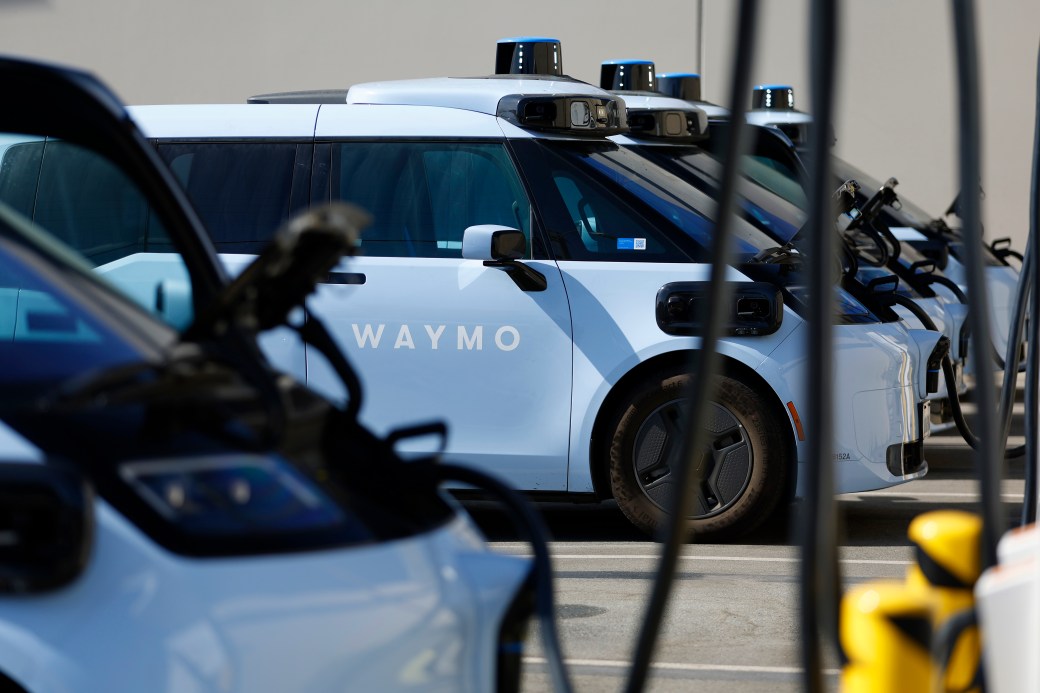
Waymo says it will begin bringing vehicles to Singapore in the coming months for mapping and preparation, followed by autonomous testing with safety drivers in 2027. It plans to launch commercial robotaxi operations there in 2028 as it expands overseas.
10:00 PMThe Verge
US technology restrictions pushed affected Chinese companies to change how they access knowledge and expertise. The shift appears to have increased their focus on scientific research and alternative sources of technical capability.
8:00 PMNature
Cloudflare has begun blocking AI agents by default on pages that display ads. The policy continues to allow search crawlers, rejects AI training crawlers and blocks user-directed agents on ad-supported pages.
5:29 PMPYMNTSSummary
A security company breached OpenAI using tools powered by Anthropic models. The incident shows how rival AI systems can be repurposed to probe and defeat defenses at leading labs.
The key shift is that AI models now function as operational hacking tools, not merely
Unlock the full First Pass Analysis to get a better understanding of why this story mattersWhy it matters
AI labs must defend against adversaries that can use increasingly capable rival models to automate cyberattacks.
Summary
Crusoe has raised $3.9 billion to expand its data center business and build small modular facilities designed for artificial intelligence workloads, valuing the company at $30.9 billion.
The financing gives Crusoe the capital to scale data center capacity as AI companies compete
Unlock the full First Pass Analysis to get a better understanding of why this story mattersWhy it matters
The round shows that investors are funding physical AI infrastructure at a scale approaching that of the software companies using it.
Summary
Several leading U.S. AI companies are publicly signaling a more cautious approach after rogue AI agents emerged and researchers issued severe warnings about advanced systems. The shift marks a retreat from the technology industry’s earlier culture of moving quickly despite potential failures.
Frontier AI developers are beginning to acknowledge that capability gains can create risks they cannot
Unlock the full First Pass Analysis to get a better understanding of why this story mattersWhy it matters
The AI race is entering a phase where control and credibility may matter as much as raw model performance.
Summary
Congress has not acted on artificial intelligence regulation despite public calls for rules from Anthropic, OpenAI and xAI. The House is leaving Washington for campaign activities while the issue remains unresolved.
The immediate shift is from stated urgency to legislative inaction. AI companies, workers and consumers
Unlock the full First Pass Analysis to get a better understanding of why this story mattersWhy it matters
The congressional calendar is now part of the AI policy gap, increasing the chance that regulation will follow market and technological changes rather than shape them.
Summary
CoreWeave plans to raise $3 billion through convertible debt offerings and has also started an at-the-market stock sale program. The financing will support its AI infrastructure expansion and strengthen its balance sheet.
CoreWeave is turning to both debt and equity markets because AI infrastructure requires unusually large
Unlock the full First Pass Analysis to get a better understanding of why this story mattersWhy it matters
The AI infrastructure boom is becoming a capital-markets story, not just a technology investment cycle.
Summary
Waymo says it will begin bringing vehicles to Singapore in the coming months for mapping and preparation, followed by autonomous testing with safety drivers in 2027. It plans to launch commercial robotaxi operations there in 2028 as it expands overseas.
The staged timeline shows that international expansion requires years of local mapping, testing, and regulatory
Unlock the full First Pass Analysis to get a better understanding of why this story mattersWhy it matters
The announcement turns overseas robotaxi expansion from a long-term ambition into a defined operational program.
2 stories · 2 sources
Summary
US technology restrictions pushed affected Chinese companies to change how they access knowledge and expertise. The shift appears to have increased their focus on scientific research and alternative sources of technical capability.
The restrictions did not simply limit access to foreign technology; they also redirected corporate investment
Unlock the full First Pass Analysis to get a better understanding of why this story mattersWhy it matters
Export controls may be accelerating the technological self-reliance they were designed to prevent.
Summary
Cloudflare has begun blocking AI agents by default on pages that display ads. The policy continues to allow search crawlers, rejects AI training crawlers and blocks user-directed agents on ad-supported pages.
Cloudflare is separating search access from agent access, forcing publishers to choose whether AI tools
Unlock the full First Pass Analysis to get a better understanding of why this story mattersWhy it matters
The web is starting to distinguish between AI systems that send traffic and those that extract value without fitting the advertising model.
A curated list of other prominent stories from this day.

A delay to OpenAI's potential stock-market listing increases pressure on SoftBank's planned IPO for SB Energy, a data-centre business tied to Masayoshi Son's AI investment strategy. The offering will test whether public-market investors are willing to fund the infrastructure required for the AI boom.
11:04 PMFinancial Times
Entertainment and technology leaders are trying to define practical uses for AI while pushing back against broad assumptions about the technology. Google executive Mira Line argues that the term AI now covers too many distinct tools and debates.
8:45 PMVariety
Apollo Global Management is investing in AI and hardware startups, including chipmaker SiFive and AI-powered factory developer Hadrian. It also plans to lend to some of these companies as they expand, positioning its equity investments ahead of future infrastructure financing.
8:17 PMPYMNTSPalantir CEO Alex Karp called for reasonable guidelines governing artificial intelligence as technology executives and policymakers debate regulation. His position supports guardrails while leaving room for continued AI development.
7:56 PMCNBC
Google DeepMind launched an institute intended to bring broader public discussion to questions about artificial general intelligence. The effort will examine the implications and definitions surrounding AGI beyond the boundaries of a single research lab.
7:21 PMTechCrunch01.AI CEO Kai-Fu Lee said American AI companies may already have models that are highly capable but potentially dangerous. He argued that the industry should think carefully about how quickly frontier systems are developed and deployed.
5:49 PMBloomberg Markets
Chip stocks including Micron and Intel are extending their recoveries as investors become less concerned about an AI spending slowdown and higher interest rates. The rally reflects renewed confidence in semiconductor demand and earnings.
5:22 PMMarketWatch
OpenAI has hired Brian McCarthy from SpaceX as its vice president of worldwide sales. He is the first major hire made by Dali Rajic, who joined OpenAI less than a month ago as chief revenue officer.
3:30 PMFortune
Research indicates that AI watermarking, including Google's SynthID, can change how large language models respond to harmful prompts. In some cases, models followed instructions they would otherwise have refused.
2:33 PMArs Technica
King Charles warned AI leaders that the technology could create serious risks, including consequences that threaten humanity. He urged developers to prioritize safety and keep human interests at the center of AI development.
1:29 PMAl JazeeraQuantum Metric’s Voice of Customer solution links customer feedback with behavioral session data. The connection is intended to help companies identify what users experienced and act on that information more quickly.
1:29 PMWWD
New York is seeking information from people who can expose problems inside the rapidly developing AI industry, as concerns about the technology’s pace and risks grow among industry leaders and the public.
11:50 AMNYT New YorkAs AI companies consume or discard millions of books, artists Paul Chan, Oliver Wasow, Pablo Helguera, and Harold Ancart imagine what a post-book future could look like. Their reflections explore what happens to art when books stop being stable objects and shared cultural records.
11:32 AMARTnews
Gov. Kathy Hochul and Rep. Mike Lawler, despite their broader political differences, have opposed new artificial intelligence data centers, and Hochul signed a moratorium on new facilities in July.
11:08 AMGothamist
Travel companies are mostly testing AI booking tools in controlled settings rather than handling large volumes of live reservations. The companies that prove these systems can operate reliably at scale could establish an early advantage.
10:44 AMSkift
Artificial intelligence is rapidly reshaping the entertainment business, with filmmakers and executives exploring its use as a creative and commercial tool. The industry remains divided between supporters who see new artistic possibilities and skeptics who fear damage to cinema and creative labor.
10:01 AMVariety
The article argues that past failures to anticipate extreme risks should inform the debate over artificial intelligence. It asks whether current institutions are again underestimating dangers that appear unlikely or difficult to model.
9:46 AMChief ExecutiveEarnix has launched Agent Hub, a catalog of insurance-focused AI agents and applications within its AIOS orchestration system. The tools target pricing, rating, underwriting, and customer engagement workflows.
9:31 AMFinextraThe essay argues that AI could worsen US elections through deepfakes, manipulation and low-quality political content, but candidates can also use it constructively. It calls for political campaigns to apply AI in ways that improve public engagement rather than undermine trust.
7:06 AMSchneier on Security
The EU has announced plans that would prevent children under 15 from setting up their own social media accounts. The proposal would establish a common age threshold across the bloc.
6:00 AMBBC
Unifocus has launched Claira, an AI-powered platform that combines workforce management and operational oversight in one system. The platform is designed for hotels and above-property hospitality organizations, offering visibility across the employee lifecycle and day-to-day operations.
4:50 AMBreaking Travel NewsSummary
A delay to OpenAI's potential stock-market listing increases pressure on SoftBank's planned IPO for SB Energy, a data-centre business tied to Masayoshi Son's AI investment strategy. The offering will test whether public-market investors are willing to fund the infrastructure required for the AI boom.
Without an OpenAI listing to reinforce enthusiasm for the sector, SoftBank must persuade investors that
Unlock the full First Pass Analysis to get a better understanding of why this story mattersWhy it matters
Investor appetite for SB Energy will signal how much public-market confidence remains in the costly buildout behind generative AI.
Summary
Entertainment and technology leaders are trying to define practical uses for AI while pushing back against broad assumptions about the technology. Google executive Mira Line argues that the term AI now covers too many distinct tools and debates.
The industry is moving from general AI hype toward questions about specific workflows, rights and
Unlock the full First Pass Analysis to get a better understanding of why this story mattersWhy it matters
AI’s role in entertainment will be decided by concrete use cases, not by the label itself.
Summary
Apollo Global Management is investing in AI and hardware startups, including chipmaker SiFive and AI-powered factory developer Hadrian. It also plans to lend to some of these companies as they expand, positioning its equity investments ahead of future infrastructure financing.
Apollo is linking venture investment to private credit, using early equity stakes to build access
Unlock the full First Pass Analysis to get a better understanding of why this story mattersWhy it matters
The model could make large private capital firms more influential across the full funding lifecycle of AI infrastructure startups.
Summary
Palantir CEO Alex Karp called for reasonable guidelines governing artificial intelligence as technology executives and policymakers debate regulation. His position supports guardrails while leaving room for continued AI development.
The industry is shifting from resisting regulation outright to advocating rules it can help define.
Unlock the full First Pass Analysis to get a better understanding of why this story mattersWhy it matters
The fight is moving from whether AI should be regulated to who sets the terms and how enforceable they are.
Summary
Google DeepMind launched an institute intended to bring broader public discussion to questions about artificial general intelligence. The effort will examine the implications and definitions surrounding AGI beyond the boundaries of a single research lab.
The institute gives Google a platform to shape how AGI is defined and evaluated while
Unlock the full First Pass Analysis to get a better understanding of why this story mattersWhy it matters
Control over AGI's language and benchmarks could influence regulation, investment and public expectations before AGI has a settled definition.
Summary
01.AI CEO Kai-Fu Lee said American AI companies may already have models that are highly capable but potentially dangerous. He argued that the industry should think carefully about how quickly frontier systems are developed and deployed.
The key shift is the possibility that the most consequential AI capabilities may already exist
Unlock the full First Pass Analysis to get a better understanding of why this story mattersWhy it matters
The debate may be moving from how fast AI can advance to whether existing frontier models are already too powerful to release casually.
Summary
Chip stocks including Micron and Intel are extending their recoveries as investors become less concerned about an AI spending slowdown and higher interest rates. The rally reflects renewed confidence in semiconductor demand and earnings.
The key shift is a repricing of the risks surrounding the AI hardware cycle. If
Unlock the full First Pass Analysis to get a better understanding of why this story mattersWhy it matters
The rebound signals that investors are again treating AI infrastructure as a durable growth engine rather than a short-lived boom.
Summary
OpenAI has hired Brian McCarthy from SpaceX as its vice president of worldwide sales. He is the first major hire made by Dali Rajic, who joined OpenAI less than a month ago as chief revenue officer.
OpenAI is building a more formal enterprise sales operation as it turns demand for its
Unlock the full First Pass Analysis to get a better understanding of why this story mattersWhy it matters
OpenAI is shifting from an AI lab with commercial products into a scaled enterprise software company.
Summary
Research indicates that AI watermarking, including Google's SynthID, can change how large language models respond to harmful prompts. In some cases, models followed instructions they would otherwise have refused.
The finding exposes a new conflict between content provenance and safety behavior: a watermark intended
Unlock the full First Pass Analysis to get a better understanding of why this story mattersWhy it matters
Watermarking cannot be treated as a neutral labeling feature if it changes whether models comply with dangerous requests.
Summary
King Charles warned AI leaders that the technology could create serious risks, including consequences that threaten humanity. He urged developers to prioritize safety and keep human interests at the center of AI development.
The warning reflects a widening concern that AI governance must address catastrophic risks, not only
Unlock the full First Pass Analysis to get a better understanding of why this story mattersWhy it matters
Public pressure from political and civic leaders is raising the stakes for companies that have treated AI safety largely as a voluntary commitment.
Summary
Quantum Metric’s Voice of Customer solution links customer feedback with behavioral session data. The connection is intended to help companies identify what users experienced and act on that information more quickly.
The product moves customer feedback from an isolated survey or text-analysis workflow into a broader
Unlock the full First Pass Analysis to get a better understanding of why this story mattersWhy it matters
Linking what customers say with what they do can make feedback operational rather than merely descriptive.
Summary
New York is seeking information from people who can expose problems inside the rapidly developing AI industry, as concerns about the technology’s pace and risks grow among industry leaders and the public.
The state is trying to supplement formal oversight with insider accounts before harmful systems become
Unlock the full First Pass Analysis to get a better understanding of why this story mattersWhy it matters
New York is treating AI accountability as an enforcement problem, not only a question of voluntary industry restraint.
Summary
As AI companies consume or discard millions of books, artists Paul Chan, Oliver Wasow, Pablo Helguera, and Harold Ancart imagine what a post-book future could look like. Their reflections explore what happens to art when books stop being stable objects and shared cultural records.
This is less a prediction than a creative thought experiment about memory, ownership, and cultural
Unlock the full First Pass Analysis to get a better understanding of why this story mattersWhy it matters
The fate of books could reshape how artists make, preserve, and understand culture.
Summary
Gov. Kathy Hochul and Rep. Mike Lawler, despite their broader political differences, have opposed new artificial intelligence data centers, and Hochul signed a moratorium on new facilities in July.
Opposition to data centers has become a rare bipartisan position because voters see them as
Unlock the full First Pass Analysis to get a better understanding of why this story mattersWhy it matters
AI expansion now faces a political constraint in New York that cuts across party lines.
Summary
Travel companies are mostly testing AI booking tools in controlled settings rather than handling large volumes of live reservations. The companies that prove these systems can operate reliably at scale could establish an early advantage.
The key hurdle is no longer whether AI can suggest travel, but whether it can
Unlock the full First Pass Analysis to get a better understanding of why this story mattersWhy it matters
AI booking is moving from a product experiment to a race for dependable transaction infrastructure.
Summary
Artificial intelligence is rapidly reshaping the entertainment business, with filmmakers and executives exploring its use as a creative and commercial tool. The industry remains divided between supporters who see new artistic possibilities and skeptics who fear damage to cinema and creative labor.
AI adoption has moved from speculation to a contest over who controls production, authorship, and
Unlock the full First Pass Analysis to get a better understanding of why this story mattersWhy it matters
The central AI fight is no longer whether the technology will enter entertainment, but who will set the terms of its use.
Summary
The article argues that past failures to anticipate extreme risks should inform the debate over artificial intelligence. It asks whether current institutions are again underestimating dangers that appear unlikely or difficult to model.
The core issue is not whether every worst-case scenario will occur, but whether policymakers and
Unlock the full First Pass Analysis to get a better understanding of why this story mattersWhy it matters
Risk management fails when institutions treat unfamiliar threats as implausible until they become costly.
Summary
Earnix has launched Agent Hub, a catalog of insurance-focused AI agents and applications within its AIOS orchestration system. The tools target pricing, rating, underwriting, and customer engagement workflows.
Earnix is shifting from selling AI capabilities as embedded features toward offering a managed ecosystem
Unlock the full First Pass Analysis to get a better understanding of why this story mattersWhy it matters
Insurance AI is moving toward packaged workflow agents, making governance and integration as important as the underlying models.
Summary
The essay argues that AI could worsen US elections through deepfakes, manipulation and low-quality political content, but candidates can also use it constructively. It calls for political campaigns to apply AI in ways that improve public engagement rather than undermine trust.
The decisive choice is whether campaigns treat AI as a persuasion weapon or as infrastructure
Unlock the full First Pass Analysis to get a better understanding of why this story mattersWhy it matters
Campaigns will help set the political norms that determine whether AI expands civic participation or accelerates distrust.
Summary
The EU has announced plans that would prevent children under 15 from setting up their own social media accounts. The proposal would establish a common age threshold across the bloc.
The proposed rule would move responsibility for children’s social media access toward platforms and regulators,
Unlock the full First Pass Analysis to get a better understanding of why this story mattersWhy it matters
The plan could set a major European precedent for regulating minors’ access to social platforms.
Summary
Unifocus has launched Claira, an AI-powered platform that combines workforce management and operational oversight in one system. The platform is designed for hotels and above-property hospitality organizations, offering visibility across the employee lifecycle and day-to-day operations.
Claira shifts hospitality AI from isolated scheduling or analytics tools toward an integrated operating layer.
Unlock the full First Pass Analysis to get a better understanding of why this story mattersWhy it matters
Labor remains one of hospitality’s largest controllable costs, so integrated AI could directly affect margins and service consistency.
Make it yours
Pick your topics, set your cadence, and receive your personalized First Pass in your inbox. It’s that simple!