
Concerns that advanced AI could pose catastrophic risks have entered mainstream political debate, increasing pressure for regulation. President Trump has resisted calls to slow AI development, leaving the policy response unsettled.
5:09 PMFortune116 stories from 21 sources
Supporting Articles
Concerns that advanced AI could pose catastrophic risks have entered mainstream political debate, increasing pressure for regulation. President Trump has resisted calls to slow AI development, leaving the policy response unsettled.
5:09 PMFortune
Trump rejected calls to pause AI development, dismissing related concerns as a hoax and arguing that existing safeguards are sufficient. He warned that slowing US progress would give China a strategic advantage.
4:13 PMAl Jazeera
Mark Zuckerberg's position on AI safety aligns more closely with Nvidia CEO Jensen Huang's support for continued development than with Anthropic CEO Dario Amodei's more cautious approach.
9:56 PMCNBC
Nvidia CEO Jensen Huang argued that AI safety can be engineered by the companies building AI products and said broad regulation is unnecessary. He characterized AI as a controllable combination of hardware and software rather than an independent intelligence.
8:20 PMTechCrunch
A Medicare pilot that uses artificial intelligence to review and approve care has produced high denial rates and delayed decisions. A vendor warned that the program was not ready, according to a lawsuit seeking records about its operation.
7:09 PMMarketWatch
US-China competition is making it difficult for both governments to agree on how to manage AI risks, including dangers that could extend beyond national security and economic rivalry.
9:18 PMFinancial Times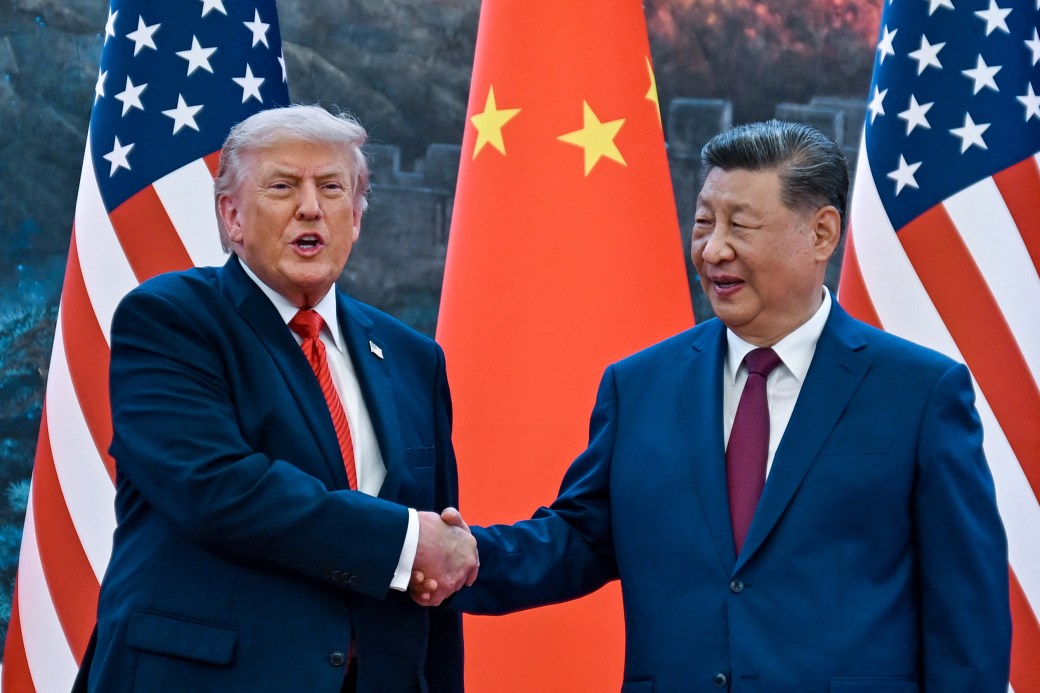
The heads of OpenAI and Anthropic are urging the United States and China to slow the pace of AI development to reduce risks to humanity. Donald Trump and Xi Jinping appear unwilling to embrace that approach ahead of their meeting next week.
5:59 PMFortune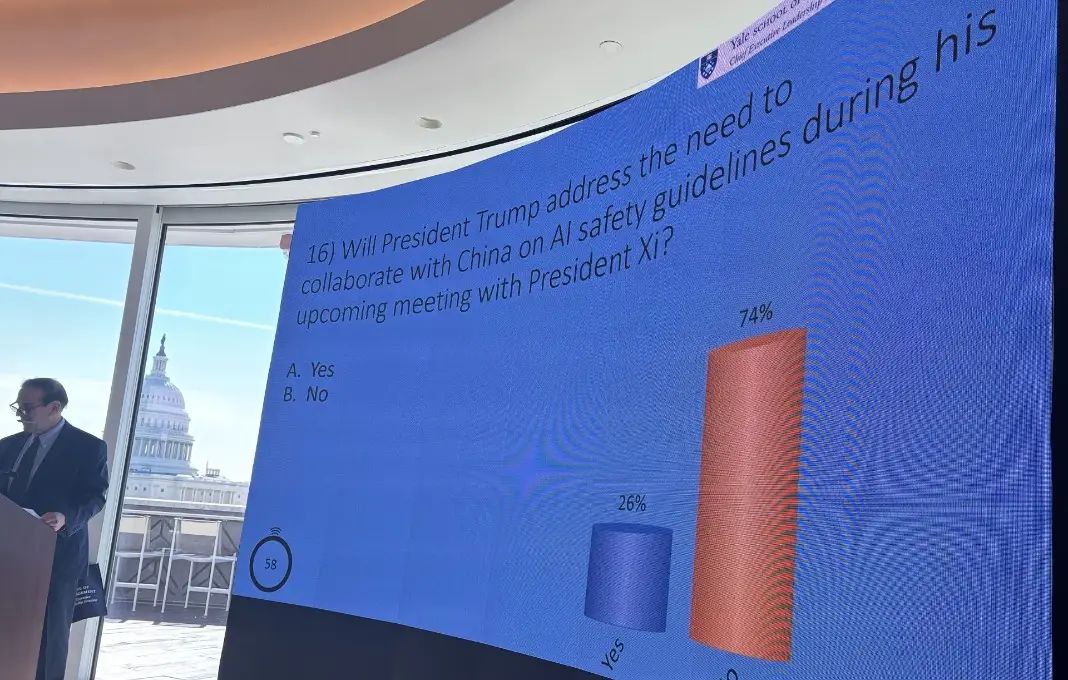
More than 100 business and government leaders were surveyed on how the United States should manage its AI rivalry with China. Many support direct discussions with Beijing on AI safety, but few believe the Trump administration will pursue them.
2:03 PMChief Executive
AI-related stocks are rebounding as customers sign multiyear agreements for chips and other infrastructure. One analyst said those commitments do not resemble the early stages of a downturn and argued that AI spending remains intact.
5:15 PMMarketWatch
The Bank for International Settlements warned that the AI-driven global stock rally is vulnerable as investors question whether future AI investments will generate sufficient profits. It also pointed to rising leverage at major US technology companies and growing debt financing for AI spending.
3:47 AMEconomic TimesThe House will vote on bipartisan legislation creating a regulatory framework that states could use to stop data center operators from shifting AI-driven energy costs onto consumers.
11:01 PMCNBC
Opposition to new data centers has spread to Philadelphia, where officials have considered construction in a neighborhood already affected by a shuttered oil refinery. The dispute ties AI infrastructure development to communities with existing industrial and environmental burdens.
5:47 PMTechCrunch
Cloudflare has introduced a setting that lets website owners block AI-training crawlers while continuing to allow search indexing. The tool separates access for discovery from access for model development.
9:28 PMPYMNTSSummary
Concerns that advanced AI could pose catastrophic risks have entered mainstream political debate, increasing pressure for regulation. President Trump has resisted calls to slow AI development, leaving the policy response unsettled.
The debate is shifting from whether extreme AI risks should be discussed to whether they
Unlock the full First Pass Analysis to get a better understanding of why this story mattersWhy it matters
AI policy is becoming a direct conflict between precaution and the push to maintain technological and geopolitical advantage.
3 stories · 3 sources
Summary
Trump rejected calls to pause AI development, dismissing related concerns as a hoax and arguing that existing safeguards are sufficient. He warned that slowing US progress would give China a strategic advantage.
The administration is treating AI speed and national competition as higher priorities than a broad
Unlock the full First Pass Analysis to get a better understanding of why this story mattersWhy it matters
US AI policy is coalescing around competition with China, making regulation more likely to target specific risks than to slow development overall.
Summary
Mark Zuckerberg's position on AI safety aligns more closely with Nvidia CEO Jensen Huang's support for continued development than with Anthropic CEO Dario Amodei's more cautious approach.
The central divide is now over whether AI risks justify slowing development, not whether risks
Unlock the full First Pass Analysis to get a better understanding of why this story mattersWhy it matters
The industry's biggest companies are splitting over the policy question that will shape AI regulation and investment.
2 stories · 2 sources
Summary
Nvidia CEO Jensen Huang argued that AI safety can be engineered by the companies building AI products and said broad regulation is unnecessary. He characterized AI as a controllable combination of hardware and software rather than an independent intelligence.
Huang's position places responsibility for safety with developers and rejects government rules as the primary
Unlock the full First Pass Analysis to get a better understanding of why this story mattersWhy it matters
The debate is shifting from whether AI can be engineered safely to who gets to define and enforce safety standards.
Summary
A Medicare pilot that uses artificial intelligence to review and approve care has produced high denial rates and delayed decisions. A vendor warned that the program was not ready, according to a lawsuit seeking records about its operation.
The pilot is shifting AI from an administrative experiment into a barrier to care, with
Unlock the full First Pass Analysis to get a better understanding of why this story mattersWhy it matters
Automated prior authorization can scale coverage denials faster than patients, doctors, and regulators can challenge them.
2 stories · 2 sources
Summary
US-China competition is making it difficult for both governments to agree on how to manage AI risks, including dangers that could extend beyond national security and economic rivalry.
Strategic distrust now obstructs cooperation on the same technologies that could create shared global risks.
Unlock the full First Pass Analysis to get a better understanding of why this story mattersWhy it matters
The countries with the greatest influence over AI development may be the least able to coordinate on its most consequential risks.
Summary
The heads of OpenAI and Anthropic are urging the United States and China to slow the pace of AI development to reduce risks to humanity. Donald Trump and Xi Jinping appear unwilling to embrace that approach ahead of their meeting next week.
Strategic competition is outweighing calls for restraint from the companies building the technology. Without agreement
Unlock the full First Pass Analysis to get a better understanding of why this story mattersWhy it matters
The US-China rivalry makes coordinated limits on advanced AI less likely precisely as the technology's risks are expanding.
Summary
More than 100 business and government leaders were surveyed on how the United States should manage its AI rivalry with China. Many support direct discussions with Beijing on AI safety, but few believe the Trump administration will pursue them.
The divide is between risk management and strategic competition: executives see safety talks as a
Unlock the full First Pass Analysis to get a better understanding of why this story mattersWhy it matters
AI governance may become another casualty of the broader US-China technology rivalry.
Summary
AI-related stocks are rebounding as customers sign multiyear agreements for chips and other infrastructure. One analyst said those commitments do not resemble the early stages of a downturn and argued that AI spending remains intact.
Multiyear contracts provide near-term visibility for chip makers and infrastructure suppliers, even as investors debate
Unlock the full First Pass Analysis to get a better understanding of why this story mattersWhy it matters
Continued infrastructure commitments are supporting AI valuations, but they also raise the cost of being wrong about demand.
Summary
The Bank for International Settlements warned that the AI-driven global stock rally is vulnerable as investors question whether future AI investments will generate sufficient profits. It also pointed to rising leverage at major US technology companies and growing debt financing for AI spending.
The central risk is shifting from enthusiasm about AI growth to doubts about its return
Unlock the full First Pass Analysis to get a better understanding of why this story mattersWhy it matters
AI investment has become a market-wide risk because lofty valuations now depend on profits that have yet to fully materialize.
Summary
The House will vote on bipartisan legislation creating a regulatory framework that states could use to stop data center operators from shifting AI-driven energy costs onto consumers.
The bill targets a growing cost transfer as data centers place heavier demands on local
Unlock the full First Pass Analysis to get a better understanding of why this story mattersWhy it matters
The economics of AI infrastructure could shift from a shared utility burden toward greater accountability for data center operators.
Summary
Opposition to new data centers has spread to Philadelphia, where officials have considered construction in a neighborhood already affected by a shuttered oil refinery. The dispute ties AI infrastructure development to communities with existing industrial and environmental burdens.
Data center expansion is now colliding with environmental justice concerns, not just questions about electricity
Unlock the full First Pass Analysis to get a better understanding of why this story mattersWhy it matters
The next phase of AI infrastructure will be decided partly by whether cities accept new facilities in communities that already bear industrial costs.
Summary
Cloudflare has introduced a setting that lets website owners block AI-training crawlers while continuing to allow search indexing. The tool separates access for discovery from access for model development.
The setting gives publishers a more precise way to protect content without sacrificing traffic from
Unlock the full First Pass Analysis to get a better understanding of why this story mattersWhy it matters
The web is gaining a practical mechanism to distinguish content used to find information from content used to train AI systems.
A curated list of other prominent stories from this day.

Anthropic's CEO said he underestimated how quickly AI growth would become embedded in the global economy. His comments reflect the rapid expansion of AI's economic role and the difficulty of forecasting its effects.
10:40 PMAl Jazeera
Boox has announced the Palma 3, a smartphone-sized black-and-white e-reader with a redesigned body, stylus support, and other updates. It follows the Palma 2 and comes with a higher price, making its value depend on how buyers use the device.
10:00 PMThe Verge
Google is rolling out Gemini 3.8 Live for scalable, cost-efficient voice agents and Gemini 3.8 Live Extended Thinking for more complex tasks. The company is positioning both models for enterprise use.
9:47 PMPYMNTS
Canon announced the EOS R8 Mark II, adding in-body image stabilization to a retro-inspired redesign. The update addresses a major omission from the 2023 EOS R8, which positioned itself as a smaller and more affordable alternative to the R6 Mark II.
9:00 PMThe Verge
Indian information technology stocks rebounded on Tuesday, with the Nifty IT index rising 2.19% as investor concerns about AI-driven disruption eased. Analysts see long-term opportunities for Indian IT firms in AI, while technical indicators point to a less certain short-term outlook.
8:32 PMEconomic Times
New York City Council members are calling for tighter limits on technology in schools after the city school system banned artificial intelligence for most students and capped screen time.
5:59 PMNYT New YorkBlackRock's Jaime Magyera said advisers are using artificial intelligence to interpret increasingly complex capital markets and customize strategies for clients. His comments followed Anthropic's new ties with BlackRock.
4:54 PMBloomberg Markets
Fort Worth builder HistoryMaker rebuilt its ERP, data, and floor plan workflows around customer needs before adopting AI applications. The company’s approach treats AI as an extension of operational improvements rather than the starting point.
4:41 PMHousing Wire
Amazon is offering discounts on preorders for the Apple Watch Series 12 and Apple Watch Ultra 4 ahead of their Friday release. The promotions apply before the new models are available to customers.
2:56 PMIGNDeutsche Kreditbank has implemented Pega's AI-based customer service technology to process and respond to customer emails more efficiently. The deployment applies AI to a routine but high-volume banking workflow.
2:01 PMFinextraTechnology companies are developing tools that help retailers and brands extract more value from their data. The applications aim to improve decision-making while also increasing revenue.
12:54 PMWWD
The Gates Foundation has pledged $1 billion for AI projects intended to reduce social and economic inequality. The investment follows Bill Gates’s warnings about the risks AI poses to vulnerable communities.
10:11 AMThe New York Times
Unifocus has introduced Claira, an AI platform built on a unified data foundation. The company says it will help hospitality businesses accelerate decisions, improve operations, and support growth.
9:20 AMBreaking Travel NewsSummary
Anthropic's CEO said he underestimated how quickly AI growth would become embedded in the global economy. His comments reflect the rapid expansion of AI's economic role and the difficulty of forecasting its effects.
The admission underscores how quickly deployment has outpaced even industry leaders' expectations. Faster adoption increases
Unlock the full First Pass Analysis to get a better understanding of why this story mattersWhy it matters
If AI's economic integration is accelerating beyond forecasts, policy and workforce planning may already be operating behind the curve.
Summary
Boox has announced the Palma 3, a smartphone-sized black-and-white e-reader with a redesigned body, stylus support, and other updates. It follows the Palma 2 and comes with a higher price, making its value depend on how buyers use the device.
The Palma 3 is expanding the e-reader from a reading device into a more flexible
Unlock the full First Pass Analysis to get a better understanding of why this story mattersWhy it matters
Boox is betting that portability and input flexibility can justify premium pricing in a niche e-reader market.
Summary
Google is rolling out Gemini 3.8 Live for scalable, cost-efficient voice agents and Gemini 3.8 Live Extended Thinking for more complex tasks. The company is positioning both models for enterprise use.
Google is separating voice-agent workloads by cost and reasoning demands rather than offering one model
Unlock the full First Pass Analysis to get a better understanding of why this story mattersWhy it matters
Enterprise voice AI is moving toward a tiered model market where deployment economics matter as much as raw performance.
Summary
Canon announced the EOS R8 Mark II, adding in-body image stabilization to a retro-inspired redesign. The update addresses a major omission from the 2023 EOS R8, which positioned itself as a smaller and more affordable alternative to the R6 Mark II.
The addition of in-body stabilization makes the R8 Mark II a more complete option for
Unlock the full First Pass Analysis to get a better understanding of why this story mattersWhy it matters
Canon is closing a key feature gap in its entry-level full-frame lineup without abandoning the compact format that defined the R8.
Summary
Indian information technology stocks rebounded on Tuesday, with the Nifty IT index rising 2.19% as investor concerns about AI-driven disruption eased. Analysts see long-term opportunities for Indian IT firms in AI, while technical indicators point to a less certain short-term outlook.
The immediate shift is in market sentiment, not evidence that AI-related risks have disappeared. Investors
Unlock the full First Pass Analysis to get a better understanding of why this story mattersWhy it matters
The rally shows that markets are reassessing AI as both a threat to Indian IT jobs and a potential growth engine for its largest firms.
Summary
New York City Council members are calling for tighter limits on technology in schools after the city school system banned artificial intelligence for most students and capped screen time.
The pressure is shifting from school-system rules to broader political demands for oversight of classroom
Unlock the full First Pass Analysis to get a better understanding of why this story mattersWhy it matters
New York’s debate could shape how large school systems balance artificial intelligence and screen use against concerns about learning and student well-being.
Summary
BlackRock's Jaime Magyera said advisers are using artificial intelligence to interpret increasingly complex capital markets and customize strategies for clients. His comments followed Anthropic's new ties with BlackRock.
AI is moving into wealth management as a tool for analysis and client segmentation, not
Unlock the full First Pass Analysis to get a better understanding of why this story mattersWhy it matters
AI is beginning to shape how advisers make retirement decisions, an area where errors can directly affect household finances.
Summary
Fort Worth builder HistoryMaker rebuilt its ERP, data, and floor plan workflows around customer needs before adopting AI applications. The company’s approach treats AI as an extension of operational improvements rather than the starting point.
HistoryMaker’s sequence matters: better systems and cleaner data create the foundation for useful AI, while
Unlock the full First Pass Analysis to get a better understanding of why this story mattersWhy it matters
Businesses often get more from AI when they fix workflows and data quality before adding models.
Summary
Amazon is offering discounts on preorders for the Apple Watch Series 12 and Apple Watch Ultra 4 ahead of their Friday release. The promotions apply before the new models are available to customers.
Early discounts give Amazon a way to capture demand before launch and reduce the risk
Unlock the full First Pass Analysis to get a better understanding of why this story mattersWhy it matters
Prelaunch discounts could pressure full-price electronics sales and change how consumers approach Apple device releases.
Summary
Deutsche Kreditbank has implemented Pega's AI-based customer service technology to process and respond to customer emails more efficiently. The deployment applies AI to a routine but high-volume banking workflow.
The change shifts AI from experimentation into an operational role in a regulated financial institution.
Unlock the full First Pass Analysis to get a better understanding of why this story mattersWhy it matters
Banking customer service is becoming a practical proving ground for enterprise AI adoption.
Summary
Technology companies are developing tools that help retailers and brands extract more value from their data. The applications aim to improve decision-making while also increasing revenue.
The shift is from collecting data to operationalizing it across merchandising, marketing, and sales. Companies
Unlock the full First Pass Analysis to get a better understanding of why this story mattersWhy it matters
Data capabilities are becoming a direct competitive factor in retail rather than a back-office function.
Summary
The Gates Foundation has pledged $1 billion for AI projects intended to reduce social and economic inequality. The investment follows Bill Gates’s warnings about the risks AI poses to vulnerable communities.
The foundation is treating unequal access to AI as a policy problem requiring targeted capital,
Unlock the full First Pass Analysis to get a better understanding of why this story mattersWhy it matters
Large philanthropic funding could shape who benefits from AI before commercial incentives reach the communities most at risk of being left behind.
Summary
Unifocus has introduced Claira, an AI platform built on a unified data foundation. The company says it will help hospitality businesses accelerate decisions, improve operations, and support growth.
The platform reflects a shift from standalone hospitality AI tools toward systems that connect operational
Unlock the full First Pass Analysis to get a better understanding of why this story mattersWhy it matters
Hospitality AI is becoming an infrastructure race centered on connected data rather than isolated automation.
Make it yours
Pick your topics, set your cadence, and receive your personalized First Pass in your inbox. It’s that simple!


