
Government bond yields are rising across major markets as investors debate the forces behind the move and whether the selloff has further to run.
9:58 PMBloomberg Markets103 stories from 7 sources
Supporting Articles
Government bond yields are rising across major markets as investors debate the forces behind the move and whether the selloff has further to run.
9:58 PMBloomberg Markets
Ten-year Treasury yields jumped roughly half a percentage point in the month's worst bond-market selloff in four years, intensifying concerns about a self-reinforcing wave of selling.
5:32 PMFinancial Times
Global bond yields have risen at an unusually rapid pace, with the more than $30 trillion U.S. government debt market caught in the selloff.
4:32 PMMarketWatch
The dollar remained near a two-month high as rising US Treasury yields supported demand for the currency. The euro and pound weakened amid continuing economic stress in Europe, despite US inflation rising less than expected.
10:07 PMEconomic Times
Vanguard warned that France is damaging its credit profile as borrowing costs rise and fiscal pressures intensify. The Iran war has added to those pressures just as Paris faces a difficult budget battle.
4:42 AMFinancial Times
Standard Chartered's China chief said the yuan has no realistic prospect of challenging the U.S. dollar during his career, while suggesting the yen and pound may face greater risks.
3:50 AMFortune
Gold prices held steady as investors waited for US employment data to assess the Federal Reserve’s next interest-rate move. Slightly firmer US inflation and signals that the Bank of Japan could raise rates added uncertainty to the outlook.
10:11 PMEconomic TimesFed policymaker Neel Kashkari said inflation remains too high despite softer-than-expected PCE data, while describing the labor market as pretty good. His comments came in an interview with CNBC.
7:44 PMCNBCThe 10-year Treasury yield initially fell after softer-than-expected inflation data but turned higher as traders shifted their focus to the upcoming jobs report.
4:33 PMCNBC
Softer inflation data lifted the Nasdaq slightly while the S&P 500 and Dow fell, though both still posted quarterly gains. Private employers added 90,000 jobs in September, adding to mixed signals about labor-market strength and the Federal Reserve's outlook.
4:10 PMEconomic Times
The S&P 500 has posted a small gain in September, but roughly three-quarters of its constituents have declined. The index's performance has therefore masked broad weakness among individual stocks.
5:22 PMMarketWatch
U.S. GDP grew 2.2% despite conflict with Iran and the resulting energy-price spike. The economy’s resilience is increasingly tied to gains from artificial intelligence, even as optimism about the technology has recently reversed sharply.
12:06 PMFortune
KKR is warning that heavy borrowing tied to artificial intelligence has created growing exposure and concentration in credit markets. A downturn in the AI sector could therefore trigger broader volatility beyond technology stocks.
9:03 AMFinancial Times
Investors fear that a surge in global bond yields could push U.S. stocks into a correction, but BofA Global Research says the larger danger lies elsewhere.
4:59 PMMarketWatchThe yen weakened after the Bank of Japan’s summary of opinions from its September meeting offered little evidence that policymakers were preparing to raise rates again this month.
10:09 PMBloomberg Markets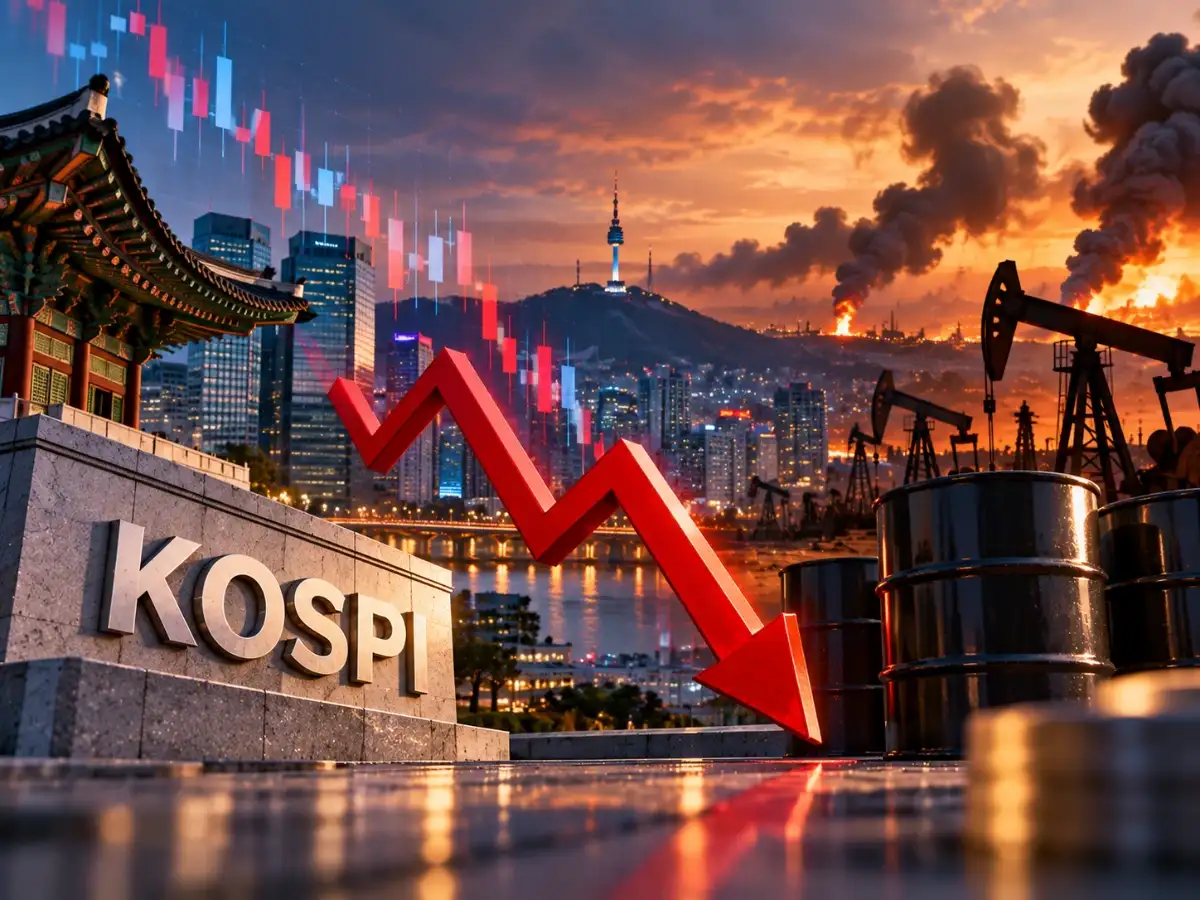
South Korean shares slipped despite record September exports as elevated oil prices and uncertainty over Middle East energy supplies weakened sentiment. The KOSPI fell 0.21%, the won weakened and bond yields rose, while semiconductor exports surged 83.5% on strong AI-related demand and foreign investors continued selling.
11:50 PMEconomic TimesForeign investors pulled the most money from Thai bonds since March as rising US Treasury yields and higher oil prices weakened the appeal of Thailand’s debt.
9:24 PMBloomberg MarketsSummary
Government bond yields are rising across major markets as investors debate the forces behind the move and whether the selloff has further to run.
The yield surge reflects a broad repricing of inflation, fiscal risk, term premiums, and the
Unlock the full First Pass Analysis to get a better understanding of why this story mattersWhy it matters
A prolonged bond selloff would raise funding costs globally and tighten markets even without further central bank hikes.
Summary
Ten-year Treasury yields jumped roughly half a percentage point in the month's worst bond-market selloff in four years, intensifying concerns about a self-reinforcing wave of selling.
Higher yields are raising funding costs while forcing leveraged investors to reduce positions, creating pressure
Unlock the full First Pass Analysis to get a better understanding of why this story mattersWhy it matters
Treasury market stress reaches nearly every major asset class and could turn a bond selloff into a broader risk-off event.
Summary
Global bond yields have risen at an unusually rapid pace, with the more than $30 trillion U.S. government debt market caught in the selloff.
The scale and speed of the move suggest a repricing of long-term borrowing costs rather
Unlock the full First Pass Analysis to get a better understanding of why this story mattersWhy it matters
A sustained rise in benchmark yields could reset asset prices and fiscal assumptions across the global economy.
Summary
The dollar remained near a two-month high as rising US Treasury yields supported demand for the currency. The euro and pound weakened amid continuing economic stress in Europe, despite US inflation rising less than expected.
Higher US yields are outweighing the modestly softer US inflation data and keeping the dollar’s
Unlock the full First Pass Analysis to get a better understanding of why this story mattersWhy it matters
A stronger dollar tightens global financial conditions and can add pressure to emerging-market currencies and dollar-denominated debt.
Summary
Vanguard warned that France is damaging its credit profile as borrowing costs rise and fiscal pressures intensify. The Iran war has added to those pressures just as Paris faces a difficult budget battle.
France now faces a tighter link between political gridlock, higher debt-service costs and investor confidence.
Unlock the full First Pass Analysis to get a better understanding of why this story mattersWhy it matters
Rising yields are turning France’s fiscal dispute into a broader sovereign-credit risk.
Summary
Standard Chartered's China chief said the yuan has no realistic prospect of challenging the U.S. dollar during his career, while suggesting the yen and pound may face greater risks.
The decisive view is that China's currency will remain a secondary international currency rather than
Unlock the full First Pass Analysis to get a better understanding of why this story mattersWhy it matters
The assessment reinforces the dollar's central role while putting other major currencies under closer scrutiny.
Summary
Gold prices held steady as investors waited for US employment data to assess the Federal Reserve’s next interest-rate move. Slightly firmer US inflation and signals that the Bank of Japan could raise rates added uncertainty to the outlook.
The jobs report is the next major test for expectations about US rates, which remain
Unlock the full First Pass Analysis to get a better understanding of why this story mattersWhy it matters
Gold is caught between persistent inflation risks and the possibility that weaker labor data will reopen the path to rate cuts.
Summary
Fed policymaker Neel Kashkari said inflation remains too high despite softer-than-expected PCE data, while describing the labor market as pretty good. His comments came in an interview with CNBC.
Kashkari's assessment supports a cautious approach to further rate cuts: inflation has improved, but not
Unlock the full First Pass Analysis to get a better understanding of why this story mattersWhy it matters
The Fed's tolerance for waiting depends on inflation falling further without a clear deterioration in jobs.
Summary
The 10-year Treasury yield initially fell after softer-than-expected inflation data but turned higher as traders shifted their focus to the upcoming jobs report.
Investors are treating the inflation release as insufficient to reset the rates outlook. Labor-market data
Unlock the full First Pass Analysis to get a better understanding of why this story mattersWhy it matters
The market's reaction shows that employment data, not just inflation, will determine the next move in Treasuries.
Summary
Softer inflation data lifted the Nasdaq slightly while the S&P 500 and Dow fell, though both still posted quarterly gains. Private employers added 90,000 jobs in September, adding to mixed signals about labor-market strength and the Federal Reserve's outlook.
The data reduced immediate pressure for another Fed hike, supporting growth-sensitive technology stocks even as
Unlock the full First Pass Analysis to get a better understanding of why this story mattersWhy it matters
The inflation and jobs data keep Fed policy as the main driver of whether the stock rally broadens or narrows further.
Summary
The S&P 500 has posted a small gain in September, but roughly three-quarters of its constituents have declined. The index's performance has therefore masked broad weakness among individual stocks.
The narrow advance points to concentration rather than a healthy market-wide rally. If leadership from
Unlock the full First Pass Analysis to get a better understanding of why this story mattersWhy it matters
Weak market breadth makes the headline index look more resilient than the average stock.
2 stories · 2 sources
Summary
U.S. GDP grew 2.2% despite conflict with Iran and the resulting energy-price spike. The economy’s resilience is increasingly tied to gains from artificial intelligence, even as optimism about the technology has recently reversed sharply.
AI has become an important support for growth while other shocks raise costs and weaken
Unlock the full First Pass Analysis to get a better understanding of why this story mattersWhy it matters
Growth looks resilient, but its increasing dependence on AI creates a concentrated risk to the economic outlook.
Summary
KKR is warning that heavy borrowing tied to artificial intelligence has created growing exposure and concentration in credit markets. A downturn in the AI sector could therefore trigger broader volatility beyond technology stocks.
AI investment has become a credit risk as companies and lenders commit increasing capital to
Unlock the full First Pass Analysis to get a better understanding of why this story mattersWhy it matters
A reversal in AI spending could damage lenders and credit markets even before it appears in broader economic data.
Summary
Investors fear that a surge in global bond yields could push U.S. stocks into a correction, but BofA Global Research says the larger danger lies elsewhere.
Rising yields are a warning signal, not necessarily the market's central risk. The strategists' view
Unlock the full First Pass Analysis to get a better understanding of why this story mattersWhy it matters
Investors may need to reassess what is driving market risk rather than treating higher yields as the entire problem.
Summary
The yen weakened after the Bank of Japan’s summary of opinions from its September meeting offered little evidence that policymakers were preparing to raise rates again this month.
The market has lowered expectations for a near-term BOJ hike, removing a source of support
Unlock the full First Pass Analysis to get a better understanding of why this story mattersWhy it matters
A delayed BOJ move keeps the yen vulnerable and complicates Japan’s effort to contain imported inflation.
Summary
South Korean shares slipped despite record September exports as elevated oil prices and uncertainty over Middle East energy supplies weakened sentiment. The KOSPI fell 0.21%, the won weakened and bond yields rose, while semiconductor exports surged 83.5% on strong AI-related demand and foreign investors continued selling.
Strong chip exports are not offsetting the broader macro shock from higher energy costs and
Unlock the full First Pass Analysis to get a better understanding of why this story mattersWhy it matters
South Korea shows how an AI-led export boom can be overwhelmed by imported inflation, currency pressure and geopolitical risk.
Summary
Foreign investors pulled the most money from Thai bonds since March as rising US Treasury yields and higher oil prices weakened the appeal of Thailand’s debt.
The outflows show that global rates and imported energy costs are overwhelming the yield support
Unlock the full First Pass Analysis to get a better understanding of why this story mattersWhy it matters
Thailand faces simultaneous pressure on capital flows, its currency, and the cost of financing.
A curated list of other prominent stories from this day.
Copper prices held steady as investors focused on supply conditions while China’s national holiday reduced trading activity and near-term demand signals.
10:08 PMBloomberg MarketsThe Reserve Bank of Australia said the collapse of property developer Bathla and its exposure to private credit lenders do not pose a system-wide financial stability threat.
9:30 PMBloomberg Markets
September delivered a severe bond-market decline, and historical patterns suggest October could bring further losses.
4:56 PMMarketWatch
The Reserve Bank of India’s net short forward position rose to $200 billion in August from $136 billion in July. The increase came alongside additional long-dollar positions, reflecting continued adjustments in the central bank’s currency operations.
3:38 PMEconomic TimesOptions activity in two Magnificent Seven stocks exceeded the 30-day average by more than 50% on Wednesday, signaling unusually strong investor interest.
2:47 PMCNBCTanker stocks have delivered some of the market's strongest gains this year, with their momentum supported by favorable conditions in shipping markets.
1:28 PMCNBC
The Commodity Futures Trading Commission has submitted rules for White House review that would classify prediction-market event contracts as swaps and state that they are not gambling. The proposals come as the federal regulator contests states’ claims to oversee the industry.
1:20 PMPYMNTS
A revised second-quarter GDP estimate showed stronger growth even as inflation rose and real disposable income barely changed. Consumers nevertheless increased spending substantially, revealing continued resilience alongside pressure on household finances.
12:26 PMPYMNTS
Unbalanced corporate and government balance sheets could weaken future growth and undermine both major asset classes. The argument favors caution rather than a broad shift into bonds or equities.
11:53 AMFinancial Times
Saudi Arabia’s IPO market is losing momentum as weak post-listing performance, valuation disputes and geopolitical uncertainty deter investors. Regulators are reconsidering how companies are priced and brought to market.
5:36 AMFortune
Robinhood’s role as an underwriter for Oura’s IPO reflects the growing influence of individual investors in new-stock offerings. Companies and banks are increasingly treating retail demand as part of the IPO process rather than a secondary audience.
5:01 AMFortune
The global debt burden may not signal an imminent crisis, but major economies have less room to respond to future shocks. High debt levels constrain fiscal and monetary policy even when markets remain stable.
12:00 AMFinancial TimesSummary
Copper prices held steady as investors focused on supply conditions while China’s national holiday reduced trading activity and near-term demand signals.
With Chinese markets quieter, supply developments are likely to drive price action more than fresh
Unlock the full First Pass Analysis to get a better understanding of why this story mattersWhy it matters
Copper’s next move will depend more on physical availability and Chinese demand after markets reopen.
Summary
The Reserve Bank of Australia said the collapse of property developer Bathla and its exposure to private credit lenders do not pose a system-wide financial stability threat.
The immediate shift is from concern about a developer failure to confidence that losses remain
Unlock the full First Pass Analysis to get a better understanding of why this story mattersWhy it matters
The RBA’s assessment reduces pressure for a policy response but leaves private credit and property lending under scrutiny.
Summary
September delivered a severe bond-market decline, and historical patterns suggest October could bring further losses.
The risk is that persistent inflation, heavy government borrowing, and weak demand keep pushing yields
Unlock the full First Pass Analysis to get a better understanding of why this story mattersWhy it matters
Another bad month for bonds would challenge the traditional role of fixed income as a portfolio stabilizer.
Summary
The Reserve Bank of India’s net short forward position rose to $200 billion in August from $136 billion in July. The increase came alongside additional long-dollar positions, reflecting continued adjustments in the central bank’s currency operations.
The jump indicates that the RBI is using forward markets more aggressively to manage rupee
Unlock the full First Pass Analysis to get a better understanding of why this story mattersWhy it matters
The RBI’s currency defense is becoming more dependent on instruments that create future dollar obligations.
Summary
Options activity in two Magnificent Seven stocks exceeded the 30-day average by more than 50% on Wednesday, signaling unusually strong investor interest.
The surge in options volume shows that traders are positioning for large moves, but it
Unlock the full First Pass Analysis to get a better understanding of why this story mattersWhy it matters
Options positioning in the largest stocks can quickly affect the broader market because those companies carry outsized index weights.
Summary
Tanker stocks have delivered some of the market's strongest gains this year, with their momentum supported by favorable conditions in shipping markets.
The rally shows investors rotating toward companies with direct exposure to freight rates and commodity
Unlock the full First Pass Analysis to get a better understanding of why this story mattersWhy it matters
Tanker stocks offer a market leadership trade tied to physical supply constraints, but their gains remain highly sensitive to shipping conditions.
Summary
The Commodity Futures Trading Commission has submitted rules for White House review that would classify prediction-market event contracts as swaps and state that they are not gambling. The proposals come as the federal regulator contests states’ claims to oversee the industry.
The rules would give the CFTC a stronger legal basis to regulate prediction markets as
Unlock the full First Pass Analysis to get a better understanding of why this story mattersWhy it matters
The classification battle will determine whether prediction markets grow as derivatives platforms or remain constrained by state gambling laws.
Summary
A revised second-quarter GDP estimate showed stronger growth even as inflation rose and real disposable income barely changed. Consumers nevertheless increased spending substantially, revealing continued resilience alongside pressure on household finances.
Spending is holding up despite limited real income growth, suggesting households may be drawing down
Unlock the full First Pass Analysis to get a better understanding of why this story mattersWhy it matters
Strong spending may mask weakening household capacity, making future consumer demand more fragile than GDP alone suggests.
Summary
Unbalanced corporate and government balance sheets could weaken future growth and undermine both major asset classes. The argument favors caution rather than a broad shift into bonds or equities.
Debt-heavy balance sheets leave borrowers more exposed to higher financing costs and slower demand. That
Unlock the full First Pass Analysis to get a better understanding of why this story mattersWhy it matters
The usual stock-and-bond diversification mix may offer less protection if debt and growth risks hit both markets.
Summary
Saudi Arabia’s IPO market is losing momentum as weak post-listing performance, valuation disputes and geopolitical uncertainty deter investors. Regulators are reconsidering how companies are priced and brought to market.
Investor resistance is forcing Saudi issuers to narrow the gap between ambitious valuations and public-market
Unlock the full First Pass Analysis to get a better understanding of why this story mattersWhy it matters
A weaker IPO pipeline would complicate Saudi Arabia’s effort to deepen its capital markets and finance economic diversification.
Summary
Robinhood’s role as an underwriter for Oura’s IPO reflects the growing influence of individual investors in new-stock offerings. Companies and banks are increasingly treating retail demand as part of the IPO process rather than a secondary audience.
Retail distribution is becoming a competitive advantage as issuers seek broader demand and stronger post-listing
Unlock the full First Pass Analysis to get a better understanding of why this story mattersWhy it matters
Retail investors are gaining a larger role in determining how companies raise capital and how IPOs trade.
Summary
The global debt burden may not signal an imminent crisis, but major economies have less room to respond to future shocks. High debt levels constrain fiscal and monetary policy even when markets remain stable.
The central shift is from asking whether debt will trigger immediate disaster to recognizing that
Unlock the full First Pass Analysis to get a better understanding of why this story mattersWhy it matters
Shrinking policy room raises the risk that future shocks will produce sharper economic and market damage.
Make it yours
Pick your topics, set your cadence, and receive your personalized First Pass in your inbox. It’s that simple!