
Oil prices steadied after a volatile week and remained on track for their largest monthly increase since March. The rally accelerated as the war between the US and Iran escalated.
6:04 PMBloomberg Markets23 stories from 10 sources
Supporting Articles
Oil prices steadied after a volatile week and remained on track for their largest monthly increase since March. The rally accelerated as the war between the US and Iran escalated.
6:04 PMBloomberg MarketsOil prices are holding recent gains as renewed US-Iran fighting adds to supply concerns. The conflict has widened across the region, with Houthi threats in the Red Sea and Saudi and US strikes on Iran-linked targets in Iraq increasing risks to energy flows.
10:23 AMBloomberg MarketsShell posted its strongest quarterly profit in four years as the Iran war drove oil and gas prices higher, lifting returns across the fossil-fuel sector.
4:40 AMCNBCThe U.S. and Saudi Arabia said they conducted joint airstrikes on Iranian proxies in Iraq, widening the set of actors directly engaged in the conflict. Oil prices jumped in response, reflecting fears of escalation and potential disruption across the region.
1:48 AMThe New York Times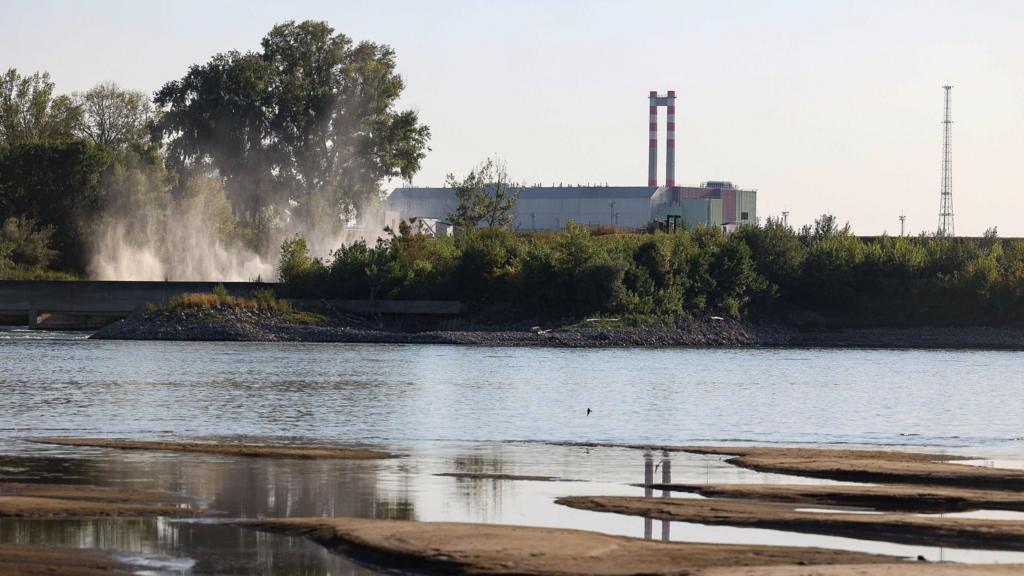
Record-low Danube water levels, following prolonged heatwaves and scant rainfall, forced Hungary to shut down its only nuclear power plant. Romania, Bulgaria and Serbia are also confronting the effects of low water and extreme heat.
1:55 PMBBCFirstEnergy reported a 50% increase in data center contracts during the second quarter. Its Mon Power subsidiary plans to evaluate a customer surcharge to help finance $2.7 billion in new generation, largely intended to serve a West Virginia data center.
8:43 AMUtility DiveRolls-Royce raised its guidance as defense demand and the expansion of AI data centers strengthened its business, with data center power orders rising more than 50% in the first half of the year.
7:59 AMCNBC
Saudi Arabia says 14 countries, including Pakistan, Turkey, Egypt, and Sudan, have joined a maritime defence coalition to protect Red Sea shipping and energy supplies from Houthi attacks.
4:58 PMFinancial Times
Egypt said a drone struck two ships at a Mediterranean port, though no group has claimed responsibility. The incident comes as Iran, Houthi forces in Yemen and Iraqi militias expand attacks on energy infrastructure across the region.
8:45 AMCNBCSummary
Oil prices steadied after a volatile week and remained on track for their largest monthly increase since March. The rally accelerated as the war between the US and Iran escalated.
The conflict has shifted oil pricing from demand concerns toward geopolitical supply risk, lifting volatility
Unlock the full First Pass Analysis to get a better understanding of why this story mattersWhy it matters
A widening conflict could raise energy costs worldwide and complicate the fight against inflation.
Summary
Oil prices are holding recent gains as renewed US-Iran fighting adds to supply concerns. The conflict has widened across the region, with Houthi threats in the Red Sea and Saudi and US strikes on Iran-linked targets in Iraq increasing risks to energy flows.
The key change is the conflict's expansion beyond the Strait of Hormuz into multiple corridors
Unlock the full First Pass Analysis to get a better understanding of why this story mattersWhy it matters
More battlefronts mean a greater chance that geopolitical escalation becomes a sustained global energy shock.
Summary
Shell posted its strongest quarterly profit in four years as the Iran war drove oil and gas prices higher, lifting returns across the fossil-fuel sector.
Higher prices are transferring value from energy consumers and importers to producers and major oil
Unlock the full First Pass Analysis to get a better understanding of why this story mattersWhy it matters
The conflict is turning energy inflation into a major windfall for fossil-fuel companies.
2 stories · 2 sources
Summary
The U.S. and Saudi Arabia said they conducted joint airstrikes on Iranian proxies in Iraq, widening the set of actors directly engaged in the conflict. Oil prices jumped in response, reflecting fears of escalation and potential disruption across the region.
Joint U.S.-Saudi strikes mark a clearer alignment that expands the battlefield beyond Israel-Iran dynamics into
Unlock the full First Pass Analysis to get a better understanding of why this story mattersWhy it matters
Broader participation increases escalation risk and immediately transmits to global oil prices, inflation expectations, and market volatility.
Summary
Record-low Danube water levels, following prolonged heatwaves and scant rainfall, forced Hungary to shut down its only nuclear power plant. Romania, Bulgaria and Serbia are also confronting the effects of low water and extreme heat.
The shutdown shows how climate-driven water stress can undermine nuclear generation even when reactors themselves
Unlock the full First Pass Analysis to get a better understanding of why this story mattersWhy it matters
Extreme heat and drought are emerging as direct threats to Europe’s nuclear and thermal power reliability.
Summary
FirstEnergy reported a 50% increase in data center contracts during the second quarter. Its Mon Power subsidiary plans to evaluate a customer surcharge to help finance $2.7 billion in new generation, largely intended to serve a West Virginia data center.
The surge in contracts is translating directly into utility investment and a fight over cost
Unlock the full First Pass Analysis to get a better understanding of why this story mattersWhy it matters
Data center growth is forcing utilities to redesign tariffs so new power-hungry customers do not subsidize or destabilize existing service.
Summary
Rolls-Royce raised its guidance as defense demand and the expansion of AI data centers strengthened its business, with data center power orders rising more than 50% in the first half of the year.
The company is benefiting from two durable capital-spending cycles: higher defense budgets and surging demand
Unlock the full First Pass Analysis to get a better understanding of why this story mattersWhy it matters
AI infrastructure is creating a new industrial demand center for power equipment alongside the defense buildup.
Summary
Saudi Arabia says 14 countries, including Pakistan, Turkey, Egypt, and Sudan, have joined a maritime defence coalition to protect Red Sea shipping and energy supplies from Houthi attacks.
The formation of a broad regional coalition signals that Red Sea insecurity is being treated
Unlock the full First Pass Analysis to get a better understanding of why this story mattersWhy it matters
The coalition could determine whether commercial traffic returns to a vital trade route or faces prolonged disruption and higher costs.
Summary
Egypt said a drone struck two ships at a Mediterranean port, though no group has claimed responsibility. The incident comes as Iran, Houthi forces in Yemen and Iraqi militias expand attacks on energy infrastructure across the region.
The attack extends the conflict's reach to maritime and port facilities that support regional energy
Unlock the full First Pass Analysis to get a better understanding of why this story mattersWhy it matters
Damage to ports and ships could disrupt energy logistics well beyond the immediate battle zones.
A curated list of other prominent stories from this day.

A Havana party promoter, David Gonzalez, is drawing crowds during Cuba's energy crisis by staging sought-after events that double as spaces for political frustration to surface. The piece explores whether those gatherings can scale from nightlife into organized pressure for change.
12:58 PMThe New York TimesTexas regulators approved an AI data center to locate next to a wind farm under rules requiring rapid curtailment during grid emergencies. The facility would have limited access to broader demand-response programs.
12:57 PMUtility DiveA proposed framework for plug-in solar would use tiered wattage limits and export controls to address household safety and grid reliability. The approach aims to give states a clearer path for regulating small, consumer-installed systems.
12:45 PMUtility DiveCuba is expanding its use of solar power as the country faces an oil shortage and recurring electricity problems. The shift reflects efforts by households and communities to offset unreliable grid supplies after the United States cut off oil access.
11:48 AMThe New York TimesCalifornia’s Cap-and-Invest program generated $36.2 billion, with $15.5 billion deployed for clean air, energy efficiency and emissions-reduction projects. The system requires covered emitters to surrender a tradable permit for every metric ton of carbon released.
11:37 AMUtility Dive
Oil majors are expected to post strong profits, but analysts see better upside in smaller companies tied to renewable energy and artificial intelligence. The recommendations reflect investor demand for growth beyond traditional hydrocarbons.
10:58 AMCNBC
An analysis by Unitaid found that higher oil prices could raise the cost of a widely used HIV medicine. The analysis links pharmaceutical expenses to fossil fuel dependence across manufacturing and supply chains and argues for reducing that exposure.
9:22 AMStat NewsEntergy is seeking ways to reduce the financial burden of its planned $1.8 billion purchase of the Cottonwood gas plant. Executives acknowledged the facility is older and that the transaction is increasingly uncertain.
8:53 AMUtility Dive
Greenidge Generation is repositioning its gas-fired power plant and bitcoin mining operation on Seneca Lake as a data center. The proposed business model could conflict with Gov. Kathy Hochul's pause on new data centers in New York.
8:00 AMGothamistPakistan has reached an agreement with Iran to secure safe passage for at least one Qatari liquefied natural gas shipment, according to people familiar with the matter. The arrangement is part of Islamabad's effort to use its ties with Tehran to ease a worsening energy shortage.
6:37 AMBloomberg Markets
The article explains the current oil-price environment and how changes in crude markets affect household energy bills and the prices of everyday goods. It links oil-market movements to broader consumer costs.
6:30 AMFortuneA large anchorage off Malaysia has become a key marketplace for Iranian oil, allowing sanctioned crude sales to continue despite a blockade.
3:02 AMAl JazeeraHigh taxes and unpredictable UK politics are pushing North Sea oil companies to pursue international deals. These companies are spending three times more on overseas transactions than on investments in Britain.
12:00 AMFinancial TimesSummary
A Havana party promoter, David Gonzalez, is drawing crowds during Cuba's energy crisis by staging sought-after events that double as spaces for political frustration to surface. The piece explores whether those gatherings can scale from nightlife into organized pressure for change.
Cuba's blackout economy is pushing social life into informal, self-powered networks that the state does
Unlock the full First Pass Analysis to get a better understanding of why this story mattersWhy it matters
Energy scarcity is not just a services failure in Cuba; it is reorganizing who can mobilize people and where politics can happen.
Summary
Texas regulators approved an AI data center to locate next to a wind farm under rules requiring rapid curtailment during grid emergencies. The facility would have limited access to broader demand-response programs.
The decision creates an early regulatory template for large behind-the-meter data centers. Co-location can connect
Unlock the full First Pass Analysis to get a better understanding of why this story mattersWhy it matters
Texas is testing whether data centers can expand quickly without shifting their grid risks onto other customers.
Summary
A proposed framework for plug-in solar would use tiered wattage limits and export controls to address household safety and grid reliability. The approach aims to give states a clearer path for regulating small, consumer-installed systems.
The decisive issue is not whether plug-in solar can expand, but how regulators define systems
Unlock the full First Pass Analysis to get a better understanding of why this story mattersWhy it matters
Clear technical thresholds could turn plug-in solar from a regulatory dispute into a scalable residential market.
Summary
Cuba is expanding its use of solar power as the country faces an oil shortage and recurring electricity problems. The shift reflects efforts by households and communities to offset unreliable grid supplies after the United States cut off oil access.
Solar is emerging as a resilience strategy for Cuba, not merely a climate policy. Distributed
Unlock the full First Pass Analysis to get a better understanding of why this story mattersWhy it matters
Cuba shows how fuel shortages can accelerate decentralized energy adoption when centralized systems become unreliable.
Summary
California’s Cap-and-Invest program generated $36.2 billion, with $15.5 billion deployed for clean air, energy efficiency and emissions-reduction projects. The system requires covered emitters to surrender a tradable permit for every metric ton of carbon released.
The program has become a major source of climate infrastructure funding, but the gap between
Unlock the full First Pass Analysis to get a better understanding of why this story mattersWhy it matters
California shows how carbon pricing can finance climate policy at scale, while raising questions about spending speed and accountability.
Summary
Oil majors are expected to post strong profits, but analysts see better upside in smaller companies tied to renewable energy and artificial intelligence. The recommendations reflect investor demand for growth beyond traditional hydrocarbons.
The key shift is that energy investment is broadening even as oil profits remain high.
Unlock the full First Pass Analysis to get a better understanding of why this story mattersWhy it matters
The strongest energy returns may come from companies enabling new power demand, not just producing oil.
Summary
An analysis by Unitaid found that higher oil prices could raise the cost of a widely used HIV medicine. The analysis links pharmaceutical expenses to fossil fuel dependence across manufacturing and supply chains and argues for reducing that exposure.
Oil price increases can reach medicines through chemicals, packaging, transport, and energy-intensive production, adding pressure
Unlock the full First Pass Analysis to get a better understanding of why this story mattersWhy it matters
Energy volatility can become a drug-pricing problem, especially for essential medicines bought at global scale.
Summary
Entergy is seeking ways to reduce the financial burden of its planned $1.8 billion purchase of the Cottonwood gas plant. Executives acknowledged the facility is older and that the transaction is increasingly uncertain.
The deal is now a capital-allocation problem rather than a straightforward capacity acquisition. Entergy may
Unlock the full First Pass Analysis to get a better understanding of why this story mattersWhy it matters
A troubled purchase could force Entergy to absorb costs or prove that aging gas capacity still serves a durable reliability need.
Summary
Greenidge Generation is repositioning its gas-fired power plant and bitcoin mining operation on Seneca Lake as a data center. The proposed business model could conflict with Gov. Kathy Hochul's pause on new data centers in New York.
The rebranding puts a regulatory question at the center of Greenidge's next phase: whether converting
Unlock the full First Pass Analysis to get a better understanding of why this story mattersWhy it matters
The case could test whether New York's data-center limits can prevent energy-intensive projects from changing labels rather than reducing impacts.
Summary
Pakistan has reached an agreement with Iran to secure safe passage for at least one Qatari liquefied natural gas shipment, according to people familiar with the matter. The arrangement is part of Islamabad's effort to use its ties with Tehran to ease a worsening energy shortage.
Pakistan is treating diplomacy with Iran as an operational tool for protecting critical energy supplies,
Unlock the full First Pass Analysis to get a better understanding of why this story mattersWhy it matters
A single protected LNG cargo could help Pakistan manage immediate shortages while revealing how regional conflict is disrupting energy security.
Summary
The article explains the current oil-price environment and how changes in crude markets affect household energy bills and the prices of everyday goods. It links oil-market movements to broader consumer costs.
Oil-price changes transmit through transport, manufacturing and household energy, so even modest moves can widen
Unlock the full First Pass Analysis to get a better understanding of why this story mattersWhy it matters
Oil remains a broad inflation channel, connecting geopolitical and commodity-market shocks to everyday expenses.
Summary
A large anchorage off Malaysia has become a key marketplace for Iranian oil, allowing sanctioned crude sales to continue despite a blockade.
The trade shows that sanctions and maritime blockades have not closed the channels that connect
Unlock the full First Pass Analysis to get a better understanding of why this story mattersWhy it matters
Sanctioned oil is still reaching the market through maritime networks that weaken the effect of economic restrictions.
Summary
High taxes and unpredictable UK politics are pushing North Sea oil companies to pursue international deals. These companies are spending three times more on overseas transactions than on investments in Britain.
The spending gap shows that fiscal and political uncertainty is redirecting capital away from the
Unlock the full First Pass Analysis to get a better understanding of why this story mattersWhy it matters
The UK is making overseas expansion more attractive than reinvestment in its own declining energy basin.
Make it yours
Pick your topics, set your cadence, and receive your personalized First Pass in your inbox. It’s that simple!