
President Trump threatened to annihilate Iran during his UN speech while US and Iranian officials met separately on the sidelines. He presented the crisis as a choice between reaching a peace agreement and taking extreme action.
10:57 PMBBC162 stories from 12 sources
Supporting Articles
President Trump threatened to annihilate Iran during his UN speech while US and Iranian officials met separately on the sidelines. He presented the crisis as a choice between reaching a peace agreement and taking extreme action.
10:57 PMBBC
President Trump threatened to annihilate Iran from the UN podium as shipping through the Strait of Hormuz remained uncertain. Hours later, US envoys met with Iran's delegation to discuss a possible route toward ending the war.
7:01 PMWWD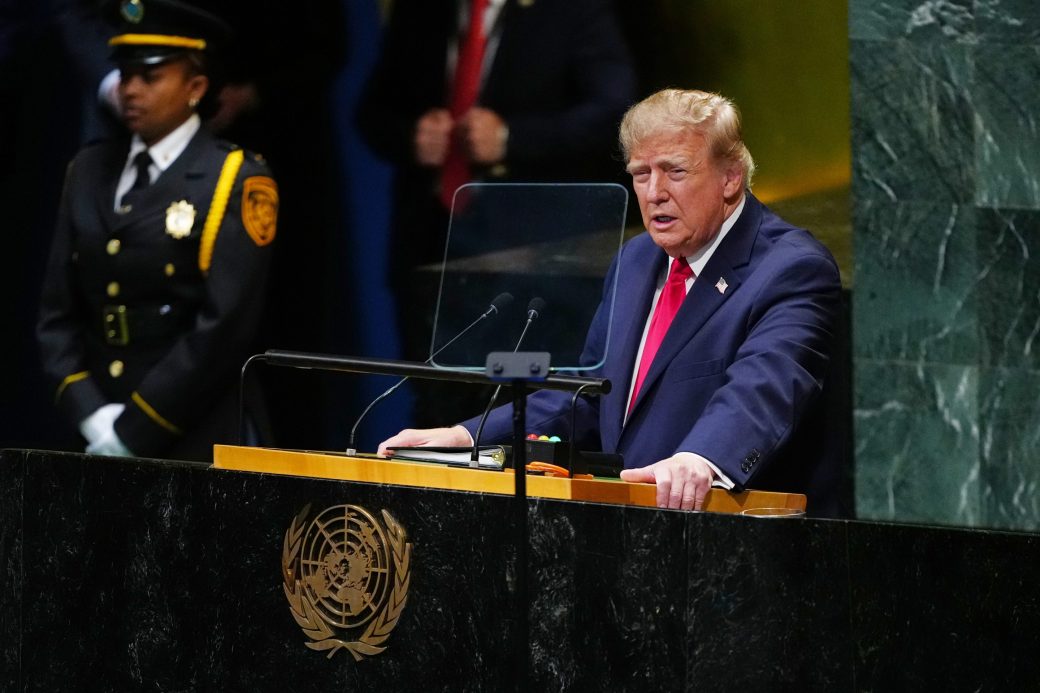
President Trump said he had a productive meeting with Iranian officials while warning that he could destroy the Islamic Republic if Tehran failed to reach an agreement. He accused Iran of delaying negotiations and described its government as weak and desperate.
2:59 PMFortune
Canada pledged 100 million Canadian dollars, or about $71 million, in aid for Palestinians. The UK and France called for action against Israeli settlements during the UN General Assembly.
10:36 PMAl Jazeera
UK Prime Minister Andy Burnham condemned Israel's war in Gaza and explained the UK's decision to sanction Israeli settlements it considers illegal. He said Britain would not remain passive as Palestinians suffer.
10:24 PMAl JazeeraTreasury Secretary Scott Bessent said Washington plans to pressure Iran more aggressively, including by targeting all Iranian airlines from Wednesday. The announcement signals a further tightening of economic measures against Tehran.
10:05 AMCNBC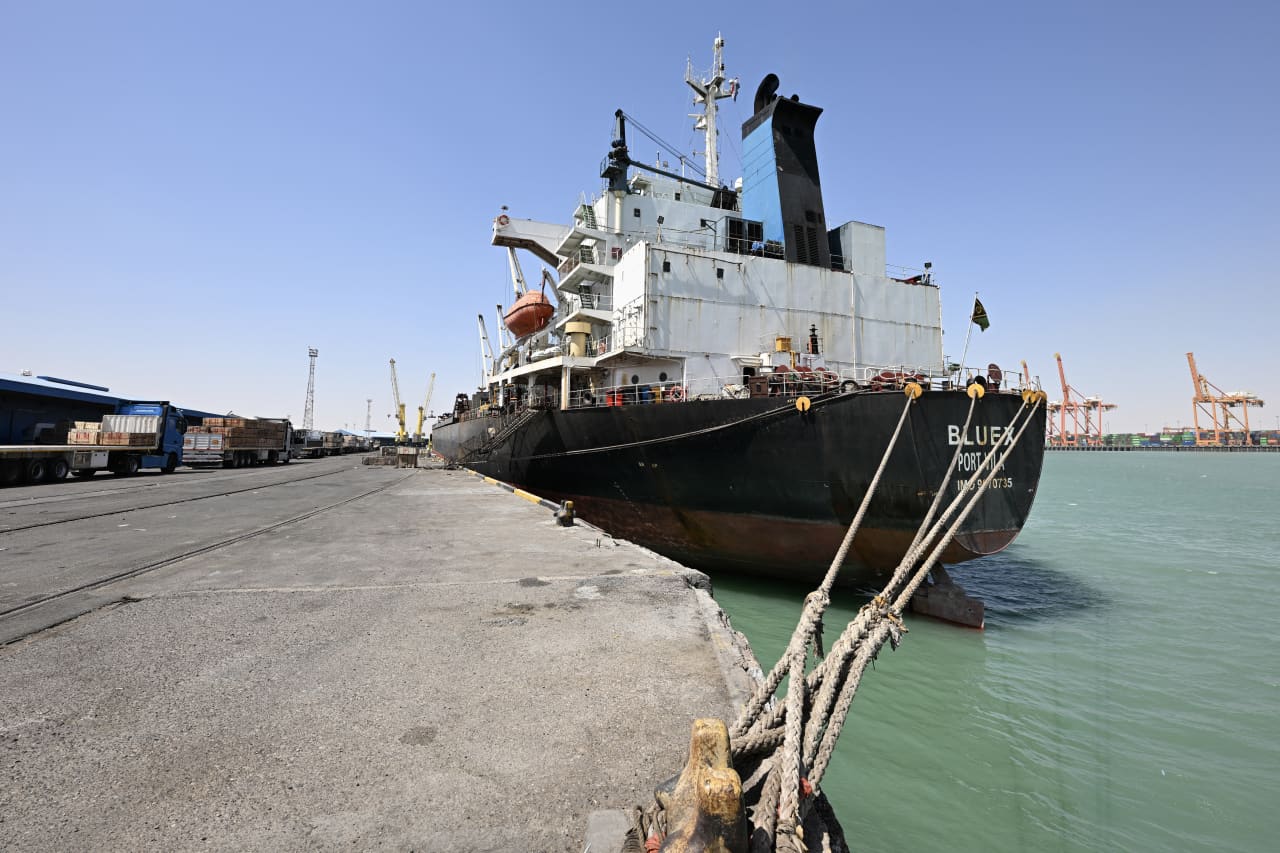
Bank of America strategists warn that Brent crude could rise above $150 a barrel if Middle East supply disruptions continue into spring 2027. The forecast assumes that current constraints deepen or persist.
7:26 AMMarketWatch
The United States and Denmark signed a defence agreement allowing the US to build two military bases in Greenland. The deal also reaffirmed Denmark’s sovereignty over the semi-autonomous Arctic territory.
5:36 PMBBC
President Salva Kiir dissolved South Sudan's government ahead of the country's first national elections, clearing a political obstacle to the long-delayed vote. The move also raised fears that he could consolidate unchecked power.
10:00 PMAl Jazeera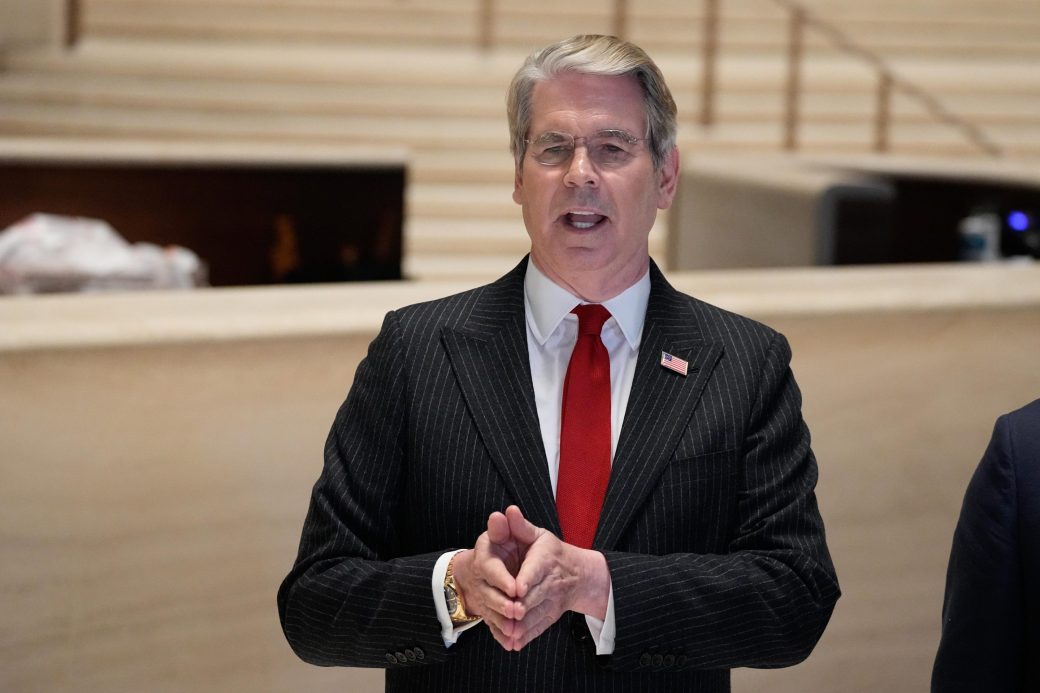
The United States and China are discussing an AI hotline to prevent accidents involving advanced systems from escalating into conflict. The proposal offers a channel for crisis communication, but neither side has resolved how to control a rogue AI system.
3:36 PMFortune
South Korea's leader is pursuing a different approach to North Korea, signaling a possible shift in the way Seoul manages tensions with Pyongyang. The effort reflects the difficulty of relying on pressure and deterrence alone to produce dialogue.
9:12 PMThe New York Times
A consortium backed by the US government and Gulf billionaires is pursuing Todd Boehly’s bid for Lukoil’s international assets. The group is seeking to displace Carlyle, which agreed in January to buy the Russian energy company’s overseas business.
4:00 PMFinancial TimesSummary
President Trump threatened to annihilate Iran during his UN speech while US and Iranian officials met separately on the sidelines. He presented the crisis as a choice between reaching a peace agreement and taking extreme action.
Trump's warning raises the cost of failure in the parallel diplomatic track and narrows the
Unlock the full First Pass Analysis to get a better understanding of why this story mattersWhy it matters
The combination of public threats and private talks creates a volatile path in which a diplomatic misstep could trigger military action.
3 stories · 3 sources
Summary
President Trump threatened to annihilate Iran from the UN podium as shipping through the Strait of Hormuz remained uncertain. Hours later, US envoys met with Iran's delegation to discuss a possible route toward ending the war.
The US is pairing extreme public threats with direct diplomacy, signaling that Washington is using
Unlock the full First Pass Analysis to get a better understanding of why this story mattersWhy it matters
The gap between Trump's rhetoric and diplomatic engagement will determine whether the crisis moves toward de-escalation or a wider regional confrontation.
Summary
President Trump said he had a productive meeting with Iranian officials while warning that he could destroy the Islamic Republic if Tehran failed to reach an agreement. He accused Iran of delaying negotiations and described its government as weak and desperate.
Trump is pairing diplomatic contact with an explicit threat of regime-level destruction, leaving the outcome
Unlock the full First Pass Analysis to get a better understanding of why this story mattersWhy it matters
The administration's negotiating strategy now carries a direct risk of turning talks over regional security and the Strait of Hormuz into a military crisis.
Summary
Canada pledged 100 million Canadian dollars, or about $71 million, in aid for Palestinians. The UK and France called for action against Israeli settlements during the UN General Assembly.
Western governments are pairing humanitarian support with sharper criticism of Israeli settlement policy. That shift
Unlock the full First Pass Analysis to get a better understanding of why this story mattersWhy it matters
Support for Palestinian relief is broadening into a wider challenge to Israel's policies in the occupied territories.
Summary
UK Prime Minister Andy Burnham condemned Israel's war in Gaza and explained the UK's decision to sanction Israeli settlements it considers illegal. He said Britain would not remain passive as Palestinians suffer.
The UK is moving from criticism of the Gaza war toward targeted economic and diplomatic
Unlock the full First Pass Analysis to get a better understanding of why this story mattersWhy it matters
Britain's policy is shifting from rhetorical concern toward direct pressure on Israeli settlement activity.
Summary
Treasury Secretary Scott Bessent said Washington plans to pressure Iran more aggressively, including by targeting all Iranian airlines from Wednesday. The announcement signals a further tightening of economic measures against Tehran.
The airline action would expand pressure from financial restrictions into Iran’s civil aviation network, affecting
Unlock the full First Pass Analysis to get a better understanding of why this story mattersWhy it matters
The measure would intensify Iran’s isolation and test whether sanctions can change its behavior without triggering escalation.
Summary
Bank of America strategists warn that Brent crude could rise above $150 a barrel if Middle East supply disruptions continue into spring 2027. The forecast assumes that current constraints deepen or persist.
The risk is no longer limited to a short-lived price spike. Prolonged outages would drain
Unlock the full First Pass Analysis to get a better understanding of why this story mattersWhy it matters
A sustained supply disruption could turn an energy shock into a broader macroeconomic crisis.
Summary
The United States and Denmark signed a defence agreement allowing the US to build two military bases in Greenland. The deal also reaffirmed Denmark’s sovereignty over the semi-autonomous Arctic territory.
The agreement expands the US military footprint in Greenland while formally rejecting the idea that
Unlock the full First Pass Analysis to get a better understanding of why this story mattersWhy it matters
Greenland is becoming a central platform for US Arctic strategy and a sharper test of its relationship with Denmark.
Summary
President Salva Kiir dissolved South Sudan's government ahead of the country's first national elections, clearing a political obstacle to the long-delayed vote. The move also raised fears that he could consolidate unchecked power.
Dissolving the government may remove an institutional barrier to elections, but it also gives Kiir
Unlock the full First Pass Analysis to get a better understanding of why this story mattersWhy it matters
South Sudan's first election could either establish a political system or deepen the concentration of power around the presidency.
Summary
The United States and China are discussing an AI hotline to prevent accidents involving advanced systems from escalating into conflict. The proposal offers a channel for crisis communication, but neither side has resolved how to control a rogue AI system.
A hotline can reduce miscalculation between governments, but it cannot by itself contain autonomous systems
Unlock the full First Pass Analysis to get a better understanding of why this story mattersWhy it matters
AI safety is becoming a national-security issue, and communication mechanisms will matter only if they are matched by shared rules and real control.
Summary
South Korea's leader is pursuing a different approach to North Korea, signaling a possible shift in the way Seoul manages tensions with Pyongyang. The effort reflects the difficulty of relying on pressure and deterrence alone to produce dialogue.
A change in policy could lower immediate tensions if Seoul pairs restraint with credible deterrence
Unlock the full First Pass Analysis to get a better understanding of why this story mattersWhy it matters
Seoul's policy shift could reshape alliance coordination and the prospects for stability on the Korean Peninsula.
Summary
A consortium backed by the US government and Gulf billionaires is pursuing Todd Boehly’s bid for Lukoil’s international assets. The group is seeking to displace Carlyle, which agreed in January to buy the Russian energy company’s overseas business.
The contest turns Lukoil’s asset sale into a geopolitical transaction as well as a financial
Unlock the full First Pass Analysis to get a better understanding of why this story mattersWhy it matters
The outcome will test whether geopolitical alignment can outweigh an earlier commercial agreement in the sale of sanctioned Russian assets.
A curated list of other prominent stories from this day.
World leaders gathered in New York for the opening of the annual UN General Assembly. Discussions range from active wars and humanitarian crises to the risks posed by artificial intelligence.
11:13 PMCNBC
Venezuelans protested in New York against interim President Delcy Rodriguez's participation in the UN General Assembly.
11:08 PMAl Jazeera
Canadian Prime Minister Mark Carney told the United Nations that the world has entered a rare period of historic change. He used the speech to present a broad plan for navigating a more divided international system.
10:27 PMThe New York TimesUK Prime Minister Andy Burnham accused Russia of spreading lies and disinformation as part of an attack on democratic society.
10:15 PMBloomberg Markets
World leaders criticized the broader consequences of the war involving Iran and called for negotiations to resume, but largely avoided directly challenging Donald Trump's threats. Their caution reflected the sensitivity of confronting Washington publicly.
9:32 PMThe New York Times
In his first speech to the UN as UK prime minister, Andy Burnham warned that Russian disinformation poses a threat to international stability.
9:25 PMBBC
Delegations from around the world gathered in New York for the United Nations General Assembly, where leaders used speeches and negotiations to advance competing positions. The event featured threats, diplomatic deals and forceful appeals.
6:33 PMBBCPolish President Karol Nawrocki says a permanent US military base, known as Fort Trump, will be built in Poland. He hopes construction will be completed before President Trump's term ends in 2029.
6:06 PMBloomberg MarketsState Department spokesman Tommy Pigott discussed Trump's UN speech and the administration's view of America's role in the world. The conversation examines whether Trump's foreign policy supports his claim to act as a global peacekeeper.
4:46 PMNPR PoliticsIsraeli Prime Minister Benjamin Netanyahu falsely accused New York Mayor Zohran Mamdani of supporting Hamas after an interview in which Mamdani again called Netanyahu a war criminal.
4:05 PMNYT New York
Senior UK anti-corruption prosecutors joined Venezuelan businessman Alejandro Betancourt during a Swiss investigation into alleged money laundering. Betancourt had previously been wanted by Swiss authorities in connection with the probe and is now linked to President Trump's orbit.
4:00 PMFinancial TimesFormer Obama administration official Brett Bruen said Donald Trump's UN speech made him appear desperate rather than diplomatically strong. He also argued that Trump's reference to gaining Venezuela's spoils conflicted with the principles behind the United Nations.
3:27 PMBloomberg MarketsTrump is set to tell world leaders that the United States will not allow threats against it to gain a foothold anywhere in the Western Hemisphere. The prepared remarks frame regional security as a direct U.S. priority.
3:00 PMCNBCOpenAI CEO Sam Altman and Anthropic CEO Dario Amodei are expected to participate in a UN Security Council meeting on artificial intelligence. President Donald Trump has also pledged support for AI while facing calls to slow the development of advanced models.
1:30 PMCNBC
The argument calls for the United States and China to treat AI safety as a shared priority rather than pursuing dominance through an unconstrained race.
1:30 PMFortune
Benjamin Moser discusses the idea that Israel serves as a guarantee of Jewish safety, arguing that the logic of a protective national refuge carries serious danger when treated as the alternative to insecurity abroad.
10:10 AMThe Paris Review DailySummary
World leaders gathered in New York for the opening of the annual UN General Assembly. Discussions range from active wars and humanitarian crises to the risks posed by artificial intelligence.
The agenda shows how the UN is handling interconnected security, technology, and humanitarian pressures at
Unlock the full First Pass Analysis to get a better understanding of why this story mattersWhy it matters
The assembly is a measure of whether multilateral diplomacy can still produce coordinated responses to global crises.
Summary
Venezuelans protested in New York against interim President Delcy Rodriguez's participation in the UN General Assembly.
The protest shows that Rodriguez's international appearance is drawing a legitimacy challenge from Venezuelans opposed
Unlock the full First Pass Analysis to get a better understanding of why this story mattersWhy it matters
The dispute signals that Venezuela's political conflict is extending into international recognition and diplomacy.
Summary
Canadian Prime Minister Mark Carney told the United Nations that the world has entered a rare period of historic change. He used the speech to present a broad plan for navigating a more divided international system.
Carney is positioning Canada as a defender of rules and cooperation at a moment when
Unlock the full First Pass Analysis to get a better understanding of why this story mattersWhy it matters
Canada is seeking greater influence by presenting middle-power diplomacy as an alternative to confrontation between larger states.
Summary
UK Prime Minister Andy Burnham accused Russia of spreading lies and disinformation as part of an attack on democratic society.
The warning frames Russian influence operations as a direct security threat, not merely a communications
Unlock the full First Pass Analysis to get a better understanding of why this story mattersWhy it matters
Disinformation is becoming a central arena of confrontation between Russia and Western governments.
Summary
World leaders criticized the broader consequences of the war involving Iran and called for negotiations to resume, but largely avoided directly challenging Donald Trump's threats. Their caution reflected the sensitivity of confronting Washington publicly.
Trump's rhetoric has narrowed the space for other governments to criticize U.S. policy without risking
Unlock the full First Pass Analysis to get a better understanding of why this story mattersWhy it matters
The response shows how U.S. power can shape not only policy outcomes but also the language other governments use in public.
Summary
In his first speech to the UN as UK prime minister, Andy Burnham warned that Russian disinformation poses a threat to international stability.
Burnham is making countering Russian disinformation an early foreign-policy priority. The message positions Britain as
Unlock the full First Pass Analysis to get a better understanding of why this story mattersWhy it matters
The speech signals that information manipulation will be treated as a central security challenge under Burnham's government.
Summary
Delegations from around the world gathered in New York for the United Nations General Assembly, where leaders used speeches and negotiations to advance competing positions. The event featured threats, diplomatic deals and forceful appeals.
The assembly is functioning as both a diplomatic forum and a stage for public confrontation.
Unlock the full First Pass Analysis to get a better understanding of why this story mattersWhy it matters
The event reflects how diplomacy now combines crisis management with increasingly public geopolitical signaling.
Summary
Polish President Karol Nawrocki says a permanent US military base, known as Fort Trump, will be built in Poland. He hopes construction will be completed before President Trump's term ends in 2029.
Nawrocki is framing a permanent US base as an expected outcome rather than a proposal
Unlock the full First Pass Analysis to get a better understanding of why this story mattersWhy it matters
A permanent US base in Poland would strengthen deterrence toward Russia and make the US commitment to Eastern Europe more difficult to reverse.
Summary
State Department spokesman Tommy Pigott discussed Trump's UN speech and the administration's view of America's role in the world. The conversation examines whether Trump's foreign policy supports his claim to act as a global peacekeeper.
The central test is whether Trump's peace claims match the administration's methods, including its use
Unlock the full First Pass Analysis to get a better understanding of why this story mattersWhy it matters
The answer will shape how other governments interpret US leadership and whether they trust American security guarantees.
Summary
Israeli Prime Minister Benjamin Netanyahu falsely accused New York Mayor Zohran Mamdani of supporting Hamas after an interview in which Mamdani again called Netanyahu a war criminal.
The accusation escalates an already charged dispute over Mamdani’s criticism of Israel and Netanyahu’s conduct
Unlock the full First Pass Analysis to get a better understanding of why this story mattersWhy it matters
A foreign leader’s attack is turning the mayor’s views on the Israel-Gaza war into a broader test of New York’s political alliances.
Summary
Senior UK anti-corruption prosecutors joined Venezuelan businessman Alejandro Betancourt during a Swiss investigation into alleged money laundering. Betancourt had previously been wanted by Swiss authorities in connection with the probe and is now linked to President Trump's orbit.
The episode raises questions about the access and reputational risks created when politically connected businessmen
Unlock the full First Pass Analysis to get a better understanding of why this story mattersWhy it matters
The case tests whether anti-corruption enforcement can remain independent when suspects gain proximity to powerful political networks.
Summary
Former Obama administration official Brett Bruen said Donald Trump's UN speech made him appear desperate rather than diplomatically strong. He also argued that Trump's reference to gaining Venezuela's spoils conflicted with the principles behind the United Nations.
The speech exposed a gap between Trump's claim to lead from strength and language that
Unlock the full First Pass Analysis to get a better understanding of why this story mattersWhy it matters
The rhetoric may reduce US diplomatic credibility precisely when Washington is trying to claim authority over global conflicts.
Summary
Trump is set to tell world leaders that the United States will not allow threats against it to gain a foothold anywhere in the Western Hemisphere. The prepared remarks frame regional security as a direct U.S. priority.
The speech signals a harder U.S. line on political, military, or criminal threats near its
Unlock the full First Pass Analysis to get a better understanding of why this story mattersWhy it matters
The address could broaden the administration's definition of threats that warrant U.S. intervention in the Western Hemisphere.
Summary
OpenAI CEO Sam Altman and Anthropic CEO Dario Amodei are expected to participate in a UN Security Council meeting on artificial intelligence. President Donald Trump has also pledged support for AI while facing calls to slow the development of advanced models.
The meeting would put leading AI executives directly into a forum traditionally focused on state
Unlock the full First Pass Analysis to get a better understanding of why this story mattersWhy it matters
UN involvement could accelerate global AI diplomacy, but it also exposes a widening conflict between rapid deployment and regulatory control.
Summary
The argument calls for the United States and China to treat AI safety as a shared priority rather than pursuing dominance through an unconstrained race.
The central risk is not simply which country leads, but whether competition pushes both governments
Unlock the full First Pass Analysis to get a better understanding of why this story mattersWhy it matters
AI competition without common safeguards could turn a geopolitical contest into a global governance failure.
Summary
Benjamin Moser discusses the idea that Israel serves as a guarantee of Jewish safety, arguing that the logic of a protective national refuge carries serious danger when treated as the alternative to insecurity abroad.
The argument exposes a core tension in debates over Israel and anti-Zionism: Jewish vulnerability remains
Unlock the full First Pass Analysis to get a better understanding of why this story mattersWhy it matters
The dispute is not only about Israel’s policies but about competing ideas of Jewish safety, political belonging, and state power.
Make it yours
Pick your topics, set your cadence, and receive your personalized First Pass in your inbox. It’s that simple!

