Fintech’s next phase depends on rules and infrastructure
Day’s Recap
“
”
Supporting Articles
The United States risks losing control of digital-asset activity if it fails to establish a clear legal framework. Without domestic rules, crypto businesses and transactions could shift to lightly regulated foreign venues beyond the reach of US regulators and law enforcement.
1:00 PMFinancial Times
A revised Senate compromise draft of the Digital Asset Market Clarity Act seeks to provide greater regulatory certainty for crypto while adding consumer protection, anti-money laundering and ethics provisions.
11:14 AMPYMNTS
A bipartisan cryptocurrency bill could let President Trump defer capital-gains taxes while separating himself from crypto-related businesses. Democrats are seeking stronger ethics protections, while the Clarity Act would define regulatory oversight of digital assets.
7:10 AMEconomic Times
Technology companies are helping credit unions apply AI across five areas as financial institutions move from broad expectations about AI’s potential toward implementation.
10:44 AMFinextra
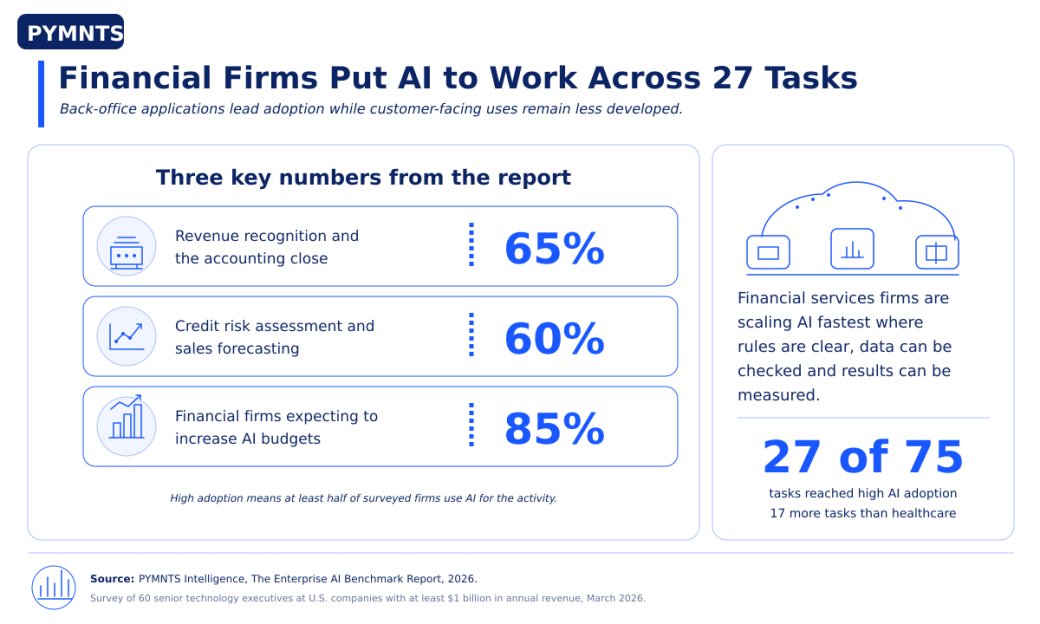
Banks, insurers and other financial firms report high AI adoption in 27 of the 75 tasks assessed in the latest enterprise benchmark. The strongest results are concentrated in back-office functions that customers rarely see.
4:00 AMPYMNTS
Crypto companies are building infrastructure for AI agents, positioning autonomous software as a new class of users and a potential source of demand.
12:47 PMCNBC
The article argues that AI is becoming an economic and financial force, not just a software development. That shift requires infrastructure capable of supporting new forms of automated activity, transactions, and scale.
8:40 AMFinextra
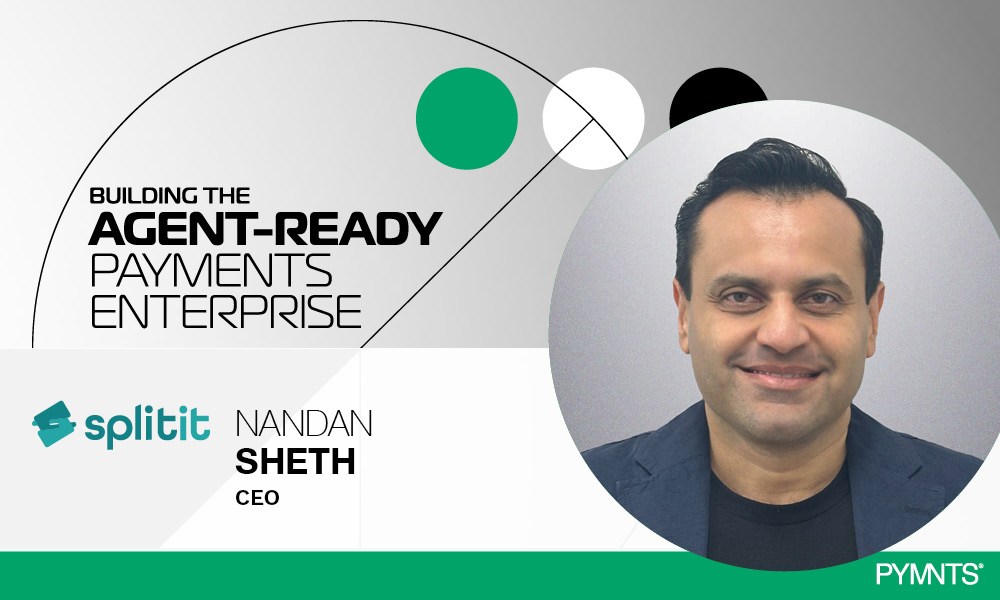
Card-linked installments could reduce payment failures when AI agents make purchases on behalf of consumers, according to Splitit CEO Nandan Sheth. The approach is presented as part of a broader redesign of payments and controls for agent-driven commerce.
4:00 AMPYMNTS
The FDIC is working with industry participants to create an independent standards committee that would certify fintech companies providing services to banks.
7:15 AMFinextra
Oregon’s financial regulator has proposed guidance stating that nonbank buy now, pay later lenders and service providers must obtain licenses, signaling that installment products may face state-by-state licensing requirements.
12:39 PMPYMNTS
Achieve has completed a $261.5 million securitization of newly originated home equity lines of credit, its first transaction of 2026 and ninth overall.
1:17 PMHousing Wire
Varo Bank and Green Dot are introducing fee-free cash deposits for Varo customers at more than 2,000 Kroger family store locations. The arrangement lets digital-bank users add cash through existing retail checkout networks.
9:14 AMFinextra
1:00 PMFinancial Times
Passing the Clarity Act on digital assets is a matter of national security
Summary
The United States risks losing control of digital-asset activity if it fails to establish a clear legal framework. Without domestic rules, crypto businesses and transactions could shift to lightly regulated foreign venues beyond the reach of US regulators and law enforcement.
The core shift is jurisdictional: regulatory uncertainty could push crypto activity offshore rather than eliminate
Unlock the full First Pass Analysis to get a better understanding of why this story matters
Why it matters
Crypto regulation now affects where financial activity, data, and enforcement power reside.
A revised Senate compromise draft of the Digital Asset Market Clarity Act seeks to provide greater regulatory certainty for crypto while adding consumer protection, anti-money laundering and ethics provisions.
The draft moves the debate toward a tradeoff between clearer market rules and tighter safeguards
Unlock the full First Pass Analysis to get a better understanding of why this story matters
Why it matters
The compromise could determine whether U.S. digital asset regulation enables mainstream growth or imposes constraints that reshape the sector.
Trump could net big tax windfall in crypto bill divestiture plan: Reports
Summary
A bipartisan cryptocurrency bill could let President Trump defer capital-gains taxes while separating himself from crypto-related businesses. Democrats are seeking stronger ethics protections, while the Clarity Act would define regulatory oversight of digital assets.
The proposal creates a potential financial benefit for Trump even as it addresses concerns about
Unlock the full First Pass Analysis to get a better understanding of why this story matters
Why it matters
The legislation could shape crypto regulation while setting a precedent for how presidents handle profitable personal assets.
How tech companies are helping credit unions meet AI-transformation goals in 5 key areas
Summary
Technology companies are helping credit unions apply AI across five areas as financial institutions move from broad expectations about AI’s potential toward implementation.
The change is practical adoption rather than another forecast about AI’s value. Vendors can help
Unlock the full First Pass Analysis to get a better understanding of why this story matters
Why it matters
AI adoption is becoming an execution challenge for credit unions, not just a question of whether the technology works.
Financial Firms Put AI to Work Across 27 Tasks, Study Finds
Summary
Banks, insurers and other financial firms report high AI adoption in 27 of the 75 tasks assessed in the latest enterprise benchmark. The strongest results are concentrated in back-office functions that customers rarely see.
Financial institutions are applying AI broadly, but primarily where processes are structured and customer risk
Unlock the full First Pass Analysis to get a better understanding of why this story matters
Why it matters
AI is already reshaping financial operations, even if its most visible customer applications remain limited.
The article argues that AI is becoming an economic and financial force, not just a software development. That shift requires infrastructure capable of supporting new forms of automated activity, transactions, and scale.
AI will pressure financial institutions to redesign infrastructure around machine-speed decisions and more programmable financial
Unlock the full First Pass Analysis to get a better understanding of why this story matters
Why it matters
The AI economy will expose financial infrastructure that cannot operate at software speed.
Splitit CEO Says Card-Linked Payments Can Save AI Sales
Summary
Card-linked installments could reduce payment failures when AI agents make purchases on behalf of consumers, according to Splitit CEO Nandan Sheth. The approach is presented as part of a broader redesign of payments and controls for agent-driven commerce.
Agentic commerce makes payment reliability a sales issue because an agent can abandon or reroute
Unlock the full First Pass Analysis to get a better understanding of why this story matters
Why it matters
Payment infrastructure may determine whether AI shopping converts transactions or creates new failure points.
FDIC aims to establish standards body to certify banking services providers - Bloomberg Law
Summary
The FDIC is working with industry participants to create an independent standards committee that would certify fintech companies providing services to banks.
The proposal would shift fintech oversight toward a formal certification system for bank service providers.
Unlock the full First Pass Analysis to get a better understanding of why this story matters
Why it matters
Certification could make third-party banking infrastructure safer, but it may also raise the price of entering the sector.
BNPL May Face a State-by-State Licensing Challenge
Summary
Oregon’s financial regulator has proposed guidance stating that nonbank buy now, pay later lenders and service providers must obtain licenses, signaling that installment products may face state-by-state licensing requirements.
State licensing is emerging as a direct constraint on BNPL distribution, even when merchants present
Unlock the full First Pass Analysis to get a better understanding of why this story matters
Why it matters
A patchwork licensing regime could make BNPL less uniform, more expensive to operate and harder for merchants to offer nationwide.
Achieve closes $261.5 million HELOC securitization
Summary
Achieve has completed a $261.5 million securitization of newly originated home equity lines of credit, its first transaction of 2026 and ninth overall.
The deal gives Achieve another funding channel for expanding HELOC originations and shows continued investor
Unlock the full First Pass Analysis to get a better understanding of why this story matters
Why it matters
The transaction signals that capital markets remain open to fintech-originated HELOCs, supporting further competition in home equity lending.
Varo Bank and Green Dot partner to turnKroger checkout lanes into cash deposit points
Summary
Varo Bank and Green Dot are introducing fee-free cash deposits for Varo customers at more than 2,000 Kroger family store locations. The arrangement lets digital-bank users add cash through existing retail checkout networks.
The partnership addresses a core limitation of branchless banking: customers still need physical access to
Unlock the full First Pass Analysis to get a better understanding of why this story matters
Why it matters
Digital banks can expand their addressable market when retail networks replace branches for basic cash services.
A curated list of other prominent stories from this day.
Banks have invested heavily in credit-card rewards while leaving debit largely underdeveloped, despite its role in routine customer spending. The article presents debit rewards as an overlooked way to deepen engagement and create more value from everyday transactions.
3:33 PMFinextra
Automotive service providers using 1stMILE can now offer Splitit-powered installment payments at checkout. Customers can divide eligible repair purchases into monthly payments through an existing credit card, while the merchant receives the full amount upfront.
3:18 PMPYMNTS
Banks can use first-party shopping data to understand customer intent, such as when a customer researches a major purchase, and deliver more relevant financial products or guidance.
2:22 PMFinextra
Kalshi is partnering with Blanket on a product intended to help small businesses hedge against risk, with Lauris Zminsky involved in the project. Zminsky says the initiative is separate from his views on the growing appeal of lottery-style economics.
11:02 AMFortune
XTB has entered a global partnership with FC Porto, with its brand set to appear on the men's first-team shirt sleeve in domestic competitions from the 2026/2027 season.
9:14 AMFinextra
The article examines six technology breakthroughs expected to reshape financial services in 2026, linking them to the sector's persistent customer-satisfaction problem. Its central argument is that technology must improve the customer experience, not merely modernize internal systems.
8:52 AMFinextra
Pan-European digital wallet Wero has moved its planned Luxembourg launch from July 1 to September 2026, citing the need for greater regional alignment.
6:35 AMFinextra
The article explains the "Paze craze": how consumers use the digital wallet and related promotions to obtain Dunkin’ gift cards, and why credit-card rewards communities are sharing tactics for maximizing the offer.
6:15 AMBloomberg Markets
The article argues that financial institutions should apply site reliability engineering principles beyond technical infrastructure and into customer-facing operations. Operational resilience must cover the full service journey, not just the systems that run behind it.
6:08 AMFinextra
Paysera is removing bank-transfer fees for more than 10,000 merchants in Lithuania, Latvia, and Estonia that switch to its Checkout Modern platform. Fees remain on the legacy Checkout product, and card-payment rates are unchanged.
6:02 AMFinextra
The article questions the assumption that the digital-wallet market will distribute an enormous pool of value across many new entrants. It argues that large platforms and integrated financial ecosystems are better positioned to capture wallet activity than fragmented challengers.
5:15 AMFinextra
Enova is pursuing the acquisition of Grasshopper Bank to extend customer relationships beyond loan repayment and gain access to deposits and funding. CEO Steve Cunningham says better data, rather than broad AI claims, will determine how lenders assess creditworthiness.
4:00 AMPYMNTS
The article examines how the GENIUS Act is helping move tokenized real-world assets from experimentation toward institutional infrastructure. It focuses on the regulatory and technical foundations needed for broader adoption of tokenized assets and related digital payments.
1:10 AMFinextra
3:33 PMFinextra
Debit Is the Most Underbuilt Rewards Surface in Banking
Summary
Banks have invested heavily in credit-card rewards while leaving debit largely underdeveloped, despite its role in routine customer spending. The article presents debit rewards as an overlooked way to deepen engagement and create more value from everyday transactions.
Debit offers banks frequent customer interaction but captures less strategic attention than credit. A stronger
Unlock the full First Pass Analysis to get a better understanding of why this story matters
Why it matters
The next major banking rewards battle may center on the account customers use most often, not the card that earns the most points.
Splitit and 1stMILE Unlock Card-Linked Installments for Auto Repairs
Summary
Automotive service providers using 1stMILE can now offer Splitit-powered installment payments at checkout. Customers can divide eligible repair purchases into monthly payments through an existing credit card, while the merchant receives the full amount upfront.
The arrangement brings card-linked installment financing into a high-cost, often urgent spending category without requiring
Unlock the full First Pass Analysis to get a better understanding of why this story matters
Why it matters
Installment payments are moving deeper into everyday expenses where customers need flexibility and merchants cannot afford delayed settlement.
Why Banks Need to Rethink Personalization Using First-Party Shopping Insights
Summary
Banks can use first-party shopping data to understand customer intent, such as when a customer researches a major purchase, and deliver more relevant financial products or guidance.
The shift is from segment-based personalization to signals drawn from customers’ real purchasing journeys. Banks
Unlock the full First Pass Analysis to get a better understanding of why this story matters
Why it matters
First-party commerce data could give banks a more useful personalization engine without relying entirely on third-party audience data.
Exclusive: Kalshi partners with Blanket to help small businesses hedge against risk—with help from the guru of ‘hypergamblification’
Summary
Kalshi is partnering with Blanket on a product intended to help small businesses hedge against risk, with Lauris Zminsky involved in the project. Zminsky says the initiative is separate from his views on the growing appeal of lottery-style economics.
The partnership extends prediction-market infrastructure from consumer trading into business risk management. Its success will
Unlock the full First Pass Analysis to get a better understanding of why this story matters
Why it matters
Kalshi is testing whether prediction markets can become a financial tool for operating businesses instead of a niche trading product.
XTB becomes an official investment partner of FC Porto
Summary
XTB has entered a global partnership with FC Porto, with its brand set to appear on the men's first-team shirt sleeve in domestic competitions from the 2026/2027 season.
The partnership gives XTB a high-visibility route to build recognition beyond financial services, particularly in
Unlock the full First Pass Analysis to get a better understanding of why this story matters
Why it matters
Financial apps are increasingly using sports sponsorships to turn brand familiarity into investor growth.
Bridging the Gap: 6 Tech Breakthroughs Redefining Financial Services in 2026
Summary
The article examines six technology breakthroughs expected to reshape financial services in 2026, linking them to the sector's persistent customer-satisfaction problem. Its central argument is that technology must improve the customer experience, not merely modernize internal systems.
The decisive shift is from digitization as an operational project to technology as a measure
Unlock the full First Pass Analysis to get a better understanding of why this story matters
Why it matters
Financial technology will be judged increasingly by whether it fixes customer pain, not by how advanced it looks.
Pan-European digital wallet Wero has moved its planned Luxembourg launch from July 1 to September 2026, citing the need for greater regional alignment.
The two-month delay indicates that Wero is prioritizing coordinated regional deployment over its original timetable.
Unlock the full First Pass Analysis to get a better understanding of why this story matters
Why it matters
Wero’s rollout pace will determine whether it can build a genuinely pan-European alternative to established payment networks.
Dunkin’s $10 Gift Cards Are This Summer’s Hottest Free Money Hack
Summary
The article explains the "Paze craze": how consumers use the digital wallet and related promotions to obtain Dunkin’ gift cards, and why credit-card rewards communities are sharing tactics for maximizing the offer.
A payment promotion has become a viral rewards-optimization exercise rather than a routine checkout perk.
Unlock the full First Pass Analysis to get a better understanding of why this story matters
Why it matters
Promotions can turn payment infrastructure into a consumer arbitrage market almost overnight.
How Financial Institutions Can Extend Site Reliability Engineering Beyond Infrastructure
Summary
The article argues that financial institutions should apply site reliability engineering principles beyond technical infrastructure and into customer-facing operations. Operational resilience must cover the full service journey, not just the systems that run behind it.
The key change is treating failures in payments, onboarding, support, and other customer processes as
Unlock the full First Pass Analysis to get a better understanding of why this story matters
Why it matters
Banks can no longer claim resilience if customers still experience critical failures in supposedly available services.
Bank transfers are now free for Paysera merchants in Lithuania, Latvia and Estonia
Summary
Paysera is removing bank-transfer fees for more than 10,000 merchants in Lithuania, Latvia, and Estonia that switch to its Checkout Modern platform. Fees remain on the legacy Checkout product, and card-payment rates are unchanged.
The offer makes platform migration the price of accessing cheaper bank payments. Merchants can reduce
Unlock the full First Pass Analysis to get a better understanding of why this story matters
Why it matters
Free transfers could accelerate account-to-account payments in the Baltics while intensifying competition over merchant software.
The article questions the assumption that the digital-wallet market will distribute an enormous pool of value across many new entrants. It argues that large platforms and integrated financial ecosystems are better positioned to capture wallet activity than fragmented challengers.
The decisive issue is control of distribution, data, and daily user habits, not the headline
Unlock the full First Pass Analysis to get a better understanding of why this story matters
Why it matters
A large projected wallet market does not guarantee room for independent fintechs.
Enova CEO Says Better Data, Not AI Hype, Will Decide Who Gets Credit
Summary
Enova is pursuing the acquisition of Grasshopper Bank to extend customer relationships beyond loan repayment and gain access to deposits and funding. CEO Steve Cunningham says better data, rather than broad AI claims, will determine how lenders assess creditworthiness.
The acquisition would shift Enova from a transaction-focused lender toward a broader banking model built
Unlock the full First Pass Analysis to get a better understanding of why this story matters
Why it matters
The deal links fintech lending growth to bank ownership, cheaper funding and deeper data access.
How the GENIUS Act Is Accelerating Institutional Tokenization Infrastructure
Summary
The article examines how the GENIUS Act is helping move tokenized real-world assets from experimentation toward institutional infrastructure. It focuses on the regulatory and technical foundations needed for broader adoption of tokenized assets and related digital payments.
Regulatory clarity can shift tokenization from pilot projects to balance-sheet and payment infrastructure, but institutions
Unlock the full First Pass Analysis to get a better understanding of why this story matters
Why it matters
Tokenization becomes commercially relevant when regulation supports institutional-grade infrastructure, not just asset digitization.