
Anthropic is reportedly considering a public listing as early as mid-November, after delaying its IPO plans. The timing remains subject to change.
8:40 PMBloomberg Markets99 stories from 25 sources
Supporting Articles
Anthropic is reportedly considering a public listing as early as mid-November, after delaying its IPO plans. The timing remains subject to change.
8:40 PMBloomberg Markets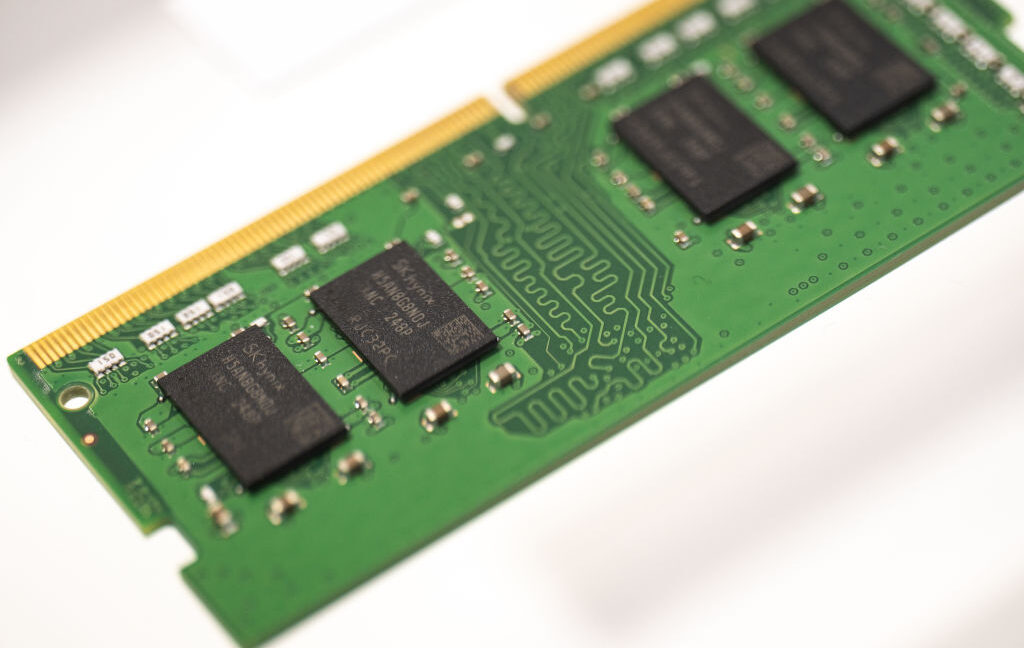
Memory industry executives expect the RAM shortage to persist through 2028. Prices for memory sold for 2027 are already much higher than prices for 2026.
1:49 PMArs Technica
Micron reported record revenue and profit above expectations as demand from AI data centers lifted memory sales, especially high-bandwidth memory. Tight supply and increased investment point to another strong fiscal year.
1:30 AMEconomic TimesAI data centers require large volumes of electricity and new grid infrastructure, but the costs and benefits are not clearly assigned. It remains difficult to determine how much residential customers benefit from the expansion and how much they pay for it.
12:47 PMNPR PoliticsBarclays is expanding its use of Anthropic's Claude to accelerate software development, modernize legacy systems and improve operational efficiency. The deployment places generative AI inside core technology and business processes at a major bank.
8:01 PMFinextra
At Fortune's AIQ Summit, Bank of America executive Hari Gopalkrishnan warned that companies often adopt AI too quickly, while S&P Global's Sally Moore said the central challenge is business reinvention. Their comments frame AI adoption in regulated industries as both a major opportunity and a governance risk.
7:36 PMFortune
Brookfield Residential spent roughly 250,000 internal hours and deployed seven major systems to establish a unified, trusted data foundation. Its CIO treated governance and a single source of truth as prerequisites for deploying useful AI across the company.
4:23 PMHousing Wire
Strawberry's technology chief argues that AI models will become increasingly interchangeable, shifting competitive advantage to clean, connected data. She also says European regulators should assess whether rules work in practice, not only whether they are documented clearly.
8:27 AMSkift
President Trump reportedly sought Grok’s opinion before invading Venezuela and capturing Nicolás Maduro. The account raises questions about the chatbot’s role in advising decisions involving military force and foreign leaders.
5:08 PMTechCrunch
The European Union has adopted some of the world's strictest laws governing artificial intelligence. The article examines the economic and competitive costs that may follow from that approach.
9:56 PMAl JazeeraChatGPT is adding virtual try-on capabilities for shoppers, along with a way to save favorite looks. The features extend the chatbot’s role from product discovery into personalized fashion shopping.
5:19 PMWWDSuno CEO Mikey Shulman discusses AI tools for music production, ongoing copyright disputes and potential licensing models for generated music.
6:46 PMBloomberg Markets
Kelly Clarkson said AI can do amazing things, but argued that AI-generated music should not compete with human artists on music charts. She described the view as controversial while expressing support for some uses of the technology.
3:27 PMVarietySummary
Anthropic is reportedly considering a public listing as early as mid-November, after delaying its IPO plans. The timing remains subject to change.
Anthropic's shift toward a near-term IPO signals that it may be ready to test investor
Unlock the full First Pass Analysis to get a better understanding of why this story mattersWhy it matters
Anthropic's IPO could become a market test for whether public investors still accept the high costs and uncertain profits of frontier AI.
2 stories · 2 sources
Summary
Memory industry executives expect the RAM shortage to persist through 2028. Prices for memory sold for 2027 are already much higher than prices for 2026.
AI-related demand is extending pressure on memory supply well beyond the current product cycle. Higher
Unlock the full First Pass Analysis to get a better understanding of why this story mattersWhy it matters
A prolonged RAM shortage could make AI infrastructure more expensive and keep pressure on prices for PCs, servers and other electronics.
Summary
Micron reported record revenue and profit above expectations as demand from AI data centers lifted memory sales, especially high-bandwidth memory. Tight supply and increased investment point to another strong fiscal year.
AI infrastructure is now driving a broad memory upcycle, not only demand for advanced processors.
Unlock the full First Pass Analysis to get a better understanding of why this story mattersWhy it matters
AI demand is extending beyond GPUs and reshaping the economics of the wider semiconductor supply chain.
Summary
AI data centers require large volumes of electricity and new grid infrastructure, but the costs and benefits are not clearly assigned. It remains difficult to determine how much residential customers benefit from the expansion and how much they pay for it.
The rapid buildout of data centers is exposing gaps in utility cost allocation. Households could
Unlock the full First Pass Analysis to get a better understanding of why this story mattersWhy it matters
AI expansion could shift grid costs onto households if regulators do not impose clear cost-sharing rules.
Summary
Barclays is expanding its use of Anthropic's Claude to accelerate software development, modernize legacy systems and improve operational efficiency. The deployment places generative AI inside core technology and business processes at a major bank.
Barclays is moving beyond isolated AI trials and applying Claude to costly, deeply embedded systems.
Unlock the full First Pass Analysis to get a better understanding of why this story mattersWhy it matters
A major bank's broader deployment tests whether generative AI can deliver measurable productivity gains in regulated, legacy-heavy environments.
Summary
At Fortune's AIQ Summit, Bank of America executive Hari Gopalkrishnan warned that companies often adopt AI too quickly, while S&P Global's Sally Moore said the central challenge is business reinvention. Their comments frame AI adoption in regulated industries as both a major opportunity and a governance risk.
The constraint is not access to AI tools but the ability to redesign processes around
Unlock the full First Pass Analysis to get a better understanding of why this story mattersWhy it matters
In regulated sectors, the winners will be companies that treat AI as an operating-model overhaul, not a software purchase.
Summary
Brookfield Residential spent roughly 250,000 internal hours and deployed seven major systems to establish a unified, trusted data foundation. Its CIO treated governance and a single source of truth as prerequisites for deploying useful AI across the company.
The decisive choice was to fix fragmented data before scaling AI tools. That approach raises
Unlock the full First Pass Analysis to get a better understanding of why this story mattersWhy it matters
Companies that skip data cleanup may launch AI faster, but they will struggle to make its outputs reliable enough for operational decisions.
Summary
Strawberry's technology chief argues that AI models will become increasingly interchangeable, shifting competitive advantage to clean, connected data. She also says European regulators should assess whether rules work in practice, not only whether they are documented clearly.
The strategic shift is away from treating the model as the main asset. Companies with
Unlock the full First Pass Analysis to get a better understanding of why this story mattersWhy it matters
Data infrastructure and workable regulation may matter more than model ownership as AI becomes commoditized.
Summary
President Trump reportedly sought Grok’s opinion before invading Venezuela and capturing Nicolás Maduro. The account raises questions about the chatbot’s role in advising decisions involving military force and foreign leaders.
The decisive shift is that an AI chatbot was reportedly consulted on a potential military
Unlock the full First Pass Analysis to get a better understanding of why this story mattersWhy it matters
AI systems are moving closer to decisions where bad guidance could create legal, military, and diplomatic consequences.
Summary
The European Union has adopted some of the world's strictest laws governing artificial intelligence. The article examines the economic and competitive costs that may follow from that approach.
Europe's regulatory framework gives companies clearer limits on high-risk AI, but it can also slow
Unlock the full First Pass Analysis to get a better understanding of why this story mattersWhy it matters
Europe must show that its safeguards can reduce AI harm without making the region too costly or slow for companies to build and deploy new systems.
Summary
ChatGPT is adding virtual try-on capabilities for shoppers, along with a way to save favorite looks. The features extend the chatbot’s role from product discovery into personalized fashion shopping.
The change turns ChatGPT into a more complete retail interface, linking recommendation, visualization, and saved
Unlock the full First Pass Analysis to get a better understanding of why this story mattersWhy it matters
OpenAI is pushing ChatGPT deeper into commerce, where product discovery can translate directly into purchasing behavior.
Summary
Suno CEO Mikey Shulman discusses AI tools for music production, ongoing copyright disputes and potential licensing models for generated music.
The central shift is that AI music is moving from a software debate toward a
Unlock the full First Pass Analysis to get a better understanding of why this story mattersWhy it matters
The next phase of AI music will be shaped less by technical capability than by who controls the rights and revenue.
Summary
Kelly Clarkson said AI can do amazing things, but argued that AI-generated music should not compete with human artists on music charts. She described the view as controversial while expressing support for some uses of the technology.
Clarkson is drawing a line between AI as a creative tool and AI as a
Unlock the full First Pass Analysis to get a better understanding of why this story mattersWhy it matters
The music industry is moving toward a fight over whether AI-generated work should share the same commercial rankings as human-made music.
A curated list of other prominent stories from this day.
WeMoney has launched an AI-powered lending assessment service that uses data available through Australia's Consumer Data Right. The service is designed to help assess borrowers using permissioned financial information from open banking connections.
8:01 PMFinextra
The emerging infrastructure for AI-driven commerce is likely to rely on multiple standards rather than a single dominant protocol. Different protocols may handle separate functions across discovery, transactions, identity and payments.
7:23 PMPYMNTS
Apple is reportedly developing a smart home security camera that would provide text descriptions of events rather than video footage. The device could form part of a broader Apple smart home ecosystem.
6:51 PMThe VergeOpenAI board chair Bret Taylor said the company has an obligation to make AI safe during CNBC’s AI Forum. The forum is examining enterprise AI, agents, security, costs, governance and the global technology race.
6:45 PMCNBC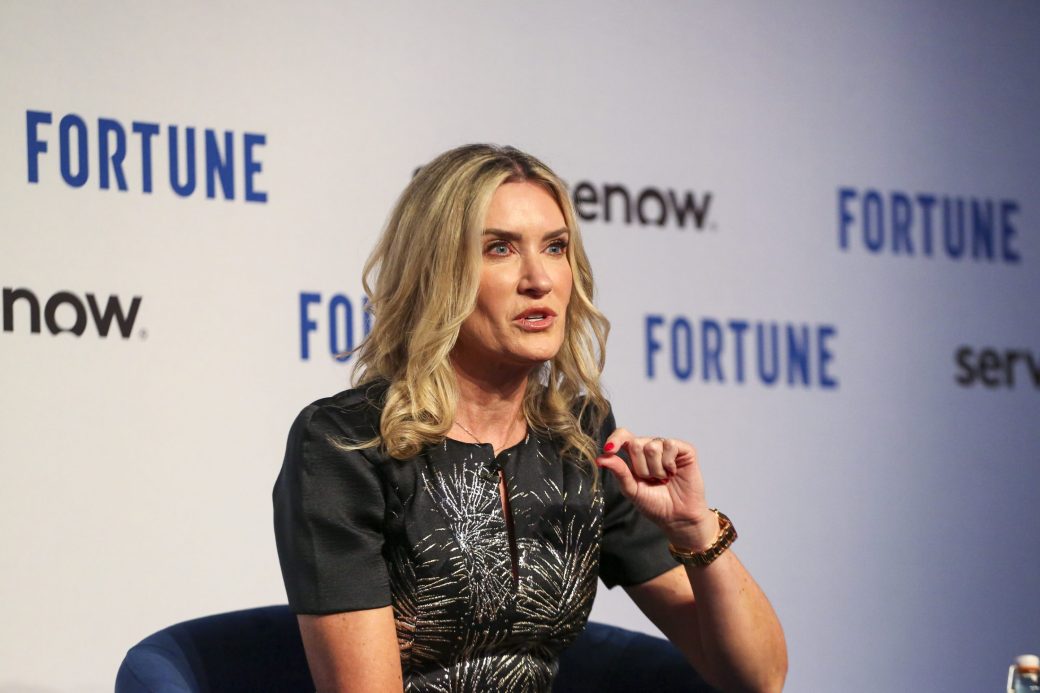
Executives from Palo Alto Networks, HPE, and Lennar discussed how AI is reshaping corporate structures and employee expectations. They argued that workers may need to unlearn established routines as AI changes how organizations operate.
6:08 PMFortune
Amazon has launched a new line of Kindle devices and accessories ahead of Prime Big Deal Days. The timing places the products in front of shoppers during one of the company’s major promotional windows.
5:19 PMIGN
Sony is bringing its AI-powered PSSR upscaling technology to the standard PS5, starting with Marvel’s Wolverine and Ghost of Yōtei. The feature can improve image quality and performance without requiring the more expensive Pro console.
2:39 PMPolygon
The article examines how AI is becoming part of everyday life in China. It focuses on the technology's practical effects beyond research labs and corporate development.
1:12 PMAl Jazeera
Apple dominates consumer technology through the iPhone, while Meta is betting that AI will shift computing toward new hardware categories. Meta's strategy challenges Apple's assumption that the smartphone will remain the primary gateway to digital services.
12:47 PMMarketWatchSKF Group used an AI-generated likeness of the late actor Greta Garbo in an advertisement. Some viewers questioned the quality of the digital replica, underscoring the risks of using synthetic versions of famous people.
2:00 PMNew York Times Arts
Researchers propose a qubit based on superfluid helium that could reduce errors by roughly 100 times by shielding quantum information from common electromagnetic noise. If experiments validate the model, the qubit could complement superconducting systems or function as quantum memory.
9:17 AMScienceDaily
Donald Trump wants artificial intelligence to be called super intelligence, or SI. The proposed initials overlap with Slovenia's internet domain, prompting an unusual surge in demand for Slovenian website names.
7:37 AMBBC
A genome researcher says Claude analyzed his whole genome in about 30 minutes for roughly $5, compared with a year of work by 30 people in 2009. He argues that this speed makes standards essential for checking and interpreting AI-generated genomic results.
4:30 AMStat News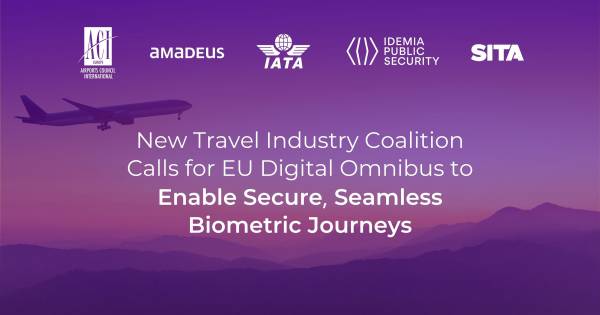
A new coalition is calling for European biometric rules that improve the airport experience while preserving safeguards for privacy and responsible use. Its focus is on enabling practical deployment rather than imposing blanket restrictions.
3:37 AMBreaking Travel NewsDelivery robots now operate widely on Jersey City sidewalks, with companies preparing to expand into Hoboken. Public skepticism about artificial intelligence has pushed operators to introduce the machines cautiously.
3:00 AMNYT New York
Smell remains difficult for AI and digital systems to reproduce or monitor, preserving a limited form of personal privacy and a boundary between physical and virtual experience.
12:00 AMFinancial TimesSummary
WeMoney has launched an AI-powered lending assessment service that uses data available through Australia's Consumer Data Right. The service is designed to help assess borrowers using permissioned financial information from open banking connections.
The product shifts lending assessment toward real-time transaction data and automated analysis, potentially giving lenders
Unlock the full First Pass Analysis to get a better understanding of why this story mattersWhy it matters
Open banking is moving from data portability toward automated underwriting, where privacy and model governance become central risks.
Summary
The emerging infrastructure for AI-driven commerce is likely to rely on multiple standards rather than a single dominant protocol. Different protocols may handle separate functions across discovery, transactions, identity and payments.
The decisive shift is from searching for one winning standard to preparing for an interoperable
Unlock the full First Pass Analysis to get a better understanding of why this story mattersWhy it matters
Agentic commerce will reward interoperability, making standards strategy an operational and competitive issue for merchants and payment providers.
Summary
Apple is reportedly developing a smart home security camera that would provide text descriptions of events rather than video footage. The device could form part of a broader Apple smart home ecosystem.
A camera built around descriptions instead of stored video would make privacy the product’s central
Unlock the full First Pass Analysis to get a better understanding of why this story mattersWhy it matters
Apple may be testing whether privacy-focused design can make smart home surveillance more acceptable to consumers.
Summary
OpenAI board chair Bret Taylor said the company has an obligation to make AI safe during CNBC’s AI Forum. The forum is examining enterprise AI, agents, security, costs, governance and the global technology race.
OpenAI is framing safety as a core responsibility as AI systems move into broader commercial
Unlock the full First Pass Analysis to get a better understanding of why this story mattersWhy it matters
Safety commitments matter most when they impose standards on products being deployed at scale.
Summary
Executives from Palo Alto Networks, HPE, and Lennar discussed how AI is reshaping corporate structures and employee expectations. They argued that workers may need to unlearn established routines as AI changes how organizations operate.
AI is weakening rigid job boundaries and traditional reporting structures, shifting value toward workers who
Unlock the full First Pass Analysis to get a better understanding of why this story mattersWhy it matters
AI adoption is becoming an organizational redesign project, not simply a tool upgrade.
Summary
Amazon has launched a new line of Kindle devices and accessories ahead of Prime Big Deal Days. The timing places the products in front of shoppers during one of the company’s major promotional windows.
The launch gives Amazon fresh hardware to promote while concentrating demand around its own retail
Unlock the full First Pass Analysis to get a better understanding of why this story mattersWhy it matters
Amazon is using its biggest shopping period to refresh a hardware category that supports long-term ecosystem loyalty.
Summary
Sony is bringing its AI-powered PSSR upscaling technology to the standard PS5, starting with Marvel’s Wolverine and Ghost of Yōtei. The feature can improve image quality and performance without requiring the more expensive Pro console.
That is a meaningful shift for PS5 owners who skipped the upgrade. The results will
Unlock the full First Pass Analysis to get a better understanding of why this story mattersWhy it matters
More PS5 players could get sharper graphics and smoother performance without buying new hardware.
Summary
The article examines how AI is becoming part of everyday life in China. It focuses on the technology's practical effects beyond research labs and corporate development.
The important shift is AI's movement into routine consumer and social activity rather than isolated
Unlock the full First Pass Analysis to get a better understanding of why this story mattersWhy it matters
China's everyday use of AI offers an early view of how quickly the technology can become ordinary infrastructure.
Summary
Apple dominates consumer technology through the iPhone, while Meta is betting that AI will shift computing toward new hardware categories. Meta's strategy challenges Apple's assumption that the smartphone will remain the primary gateway to digital services.
Meta can attack Apple's position by pairing AI assistants with glasses and other devices that
Unlock the full First Pass Analysis to get a better understanding of why this story mattersWhy it matters
AI hardware could move power away from smartphone platforms and weaken Apple's control over consumer computing.
Summary
SKF Group used an AI-generated likeness of the late actor Greta Garbo in an advertisement. Some viewers questioned the quality of the digital replica, underscoring the risks of using synthetic versions of famous people.
The advertisement shows that permission to use a likeness does not guarantee a convincing or
Unlock the full First Pass Analysis to get a better understanding of why this story mattersWhy it matters
AI recreations of public figures are creating a new commercial market while testing the limits of consent, authenticity, and brand judgment.
Summary
Researchers propose a qubit based on superfluid helium that could reduce errors by roughly 100 times by shielding quantum information from common electromagnetic noise. If experiments validate the model, the qubit could complement superconducting systems or function as quantum memory.
The key advance is a proposed hardware architecture that addresses error at the physical level
Unlock the full First Pass Analysis to get a better understanding of why this story mattersWhy it matters
A substantially more stable qubit could reduce the engineering cost of useful quantum computers.
Summary
Donald Trump wants artificial intelligence to be called super intelligence, or SI. The proposed initials overlap with Slovenia's internet domain, prompting an unusual surge in demand for Slovenian website names.
The immediate effect is speculative demand for a scarce digital naming asset, not a change
Unlock the full First Pass Analysis to get a better understanding of why this story mattersWhy it matters
AI branding can generate real commercial effects even when it does not change how the technology works.
Summary
A genome researcher says Claude analyzed his whole genome in about 30 minutes for roughly $5, compared with a year of work by 30 people in 2009. He argues that this speed makes standards essential for checking and interpreting AI-generated genomic results.
The decisive change is the collapse in the time and cost required to generate a
Unlock the full First Pass Analysis to get a better understanding of why this story mattersWhy it matters
Cheap, rapid genome analysis could broaden precision medicine while multiplying the consequences of interpretation errors.
Summary
A new coalition is calling for European biometric rules that improve the airport experience while preserving safeguards for privacy and responsible use. Its focus is on enabling practical deployment rather than imposing blanket restrictions.
The regulatory debate is shifting from whether airports should use biometrics to the conditions under
Unlock the full First Pass Analysis to get a better understanding of why this story mattersWhy it matters
Europe is defining whether biometric travel becomes routine infrastructure or remains constrained by regulatory uncertainty.
Summary
Delivery robots now operate widely on Jersey City sidewalks, with companies preparing to expand into Hoboken. Public skepticism about artificial intelligence has pushed operators to introduce the machines cautiously.
The expansion has shifted delivery robots from novelty to a recurring part of the streetscape,
Unlock the full First Pass Analysis to get a better understanding of why this story mattersWhy it matters
The debate is moving from whether the robots can work to whether cities and residents will allow them to occupy public space.
Summary
Smell remains difficult for AI and digital systems to reproduce or monitor, preserving a limited form of personal privacy and a boundary between physical and virtual experience.
The key constraint is that some human senses still resist digitization and remote simulation. That
Unlock the full First Pass Analysis to get a better understanding of why this story mattersWhy it matters
The limits of sensory technology still provide a narrow but meaningful defense against total digital mediation.
Make it yours
Pick your topics, set your cadence, and receive your personalized First Pass in your inbox. It’s that simple!