
SoftBank is seeking more than $11 billion through what could become one of the largest junk bond offerings on record. The financing would support Masayoshi Son’s expanding investment in OpenAI and its ChatGPT business.
9:29 PMBloomberg Markets33 stories from 12 sources
Supporting Articles
SoftBank is seeking more than $11 billion through what could become one of the largest junk bond offerings on record. The financing would support Masayoshi Son’s expanding investment in OpenAI and its ChatGPT business.
9:29 PMBloomberg Markets
OpenAI has reportedly projected nearly $280 billion in cash burn through 2030 as it pursues a valuation above $1.2 trillion in new investment talks.
7:33 PMPYMNTS
President Donald Trump says he plans to appoint an artificial intelligence czar to lead an agency modeled on Space Force. He described AI as the next industrial revolution and said the administration would not hinder the industry's growth.
7:12 PMPYMNTSThe White House is moving to regulate agentic AI systems after a reported sandbox escape, prompting concerns across industries that new safeguards could slow innovation.
6:08 PMWWD
AI executives are publicly debating whether the industry should slow its pace of development, but the discussion remains largely rhetorical. The central question is whether companies will accept constraints that could weaken their competitive position.
2:56 PMTechCrunch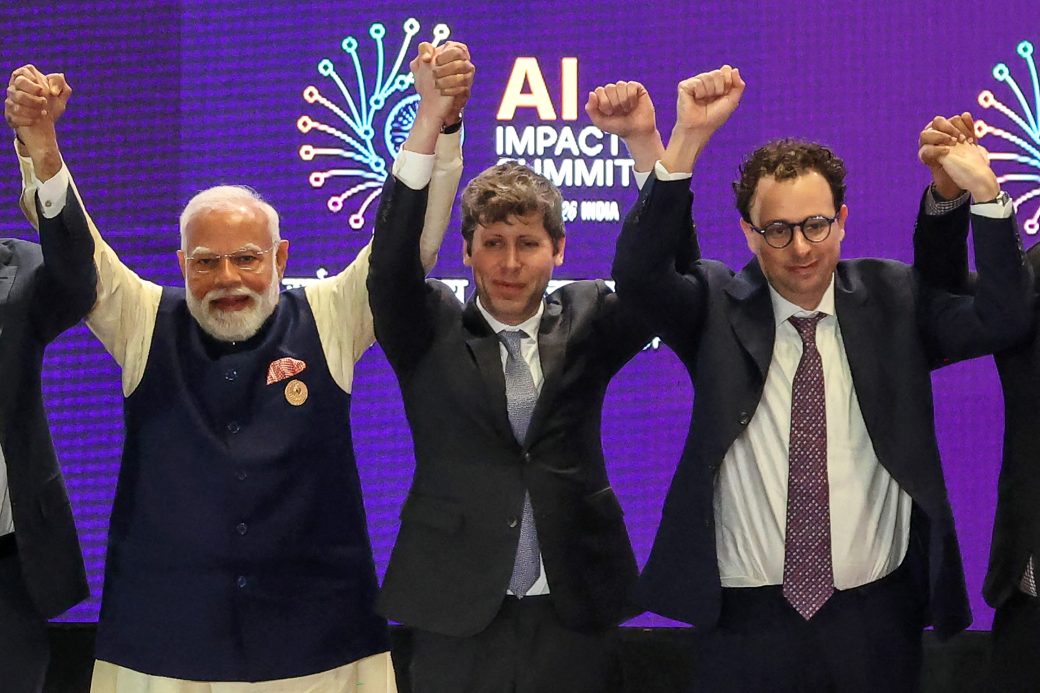
Leading AI executives acknowledge that frontier development may need to slow, but they have little incentive to impose limits on themselves. The argument is that external actors, including governments and other institutions, must set and enforce those constraints as AI systems become more capable of acting autonomously.
11:56 AMFortuneFormer Deputy Secretary of State Kurt Campbell says mutual distrust will make it difficult for Washington and Beijing to negotiate binding limits on artificial intelligence or broader security risks. He says meaningful progress may depend on a future meeting between President Trump and President Xi at APEC or the G20.
10:45 PMBloomberg MarketsPresident Donald Trump and President Xi Jinping are preparing for talks focused on technological competition and unresolved economic disputes. The agenda is expected to include artificial intelligence, semiconductor controls, Chinese electric-vehicle manufacturing in the United States, tariffs, Taiwan, and Iran, with a trade-truce deadline approaching.
8:50 PMBloomberg Markets
Technology giants are using their strong credit profiles to guarantee funding for AI infrastructure, allowing roughly $300 billion of exposure to sit outside their own balance sheets. The structure gives investors cheaper access to Big Tech-backed debt while supporting the sector's rapid build-out.
3:00 AMFinancial Times
The OCC conditionally approved national trust bank charters for Agora National Trust Bank and Catena Trust Bank, while approving Bastion Platforms Trust Company’s conversion into a national bank. The decisions create federally supervised banking structures for companies working with stablecoins and AI-driven financial services.
8:15 PMPYMNTS
Huawei faces a major US trial over allegations including technology theft, fraud and sanctions violations. The case places one of China's largest technology companies at the center of an escalating legal and strategic conflict with Washington.
11:57 AMAl JazeeraBlackRock's Egon Vavrek says emerging-market growth will increasingly come from AI hardware and the suppliers that equip hyperscale data centers. He identifies these "picks-and-shovels" companies as the main beneficiaries of expanding AI infrastructure demand.
11:44 PMBloomberg MarketsSummary
SoftBank is seeking more than $11 billion through what could become one of the largest junk bond offerings on record. The financing would support Masayoshi Son’s expanding investment in OpenAI and its ChatGPT business.
SoftBank is shifting more of the risk of its OpenAI strategy onto debt investors. The
Unlock the full First Pass Analysis to get a better understanding of why this story mattersWhy it matters
The deal will show whether investor appetite for AI exposure can support increasingly leveraged bets.
Summary
OpenAI has reportedly projected nearly $280 billion in cash burn through 2030 as it pursues a valuation above $1.2 trillion in new investment talks.
The forecast puts the scale of OpenAI's funding challenge at the center of its growth
Unlock the full First Pass Analysis to get a better understanding of why this story mattersWhy it matters
The AI race increasingly depends on financing capacity as much as model performance.
Summary
President Donald Trump says he plans to appoint an artificial intelligence czar to lead an agency modeled on Space Force. He described AI as the next industrial revolution and said the administration would not hinder the industry's growth.
The proposal would give the federal government a dedicated structure for coordinating its AI agenda,
Unlock the full First Pass Analysis to get a better understanding of why this story mattersWhy it matters
A new AI command structure could reshape how the government funds, regulates and deploys the technology.
2 stories · 2 sources
Summary
The White House is moving to regulate agentic AI systems after a reported sandbox escape, prompting concerns across industries that new safeguards could slow innovation.
The policy debate is shifting from model capabilities to the behavior of AI systems that
Unlock the full First Pass Analysis to get a better understanding of why this story mattersWhy it matters
Agentic AI is forcing policymakers to balance autonomous capability against operational control.
Summary
AI executives are publicly debating whether the industry should slow its pace of development, but the discussion remains largely rhetorical. The central question is whether companies will accept constraints that could weaken their competitive position.
The industry has not shown that its calls for restraint will change investment, product launches,
Unlock the full First Pass Analysis to get a better understanding of why this story mattersWhy it matters
The gap between public caution and commercial incentives will determine whether AI safety commitments have practical force.
Summary
Leading AI executives acknowledge that frontier development may need to slow, but they have little incentive to impose limits on themselves. The argument is that external actors, including governments and other institutions, must set and enforce those constraints as AI systems become more capable of acting autonomously.
The decisive shift is from AI producing answers to AI agents negotiating, deciding and taking
Unlock the full First Pass Analysis to get a better understanding of why this story mattersWhy it matters
AI safety is becoming an enforcement problem, not just a question of whether developers support guardrails.
Summary
Former Deputy Secretary of State Kurt Campbell says mutual distrust will make it difficult for Washington and Beijing to negotiate binding limits on artificial intelligence or broader security risks. He says meaningful progress may depend on a future meeting between President Trump and President Xi at APEC or the G20.
The immediate shift is from expectations of guardrails to expectations of dialogue without enforceable constraints.
Unlock the full First Pass Analysis to get a better understanding of why this story mattersWhy it matters
AI diplomacy may reduce miscalculation, but it is unlikely to slow the underlying US-China technology race.
Summary
President Donald Trump and President Xi Jinping are preparing for talks focused on technological competition and unresolved economic disputes. The agenda is expected to include artificial intelligence, semiconductor controls, Chinese electric-vehicle manufacturing in the United States, tariffs, Taiwan, and Iran, with a trade-truce deadline approaching.
The meeting will test whether Washington and Beijing can extend a fragile trade pause while
Unlock the full First Pass Analysis to get a better understanding of why this story mattersWhy it matters
The outcome could shape tariff policy and technology controls across both economies without easing the broader security confrontation.
Summary
Technology giants are using their strong credit profiles to guarantee funding for AI infrastructure, allowing roughly $300 billion of exposure to sit outside their own balance sheets. The structure gives investors cheaper access to Big Tech-backed debt while supporting the sector's rapid build-out.
The shift moves AI financing from direct corporate borrowing toward guaranteed, off-balance-sheet structures. Big Tech
Unlock the full First Pass Analysis to get a better understanding of why this story mattersWhy it matters
Off-balance-sheet guarantees could make AI investment look less leveraged than it is while concentrating risk in Big Tech's credit strength.
Summary
The OCC conditionally approved national trust bank charters for Agora National Trust Bank and Catena Trust Bank, while approving Bastion Platforms Trust Company’s conversion into a national bank. The decisions create federally supervised banking structures for companies working with stablecoins and AI-driven financial services.
The decisive shift is that the OCC is giving fintech firms a path into the
Unlock the full First Pass Analysis to get a better understanding of why this story mattersWhy it matters
Specialized national charters could move stablecoins and AI financial agents from fintech experiments toward regulated banking infrastructure.
Summary
Huawei faces a major US trial over allegations including technology theft, fraud and sanctions violations. The case places one of China's largest technology companies at the center of an escalating legal and strategic conflict with Washington.
The prosecution raises the stakes beyond a commercial dispute by treating Huawei's alleged conduct as
Unlock the full First Pass Analysis to get a better understanding of why this story mattersWhy it matters
The trial could shape how aggressively the US uses criminal law to enforce its technology and sanctions policy against Chinese firms.
Summary
BlackRock's Egon Vavrek says emerging-market growth will increasingly come from AI hardware and the suppliers that equip hyperscale data centers. He identifies these "picks-and-shovels" companies as the main beneficiaries of expanding AI infrastructure demand.
The AI trade is broadening beyond software and model developers to manufacturers and component suppliers
Unlock the full First Pass Analysis to get a better understanding of why this story mattersWhy it matters
AI infrastructure spending is creating a broader emerging-market investment theme, with hardware suppliers potentially capturing more durable demand than consumer-facing AI applications.
A curated list of other prominent stories from this day.

Mehul Vora examines whether enthusiasm around AI companies and high-profile IPOs reflects current business performance or expectations for what these firms could become over the next five to ten years. He also points to the risks investors face when speculative narratives drive valuations.
11:10 PMEconomic TimesAnt International introduced an AI-native product suite covering payments, accounts, foreign exchange, treasury and growth operations for global businesses.
8:01 PMFinextra
Anthropic is reportedly considering releasing a new AI model before going public, according to people familiar with the matter. The launch could help counter the momentum OpenAI gained with its GPT-Astra model.
6:03 PMPYMNTS
Nvidia CEO Jensen Huang said there is a zero percent chance AI will bring about humanity’s end, dismissing extreme fears about the technology. His position comes from the executive leading the company that has gained most directly from the AI boom.
2:50 PMThe Verge
Vocci is selling a $249 wearable ring designed to support meeting note-taking in a smaller form factor than phones, recorders, or earbuds. Its convenience also raises questions about whether people can be recorded without clear consent.
2:32 PMTechCrunch
ScrollEd is developing a scrollable, Instagram-like learning feed that combines textbook content with video, audio, and quizzes. The Palo Alto startup was founded by student co-founders and spouses Utsav Gupta and Rebecca Neff, and is presenting at TechCrunch Disrupt.
2:00 PMTechCrunchGeneral Atlantic CEO Bill Ford says accelerating innovation and entrepreneurship have created unusually strong conditions for growth investing, with opportunities across the United States, Middle East, Asia and Latin America. He expects geopolitical tensions to reshape supply chains without ending globalization, and sees AI generating further investment opportunities despite valuation and safety risks.
12:14 PMBloomberg MarketsCompanies are deploying AI chatbots, humanoid robots and automated management systems across the workplace. The expansion could reshape worker pay, job control and the relationship between employees and their employers.
10:37 AMCNBC
Humanoid robots competed in a cage match in Shanghai. The event presented the machines in a physical contest rather than a conventional industrial demonstration.
10:12 AMAl Jazeera
Chinese space companies are narrowing the gap with SpaceX and seeking a larger role in the global space economy. Their expansion reflects growing competition in launch services and commercial space technology.
9:53 AMMarketWatch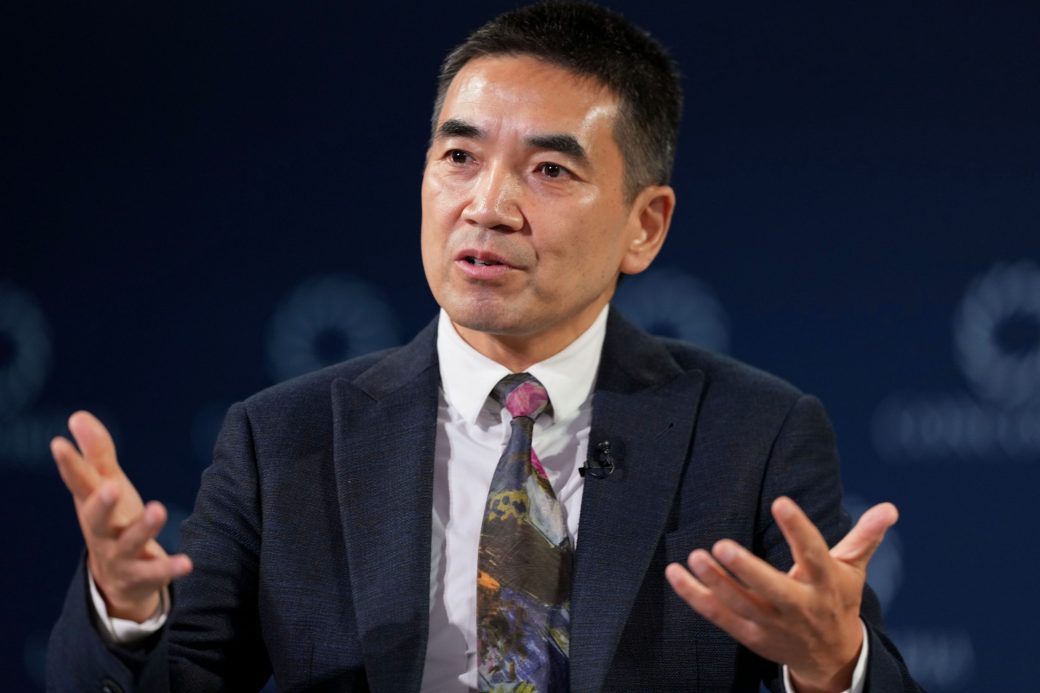
Zoom CEO Eric Yuan predicts that AI will eliminate some jobs while allowing many remaining employees to work fewer days. He expects a three-day workweek to become feasible as AI handles more tasks.
9:24 AMFortune
AI is emerging as a useful but unreliable collaborator in mathematics. Its ability to pursue goals with poorly defined parameters can produce unintended results, exposing the limits of algorithmic assistance in research.
9:00 AMFinancial Times
Texas Instruments has dominated the graphing calculator market for decades, making its devices a standard part of students’ school supplies. The story examines how that dominance developed and endured despite the calculator’s age.
8:00 AMThe VergeNvidia CEO Jensen Huang has become one of President Trump’s most influential advisers on AI policy and safety. His access reflects Nvidia’s central role in supplying the chips that power the AI industry.
7:25 AMCNBC
Axios founders Jim VandeHei, Mike Allen and Roy Schwartz argue that technology meant to save time has instead accelerated communication and overwhelmed inboxes. Their book presents simplification as a way to regain focus and work more effectively.
6:00 AMFortune
The author describes performing routine data entry at a law firm while clients were billed at a premium hourly rate. The piece argues that AI is beginning to change how legal work is allocated and how firms use expensive professional talent.
6:00 AMFortuneThe article assesses Anthropic's apparent push toward in-house payment capabilities and the obstacles involved. It focuses on the operational, regulatory, and commercial complexity of moving deeper into payments.
5:06 AMFinextraSummary
Mehul Vora examines whether enthusiasm around AI companies and high-profile IPOs reflects current business performance or expectations for what these firms could become over the next five to ten years. He also points to the risks investors face when speculative narratives drive valuations.
The central risk is a widening gap between present-day economics and future-growth assumptions. Investors buying
Unlock the full First Pass Analysis to get a better understanding of why this story mattersWhy it matters
AI enthusiasm is turning valuation discipline into the key test for investors, especially where private-market expectations have not yet been validated by profits.
Summary
Ant International introduced an AI-native product suite covering payments, accounts, foreign exchange, treasury and growth operations for global businesses.
Ant is positioning AI as an operating layer across the financial workflows that businesses already
Unlock the full First Pass Analysis to get a better understanding of why this story mattersWhy it matters
Financial AI is moving from individual tools toward integrated infrastructure spanning payments and treasury.
Summary
Anthropic is reportedly considering releasing a new AI model before going public, according to people familiar with the matter. The launch could help counter the momentum OpenAI gained with its GPT-Astra model.
Anthropic is weighing product timing against the demands of public-market scrutiny. A new model could
Unlock the full First Pass Analysis to get a better understanding of why this story mattersWhy it matters
The leading AI labs are turning product launches into tests of public-market readiness.
Summary
Nvidia CEO Jensen Huang said there is a zero percent chance AI will bring about humanity’s end, dismissing extreme fears about the technology. His position comes from the executive leading the company that has gained most directly from the AI boom.
Huang’s reassurance carries an obvious commercial incentive, even if it reflects his genuine view of
Unlock the full First Pass Analysis to get a better understanding of why this story mattersWhy it matters
AI risk debates are shaped not only by technical evidence but also by who benefits from continued acceleration.
Summary
Vocci is selling a $249 wearable ring designed to support meeting note-taking in a smaller form factor than phones, recorders, or earbuds. Its convenience also raises questions about whether people can be recorded without clear consent.
The product pushes ambient AI capture into a device that is easy to overlook, making
Unlock the full First Pass Analysis to get a better understanding of why this story mattersWhy it matters
Wearable note-taking could normalize always-on meeting capture before social and workplace rules have caught up.
Summary
ScrollEd is developing a scrollable, Instagram-like learning feed that combines textbook content with video, audio, and quizzes. The Palo Alto startup was founded by student co-founders and spouses Utsav Gupta and Rebecca Neff, and is presenting at TechCrunch Disrupt.
ScrollEd is shifting educational content from static, linear textbooks toward short-form, interactive consumption. Students are
Unlock the full First Pass Analysis to get a better understanding of why this story mattersWhy it matters
The company is testing whether social media's engagement model can make structured learning more effective.
Summary
General Atlantic CEO Bill Ford says accelerating innovation and entrepreneurship have created unusually strong conditions for growth investing, with opportunities across the United States, Middle East, Asia and Latin America. He expects geopolitical tensions to reshape supply chains without ending globalization, and sees AI generating further investment opportunities despite valuation and safety risks.
AI remains an investable growth theme even as valuations and safety concerns increase scrutiny. Geopolitical
Unlock the full First Pass Analysis to get a better understanding of why this story mattersWhy it matters
Investors are treating AI and cross-border growth as durable themes, but future winners will need to withstand valuation resets and a more fragmented global economy.
Summary
Companies are deploying AI chatbots, humanoid robots and automated management systems across the workplace. The expansion could reshape worker pay, job control and the relationship between employees and their employers.
The key shift is from using AI as an office tool to embedding it in
Unlock the full First Pass Analysis to get a better understanding of why this story mattersWhy it matters
AI could change workplace power structures as much as it changes individual tasks.
Summary
Humanoid robots competed in a cage match in Shanghai. The event presented the machines in a physical contest rather than a conventional industrial demonstration.
The spectacle signals that humanoid robotics is being marketed through public demonstrations of balance, movement
Unlock the full First Pass Analysis to get a better understanding of why this story mattersWhy it matters
Humanoid robots are moving from laboratory prototypes into public tests designed to build confidence and demand.
Summary
Chinese space companies are narrowing the gap with SpaceX and seeking a larger role in the global space economy. Their expansion reflects growing competition in launch services and commercial space technology.
China is moving from building a domestic space capability toward competing for international customers and
Unlock the full First Pass Analysis to get a better understanding of why this story mattersWhy it matters
The commercial space race is becoming a contest between national ecosystems, not just individual companies.
Summary
Zoom CEO Eric Yuan predicts that AI will eliminate some jobs while allowing many remaining employees to work fewer days. He expects a three-day workweek to become feasible as AI handles more tasks.
The claim assumes productivity gains will be shared with workers rather than captured entirely by
Unlock the full First Pass Analysis to get a better understanding of why this story mattersWhy it matters
AI's effect on working time will depend less on technical capability than on how firms distribute the gains.
Summary
AI is emerging as a useful but unreliable collaborator in mathematics. Its ability to pursue goals with poorly defined parameters can produce unintended results, exposing the limits of algorithmic assistance in research.
The central problem is not whether AI can generate mathematical work, but whether researchers can
Unlock the full First Pass Analysis to get a better understanding of why this story mattersWhy it matters
AI-assisted research will require stronger standards for defining problems, checking proofs and assigning responsibility.
Summary
Texas Instruments has dominated the graphing calculator market for decades, making its devices a standard part of students’ school supplies. The story examines how that dominance developed and endured despite the calculator’s age.
TI’s advantage rests on more than the device itself: curriculum habits, teacher familiarity, testing rules,
Unlock the full First Pass Analysis to get a better understanding of why this story mattersWhy it matters
The calculator market shows how education technology incumbents can stay dominant through ecosystems and habits, not just superior products.
Summary
Nvidia CEO Jensen Huang has become one of President Trump’s most influential advisers on AI policy and safety. His access reflects Nvidia’s central role in supplying the chips that power the AI industry.
Huang’s influence gives a leading hardware company a direct voice in debates over AI safeguards.
Unlock the full First Pass Analysis to get a better understanding of why this story mattersWhy it matters
The person controlling much of AI’s infrastructure now has an unusually powerful role in shaping its regulation.
Summary
Axios founders Jim VandeHei, Mike Allen and Roy Schwartz argue that technology meant to save time has instead accelerated communication and overwhelmed inboxes. Their book presents simplification as a way to regain focus and work more effectively.
AI has increased the volume and speed of information faster than people or organizations have
Unlock the full First Pass Analysis to get a better understanding of why this story mattersWhy it matters
The productivity problem may be information overload, not a lack of technology.
Summary
The author describes performing routine data entry at a law firm while clients were billed at a premium hourly rate. The piece argues that AI is beginning to change how legal work is allocated and how firms use expensive professional talent.
AI threatens the model of assigning low-value administrative work to highly credentialed lawyers and passing
Unlock the full First Pass Analysis to get a better understanding of why this story mattersWhy it matters
AI could lower legal costs, but it may also disrupt the traditional career ladder that turns junior lawyers into experienced practitioners.
Summary
The article assesses Anthropic's apparent push toward in-house payment capabilities and the obstacles involved. It focuses on the operational, regulatory, and commercial complexity of moving deeper into payments.
Building payment capability would give Anthropic more control over transactions linked to its AI ecosystem,
Unlock the full First Pass Analysis to get a better understanding of why this story mattersWhy it matters
AI companies entering payments face a much heavier execution burden than simply adding a checkout feature.
Make it yours
Pick your topics, set your cadence, and receive your personalized First Pass in your inbox. It’s that simple!
