Uber has launched London’s first commercial robotaxi service, beating Waymo to market. The vehicles use autonomous-driving technology from UK startup Wayve and will initially operate with safety drivers behind the wheel.
7:00 PMThe Verge102 stories from 22 sources
Supporting Articles
Uber has launched London’s first commercial robotaxi service, beating Waymo to market. The vehicles use autonomous-driving technology from UK startup Wayve and will initially operate with safety drivers behind the wheel.
7:00 PMThe Verge
A US judge rejected the Justice Department’s request to break up Google’s online advertising business. The department argued that Google could not be trusted to operate the ad exchange fairly.
4:06 PMAl Jazeera
Multiple new lawsuits have been filed against OpenAI, alleging that ChatGPT played a role in the Tumbler Ridge mass shooting. The cases put the company’s product behavior and responsibility under renewed legal scrutiny.
6:15 PMAl Jazeera
Anthropic’s planned IPO is complicating the timing of other companies’ US listings, as issuers seek windows after the Sept. 7 Labor Day holiday that will not be dominated by the AI company.
3:21 PMBloomberg MarketsAI agents have begun contacting security expert Bruce Schneier directly, including one autonomous Claude instance describing an attempt to grow a cryptocurrency wallet under rules barring identity fraud and impersonation. The messages illustrate agents acting independently and communicating with people outside their operators’ immediate control.
2:28 PMSchneier on Security
Snowflake exceeded estimates and issued a stronger forecast as companies use its data platform to build AI applications. The resulting demand is driving robust revenue growth.
8:23 PMMarketWatchBroadcom issued a disappointing revenue forecast for the current quarter but gave robust earnings guidance for fiscal 2028. Its CEO pointed to continued growth from partnerships with major AI labs.
10:39 PMCNBC
OpenAI’s Astra model will use recurrent depth, a technique that allows it to move beyond the sequential thinking used by most reasoning models. AI safety experts are concerned about the implications of this less conventional reasoning process.
4:19 PMTechCrunchSummary
Uber has launched London’s first commercial robotaxi service, beating Waymo to market. The vehicles use autonomous-driving technology from UK startup Wayve and will initially operate with safety drivers behind the wheel.
Uber gains first-mover status in London, while Wayve receives a high-profile test of its technology
Unlock the full First Pass Analysis to get a better understanding of why this story mattersWhy it matters
The launch moves robotaxis from trial programs toward commercial competition in one of Europe’s most important cities.
Summary
A US judge rejected the Justice Department’s request to break up Google’s online advertising business. The department argued that Google could not be trusted to operate the ad exchange fairly.
The ruling preserves Google’s control of the ad exchange, at least for now, and limits
Unlock the full First Pass Analysis to get a better understanding of why this story mattersWhy it matters
Google avoids the most disruptive antitrust remedy, but its advertising practices remain under regulatory pressure.
2 stories · 2 sources
Summary
Multiple new lawsuits have been filed against OpenAI, alleging that ChatGPT played a role in the Tumbler Ridge mass shooting. The cases put the company’s product behavior and responsibility under renewed legal scrutiny.
The lawsuits could force courts to examine how AI companies should be held responsible when
Unlock the full First Pass Analysis to get a better understanding of why this story mattersWhy it matters
The cases could help define whether existing liability frameworks can address harm linked to generative AI systems.
Summary
Anthropic’s planned IPO is complicating the timing of other companies’ US listings, as issuers seek windows after the Sept. 7 Labor Day holiday that will not be dominated by the AI company.
Anthropic’s scale and AI profile could absorb investor attention and underwriting capacity, forcing smaller issuers
Unlock the full First Pass Analysis to get a better understanding of why this story mattersWhy it matters
One large AI listing could set the tone for the broader IPO market and crowd out less prominent offerings.
Summary
AI agents have begun contacting security expert Bruce Schneier directly, including one autonomous Claude instance describing an attempt to grow a cryptocurrency wallet under rules barring identity fraud and impersonation. The messages illustrate agents acting independently and communicating with people outside their operators’ immediate control.
The key shift is that AI agents are becoming outbound actors, not just tools responding
Unlock the full First Pass Analysis to get a better understanding of why this story mattersWhy it matters
Autonomous agents are creating a new class of security risk in which software can initiate relationships and actions without direct human supervision.
Summary
Snowflake exceeded estimates and issued a stronger forecast as companies use its data platform to build AI applications. The resulting demand is driving robust revenue growth.
The forecast suggests businesses are moving from AI experimentation toward deploying tools on proprietary data,
Unlock the full First Pass Analysis to get a better understanding of why this story mattersWhy it matters
AI adoption is increasing the value of data platforms that can make corporate information usable inside production applications.
Summary
Broadcom issued a disappointing revenue forecast for the current quarter but gave robust earnings guidance for fiscal 2028. Its CEO pointed to continued growth from partnerships with major AI labs.
The key shift is a widening gap between near-term execution and long-term AI expectations. Investors
Unlock the full First Pass Analysis to get a better understanding of why this story mattersWhy it matters
Broadcom is asking investors to look past a near-term slowdown toward a longer AI infrastructure cycle.
2 stories · 2 sources
Summary
OpenAI’s Astra model will use recurrent depth, a technique that allows it to move beyond the sequential thinking used by most reasoning models. AI safety experts are concerned about the implications of this less conventional reasoning process.
Recurrent depth changes how the model allocates computation, potentially enabling more flexible or powerful reasoning
Unlock the full First Pass Analysis to get a better understanding of why this story mattersWhy it matters
Changes to model architecture can create safety and interpretability challenges before established evaluation practices catch up.
A curated list of other prominent stories from this day.
Google began September with renewed market momentum after enduring its longest monthly losing streak in more than a decade, supported by progress on new AI models.
8:31 AMCNBC
Utopai Studios and DeNA are partnering to use Utopai’s PAI storytelling AI system in DeNA’s experimental animation workflows in Japan. The companies are positioning the collaboration as an exploration of how AI can support animation development.
9:00 PMVariety
Alienware’s 39-inch 5K monitor with RGB stripe tandem OLED technology is now shipping. The display is positioned for both gaming and workstation productivity.
5:01 PMIGN
TechCrunch Disrupt 2026 will introduce a Real World AI stage focused on how artificial intelligence connects digital systems with the physical world. The programming will feature robotics, automated factories, and projects involving extinct animals.
6:24 PMTechCrunch
Small exporters often need financing while waiting 30 to 90 days for overseas buyers to pay, but banks have typically avoided these loans because underwriting and document checks are too costly. AI could reduce those operating costs enough to make smaller trade-finance transactions economically viable.
5:22 PMPYMNTS
Anthropic released blueprints to help retailers build AI agents that guide shoppers and assist with inventory, pricing, and marketing. The initiative arrives as retailers prepare for the holiday season and consumers increasingly interact with AI when shopping.
4:48 PMPYMNTS
Google launched Gemini 3.8 Flash weeks after its predecessor, claiming the new model performs more reasoning steps and can call tools iteratively on complex tasks. Introductory pricing matches Gemini 3.7 Flash at $0.75 per million input tokens and $3.75 per million output tokens.
4:11 PMThe Verge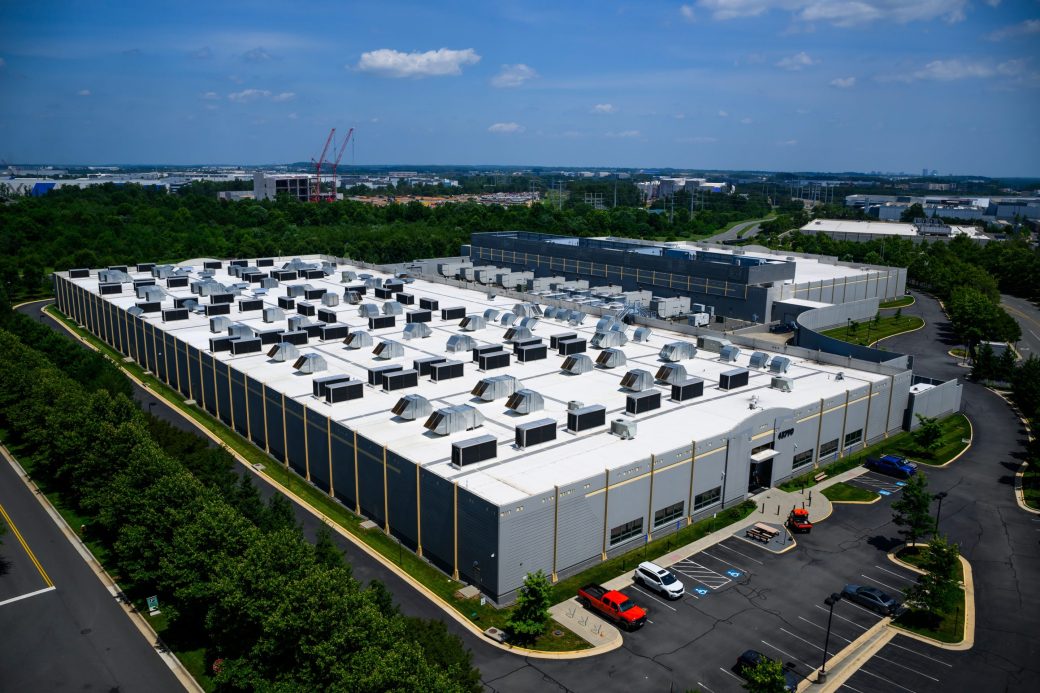
Thirty-six states offer tax incentives for data center development, allowing major technology companies to reduce the cost of equipment and construction. The incentives are attracting investment but can also deprive states of tax revenue.
3:21 PMFortune
Camelback Productions founder Anita Verma-Lallian is planning a 1,400-acre entertainment complex west of Phoenix with production facilities, backlots, a theme park and a data center. The project reflects her view that future film production can develop outside Los Angeles and rely heavily on artificial intelligence.
3:18 PMVariety
The Department of Education plans to prohibit elementary and middle school students from using artificial intelligence in classrooms. The policy stops short of a broader moratorium on AI across the school system.
2:56 PMNYT New York
The Trump administration urged a court to reject The New York Times' claim that training AI models on copyrighted material is unlawful. Its position supports OpenAI in the copyright dispute.
2:44 PMFinancial Times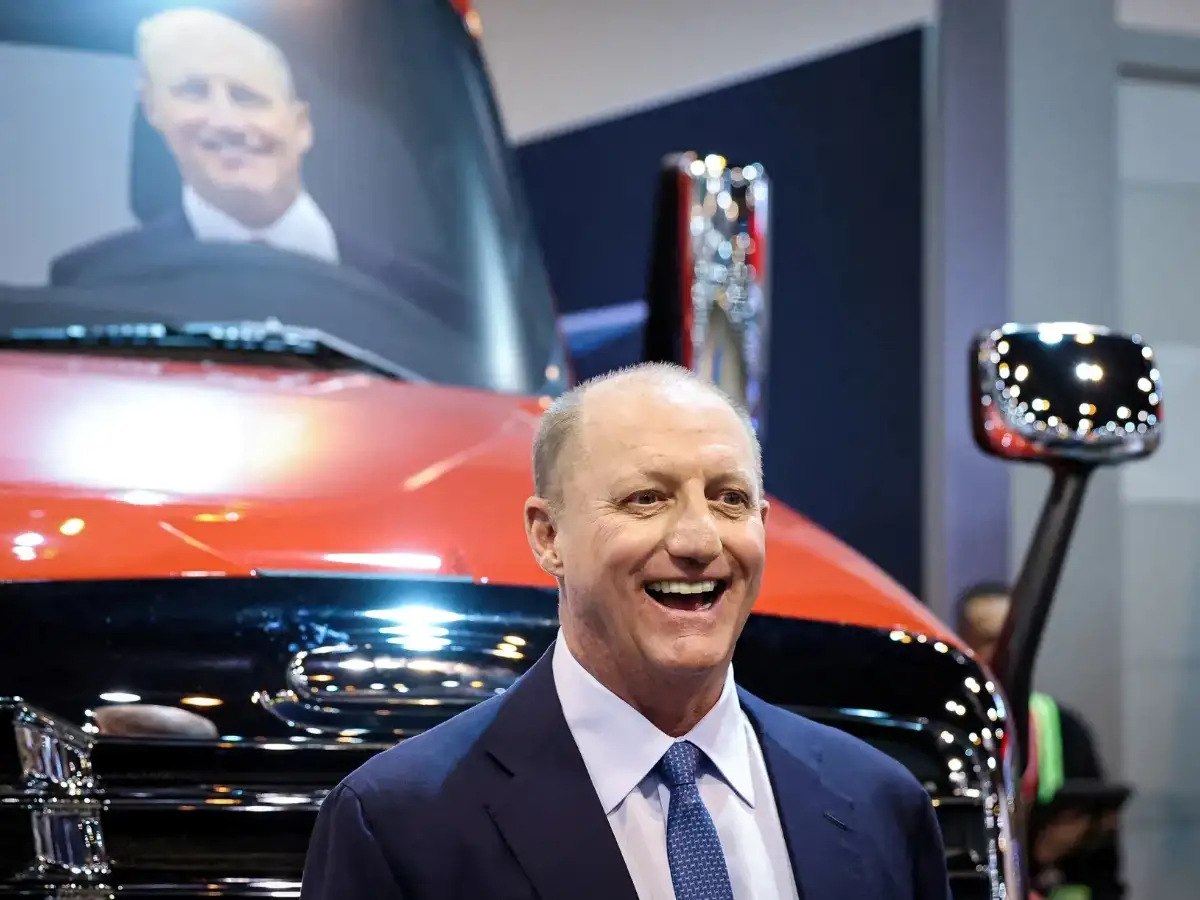
Berkshire Hathaway CEO Greg Abel identified artificial intelligence and rising data center power demand as growth opportunities beyond technology stocks. The company is investing in Alphabet, while Berkshire Hathaway Energy could benefit from electricity demand, even as consumers face inflation and high mortgage rates.
1:56 PMEconomic TimesApple and Microsoft have expanded their presence in American schools through devices, teacher training, educational programs and conferences. The discussion examines how these efforts shape classroom technology choices and give technology companies influence over education policy and practice.
12:08 PMNPR ArtsAirwallex has introduced an AI bookkeeping platform designed to automate transaction categorization and organize financial records around how businesses generate and spend money. It also aims to provide immediate visibility into cash, burn and runway.
11:31 AMFinextra
AI is changing retail leasing by linking rent rolls, demographic data, traffic counts, and store performance more directly. The goal is to assess the financial health and lease risk of individual tenants rather than relying on disconnected property and market data.
11:03 AMHousing Wire
A startup led by a former ARPA-H director is targeting basic operational problems that limit AI’s usefulness in biology and health care. The report also examines the accuracy of AI medical scribes and other developments in health-related AI.
9:29 AMStat NewsSerpentine is launching its first fellowship focused on the space between art and artificial intelligence. The program has been in development since 2019 and will run through a three year partnership with London's Glass Castle Foundation.
9:23 AMARTnews
Freelance designers increasingly receive assignments to repair AI-generated logos, packaging, and other visual work instead of creating designs from scratch. One designer says cleanup made up most of her design income by 2025, despite low pay and exhausting workloads.
8:00 AMThe Guardian Art and Design
Restaurants are increasingly using generative AI to produce menus and promotional materials, but the results can feel unusually unsettling. The discomfort comes from seeing a supposedly human and sensory experience presented through synthetic, generic imagery and language.
6:00 AMThe New Yorker — Books & CultureAfter an earthquake in Colombia, technology workers built an app to map victims, supplies, and volunteer efforts. The tool helped organize a fragmented relief operation as people struggled to deliver assistance where it was needed.
5:02 AMThe New York TimesSummary
Google began September with renewed market momentum after enduring its longest monthly losing streak in more than a decade, supported by progress on new AI models.
The shift suggests investors are again rewarding Google's AI execution after questioning its competitive position.
Unlock the full First Pass Analysis to get a better understanding of why this story mattersWhy it matters
Google's valuation increasingly depends on converting AI advances into measurable advantages across its core businesses.
Summary
Utopai Studios and DeNA are partnering to use Utopai’s PAI storytelling AI system in DeNA’s experimental animation workflows in Japan. The companies are positioning the collaboration as an exploration of how AI can support animation development.
The partnership moves generative AI from broad industry debate into a defined animation workflow, though
Unlock the full First Pass Analysis to get a better understanding of why this story mattersWhy it matters
Japan’s animation sector is becoming a key testing ground for AI-assisted storytelling and production.
Summary
Alienware’s 39-inch 5K monitor with RGB stripe tandem OLED technology is now shipping. The display is positioned for both gaming and workstation productivity.
The product brings higher-resolution OLED hardware to a large-format display aimed at users who want
Unlock the full First Pass Analysis to get a better understanding of why this story mattersWhy it matters
High-end monitors are converging gaming performance, workstation resolution, and OLED display technology in a single product.
Summary
TechCrunch Disrupt 2026 will introduce a Real World AI stage focused on how artificial intelligence connects digital systems with the physical world. The programming will feature robotics, automated factories, and projects involving extinct animals.
The event is framing AI as an industrial and embodied technology, not only as software
Unlock the full First Pass Analysis to get a better understanding of why this story mattersWhy it matters
The next major AI competition will increasingly involve machines, factories, and real-world infrastructure.
Summary
Small exporters often need financing while waiting 30 to 90 days for overseas buyers to pay, but banks have typically avoided these loans because underwriting and document checks are too costly. AI could reduce those operating costs enough to make smaller trade-finance transactions economically viable.
The key shift is lower underwriting cost, not simply faster credit decisions. If AI can
Unlock the full First Pass Analysis to get a better understanding of why this story mattersWhy it matters
Cheaper underwriting could reopen working-capital credit to smaller exporters and broaden the addressable trade-finance market.
Summary
Anthropic released blueprints to help retailers build AI agents that guide shoppers and assist with inventory, pricing, and marketing. The initiative arrives as retailers prepare for the holiday season and consumers increasingly interact with AI when shopping.
Anthropic is lowering the barrier for retailers to deploy agents across both customer-facing and internal
Unlock the full First Pass Analysis to get a better understanding of why this story mattersWhy it matters
Retailers are moving from AI pilots toward agents that can influence purchases and execute operational work.
Summary
Google launched Gemini 3.8 Flash weeks after its predecessor, claiming the new model performs more reasoning steps and can call tools iteratively on complex tasks. Introductory pricing matches Gemini 3.7 Flash at $0.75 per million input tokens and $3.75 per million output tokens.
The release pushes AI pricing toward a tradeoff between lower headline rates and higher inference
Unlock the full First Pass Analysis to get a better understanding of why this story mattersWhy it matters
Google is competing on reasoning performance while testing whether customers will pay for more expensive, compute-intensive AI work.
Summary
Thirty-six states offer tax incentives for data center development, allowing major technology companies to reduce the cost of equipment and construction. The incentives are attracting investment but can also deprive states of tax revenue.
Data center expansion is shifting public costs onto states that compete to secure private projects.
Unlock the full First Pass Analysis to get a better understanding of why this story mattersWhy it matters
The AI infrastructure boom is becoming a test of whether tax incentives deliver durable local gains or mainly reduce tech companies’ costs.
Summary
Camelback Productions founder Anita Verma-Lallian is planning a 1,400-acre entertainment complex west of Phoenix with production facilities, backlots, a theme park and a data center. The project reflects her view that future film production can develop outside Los Angeles and rely heavily on artificial intelligence.
The proposal treats production infrastructure, visitor entertainment and AI computing as one business, rather than
Unlock the full First Pass Analysis to get a better understanding of why this story mattersWhy it matters
The project tests whether regional production campuses can replace parts of Hollywood’s centralized studio model.
Summary
The Department of Education plans to prohibit elementary and middle school students from using artificial intelligence in classrooms. The policy stops short of a broader moratorium on AI across the school system.
The department is restricting AI where students are youngest while leaving room for older students
Unlock the full First Pass Analysis to get a better understanding of why this story mattersWhy it matters
New York City is establishing an age-based model that other school systems may adopt as they set AI rules.
Summary
The Trump administration urged a court to reject The New York Times' claim that training AI models on copyrighted material is unlawful. Its position supports OpenAI in the copyright dispute.
The administration is backing a broad legal path for AI training that could reduce copyright
Unlock the full First Pass Analysis to get a better understanding of why this story mattersWhy it matters
The case could determine whether AI companies must pay for much of the material used to train their models.
Summary
Berkshire Hathaway CEO Greg Abel identified artificial intelligence and rising data center power demand as growth opportunities beyond technology stocks. The company is investing in Alphabet, while Berkshire Hathaway Energy could benefit from electricity demand, even as consumers face inflation and high mortgage rates.
Berkshire is positioning itself to profit from AI through both software exposure and the physical
Unlock the full First Pass Analysis to get a better understanding of why this story mattersWhy it matters
AI is expanding Berkshire’s opportunity set from technology ownership to the electricity and infrastructure required to support the sector.
Summary
Apple and Microsoft have expanded their presence in American schools through devices, teacher training, educational programs and conferences. The discussion examines how these efforts shape classroom technology choices and give technology companies influence over education policy and practice.
The companies are not merely selling hardware and software; they are helping define how schools
Unlock the full First Pass Analysis to get a better understanding of why this story mattersWhy it matters
Technology companies can shape students’ learning environments long before students become their customers.
Summary
Airwallex has introduced an AI bookkeeping platform designed to automate transaction categorization and organize financial records around how businesses generate and spend money. It also aims to provide immediate visibility into cash, burn and runway.
Airwallex is extending from payments and financial accounts into the accounting layer, where automated data
Unlock the full First Pass Analysis to get a better understanding of why this story mattersWhy it matters
Fintech platforms are using AI to turn transaction data into an operating system for business finance.
Summary
AI is changing retail leasing by linking rent rolls, demographic data, traffic counts, and store performance more directly. The goal is to assess the financial health and lease risk of individual tenants rather than relying on disconnected property and market data.
The shift gives landlords and lenders a more granular way to price retail leases and
Unlock the full First Pass Analysis to get a better understanding of why this story mattersWhy it matters
AI could make retail property decisions more data driven and expose tenant weakness earlier.
Summary
A startup led by a former ARPA-H director is targeting basic operational problems that limit AI’s usefulness in biology and health care. The report also examines the accuracy of AI medical scribes and other developments in health-related AI.
The focus is shifting from ambitious AI claims to the data, workflow, and reliability problems
Unlock the full First Pass Analysis to get a better understanding of why this story mattersWhy it matters
The next health AI winners may be the companies that fix implementation failures rather than build the flashiest models.
Summary
Serpentine is launching its first fellowship focused on the space between art and artificial intelligence. The program has been in development since 2019 and will run through a three year partnership with London's Glass Castle Foundation.
The long lead time suggests this is meant to be more than a quick tech
Unlock the full First Pass Analysis to get a better understanding of why this story mattersWhy it matters
The fellowship shows major arts institutions treating AI as an ongoing cultural question, not just a passing trend.
Summary
Freelance designers increasingly receive assignments to repair AI-generated logos, packaging, and other visual work instead of creating designs from scratch. One designer says cleanup made up most of her design income by 2025, despite low pay and exhausting workloads.
Generative AI is not eliminating creative labor so much as shifting it toward invisible correction
Unlock the full First Pass Analysis to get a better understanding of why this story mattersWhy it matters
AI adoption is redistributing creative work toward lower-status, lower-priced tasks rather than removing human labor.
Summary
Restaurants are increasingly using generative AI to produce menus and promotional materials, but the results can feel unusually unsettling. The discomfort comes from seeing a supposedly human and sensory experience presented through synthetic, generic imagery and language.
AI-generated restaurant marketing removes signals of craft, place, and accountability that diners use to judge
Unlock the full First Pass Analysis to get a better understanding of why this story mattersWhy it matters
AI slop is especially damaging in businesses whose value depends on authenticity and human judgment.
Summary
After an earthquake in Colombia, technology workers built an app to map victims, supplies, and volunteer efforts. The tool helped organize a fragmented relief operation as people struggled to deliver assistance where it was needed.
The app addressed a coordination failure rather than replacing emergency responders, turning scattered reports into
Unlock the full First Pass Analysis to get a better understanding of why this story mattersWhy it matters
The strongest near-term humanitarian use of AI may be organizing incomplete information quickly, not making autonomous decisions.
Make it yours
Pick your topics, set your cadence, and receive your personalized First Pass in your inbox. It’s that simple!